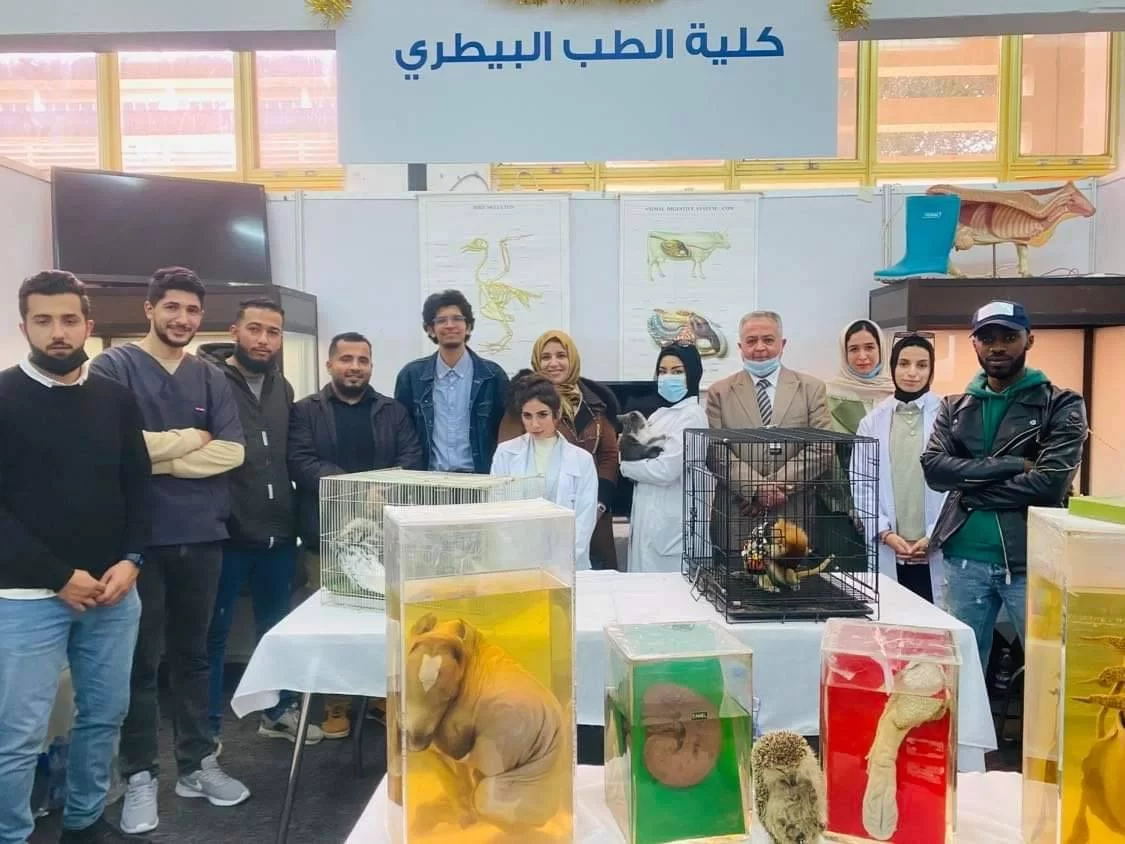
Faculty of Veterinary Medicine

More ...

About Faculty of Veterinary Medicine

The Faculty of Veterinary Medicine was established in 1975. It was the first Faculty of Veterinary Medicine in Libya. It is one of the citadels of science and knowledge at the University of Tripoli. This scientific institution works around the clock to meet the needs of the community of veterinarians and contributes to supporting the national economy. It values the care for animal health. It maintains increasing animal production, preserving human health and protecting the environment.

Facts about Faculty of Veterinary Medicine

We are proud of what we offer to the world and the community

194

Publications

86

Academic Staff

245

Students

23

Graduates

Programs

No Translation Found
Major No Translation Found

No Translation Found...

Details
Master of Poultry diseases
Major Veterinary medicine

This program is implemented through the study of academic courses, so that the number of units is not less than (24) and not more than (30) units of study over 3 semesters, in addition to the completion of a specialized scientific research thesis with (6) credits. The legal period required to obtain...

Details

Who works at the Faculty of Veterinary Medicine

Faculty of Veterinary Medicine has more than 86 academic staff members

staff photo

Prof.Dr. lutfi Musa sasi BenAli

ا.د. لطفي بن علي هو احد اعضاء هيئة التدريس بقسم الجراحة والتناسليات بكلية الطب البيطري.انخرط بالسلك التدريسي بجامعة طرابلس كمعيد مند (1988) والان يشغل درحة استاد منذ 2015 وله العديد من المنشورات العلمية في مجال تخصصه

Publications

Some of publications in Faculty of Veterinary Medicine

New insights into the pathogenesis of Beckwith-Wiedemann and Silver-Russell syndromes: contribution of small copy number variations to 11p15 imprinting defects

The imprinted 11p15 region is organized in two domains, each of them under the control of its own imprinting control region (ICR1 for the IGF2/H19 domain and ICR2 for the KCNQ1OT1/CDKN1C domain). Disruption of 11p15 imprinting results in two fetal growth disorders with opposite phenotypes: the Beckwith-Wiedemann (BWS) and the Silver-Russell (SRS) syndromes. Various 11p15 genetic and epigenetic defects have been demonstrated in BWS and SRS. Among them, isolated DNA methylation defects account for approximately 60% of patients. To investigate whether cryptic copy number variations (CNVs) involving only part of one of the two imprinted domains account for 11p15 isolated DNA methylation defects, we designed a single nucleotide polymorphism array covering the whole 11p15 imprinted region and genotyped 185 SRS or BWS cases with loss or gain of DNA methylation at either ICR1 or ICR2. We describe herein novel small gain and loss CNVs in six BWS or SRS patients, including maternally inherited cis-duplications involving only part of one of the two imprinted domains. We also show that ICR2 deletions do not account for BWS with ICR2 loss of methylation and that uniparental isodisomy involving only one of the two imprinted domains is not a mechanism for SRS or BWS. arabic 22 English 137
- Demars, J., S. Rossignol, I. Netchine, K. S. Lee, Mansur Ennuri Moftah Shmela, L. Faivre, J. Weill, S. Odent, S. Azzi, P. Callier, J. Lucas, C. Dubourg, J. Andrieux, Y. Le Bouc, A. El-Osta , C. Gicquel(10-2011)
Publisher's website

Bovine digital dermatitis and severe virulent ovine foot rot: a common spirochaetal pathogenesis

A potential pathological role for spirochaetes in bovine digital dermatitis (bovine DD) and severe virulent ovine foot rot (SVOFR) has been considered and a treponeme isolate obtained from each disease in the UK. In this work, we have investigated the hypothesis that the two diseases may have a shared (common) spirochaetal aetiology. Experiments were designed to identify serological similarities and differences between the two spirochaetes; an enzyme-linked immunosorbent assay (ELISA) was developed to detect anti-treponeme antibodies in the sera of cows and sheep against the two-treponeme isolates. Sera were further tested for antigen reactivity by Western blotting. Cattle and sheep with bovine DD and SVOFR, respectively, had increased seropositivity rates to both treponeme isolates, with different patterns of reactivity between farms. In some cattle herds, significant correlations were shown between antibodies to bovine DD treponemes and SVOFR treponemes (P0.05); sheep showed strong evidence of reactivity to one or the other treponeme antigens, but never to both. Western blotting against both treponeme antigens showed that they frequently displayed different antigen epitopes, although some minor bands were common to both organisms. The data suggest that there are a number of spirochaetes in UK farms, which could be involved in the pathogenesis of either bovine DD or SVOFR. arabic 13 English 83
Abdulgader Dhawi Alfitouri Dhawi(1-2021)
Publisher's website

Residual evaluation of oxytetracycline in camel edible tissues in Tripoli region, Libya

The deleterious effects of the residues of antibacterial drugs have been considered as one of the most serious problems in the world on the basis of their importance in both veterinary and human fields. Therefore, the present study was planned out to evaluate the residual levels of oxytetracycline in camel tissues in Tripoli area in Libya. Forty samples of slaughtered camel's tissues (10 of muscle, 10 of liver, 10 of kidney, and 10 of fat) were collected from different carcasses at different slaughter houses in Tripoli districts. The samples were homogenized, extracted and residual concentrations of oxytetracycline have been measured using liquid chromatography-Mass spectroscopy (LC-MS) technique and oxytetracycline standard. Oxytetracycline residues have been detected in 60% in muscle, 80% in liver, 90% in kidney and 70% in fat samples. The samples, although positive, yet decided acceptable as the detected levels were less than that were regulated by Codex Alimentarius Commission (CAC) for oxytetracycline maximal residual levels (100, 300, 600 and 100 μg/Kg muscle, liver, kidney or fat, respectively). The authors recommended avoiding irrational use of oxytetracycline in veterinary practice and camel in particular; and sticking to the withdrawal time regulated and labelled for drugs used in therapy among veterinary personnel, organizations, and governmental agencies in Libya.
Ibrahim Eldaghayes(9-2015)
Publisher's website

Journals

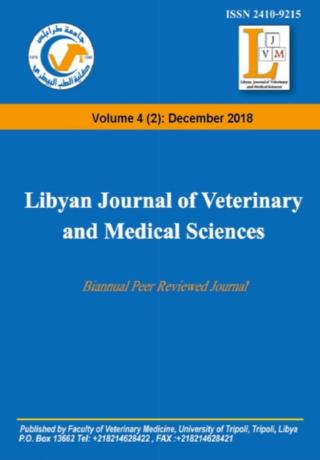
Journals published by Faculty of Veterinary Medicine

Faculty of Veterinary Medicine Video Channel

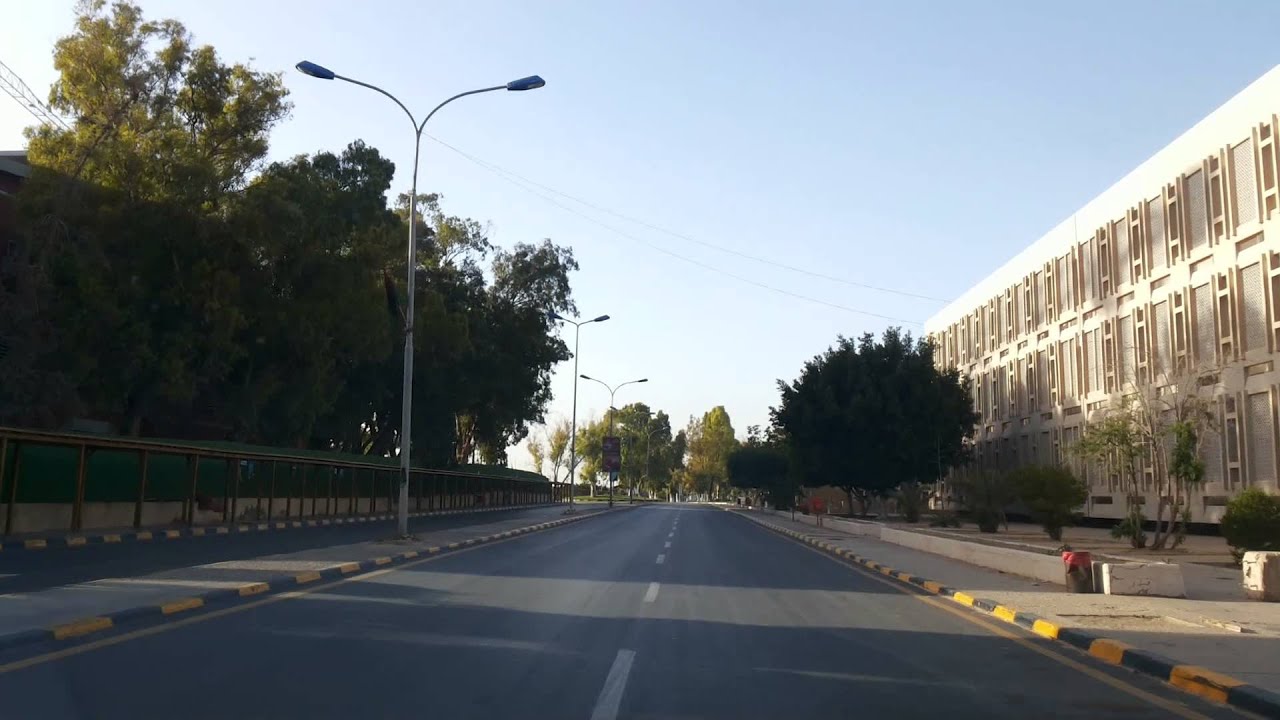
Watch some videos about the Faculty of Veterinary Medicine

See more

Faculty of Veterinary Medicine in photos

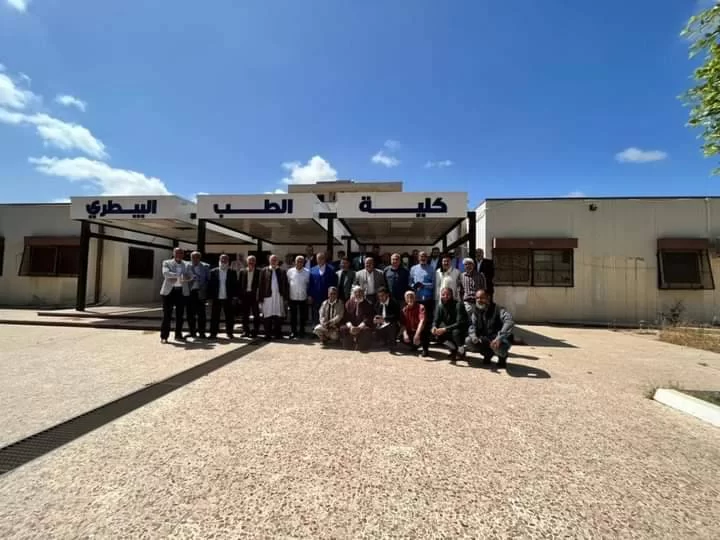
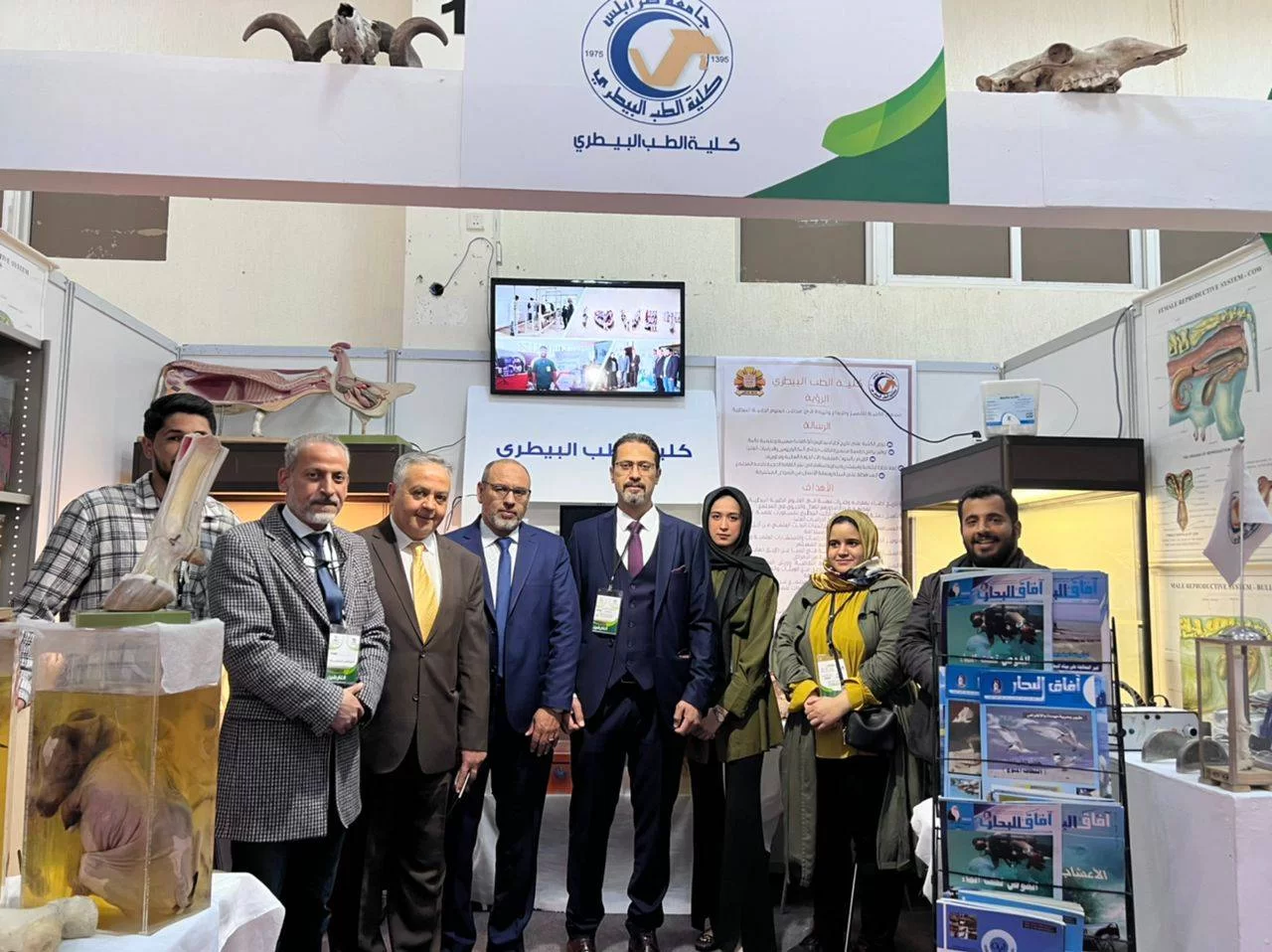
Faculty of Veterinary Medicine Albums