Department of Surgery & ٍٍReproductive

More ...

About Department of Surgery & ٍٍReproductive

Facts about Department of Surgery & ٍٍReproductive

We are proud of what we offer to the world and the community

14

Publications

10

Academic Staff

Who works at the Department of Surgery & ٍٍReproductive

Department of Surgery & ٍٍReproductive has more than 10 academic staff members

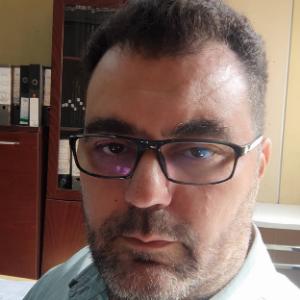
staff photo

Dr. Abdurraouf Omar Ahmed Gaja

عبدالرؤوف قاجة هو احد اعضاء هيئة التدريس بقسم الجراحة والتناسليات بكلية الطب البيطري. يعمل السيد عبدالرؤوف قاجة بجامعة طرابلس منذ 2003-03-09 وله العديد من المنشورات العلمية في مجال تخصصه

Publications

Some of publications in Department of Surgery & ٍٍReproductive

Fetlock Parameters Development on Dorsopalmar Radiographs in the Equine Forelimb

Several reports have discussed possible bony morphological causes of fetlock pathology but without relating them to its morphometry. Radiographic measurement is widely used in constructing numerical databases of bone morphometry. Such measurements would not be reliable unless all factors affecting the radiographs were considered. Therefore, this study aimed to establish a specific dorsopalmar view (DP) for fetlock radiographic measurements, and then to develop reliable and repeatable fetlock parameters that represent fetlock conformation on those DP radiographs. Ten cadaveric forelimbs from ten adult horses were cut at the distal third of the radius and mounted in a normal posture for DP radiography. Specific features on fetlock bones were used as landmarks to identify the DP at zero degrees. Other bony features were selected as landmarks for developing fetlock parameters on these radiographs. Twenty-seven parameters were designed in the form of angles (12) and ratios (15). The repeatability and consistency of each parameter was tested. A specific fetlock DP view was determined at zero degrees based on certain landmarks. All angular and ratio parameters showed high reliability and consistency in their measurements. The established parameters provide an opportunity to test the relationship between fetlock morphometrics and performance, or the likelihood of certain pathologies.
Abdulrhman Mohamed Salah Alrtib, Aiman Hussein Saleh Oheida, Mohamed Hamrouni S. Abushhiwa, Helen M S Davies(3-2019)
Publisher's website

Normal biodistribution of canine leukocytes labeled in whole blood with technetium-99m stannous fluoride colloid and their ability to localize induced inflammatory foci

This study assessed the biodistribution of autologous leucocytes radiolabelled with technetium-99m stannous fluoride colloid (99mTcSnC) for detection of foci of induced inflammation in dogs. Venous blood was collected from seven healthy dogs and incubated with 99mTcSnC for 1 h at room temperature. Radiolabelled samples were injected intravenously (IV) and the dogs were scanned using a gamma camera. Another seven healthy dogs were injected intradermally with tumour necrosis factor α and then IV with 99mTcSnC radiolabelled autologous blood 3 h later before being scanned. The radiolabelled leucocytes localised to sites of inflammation by 30 min post-injection. IV injection of autologous leucocytes radiolabelled with 99mTcSnC appears to be a sensitive method for localisation of induced foci of inflammation in dogs.
Mohamed Hamrouni S. Abushhiwa, Nouria S.Salehi, Meir Lichtenstein, Peter M. Lording, Peter J. Finnin, Robert C. Whitton, Jennifer A. Charles, Bruce W. Parry (8-2010)
Publisher's website

Evaluation of Thoracic Limb Loads, Elbow Movement, and Morphology in Dogs Before and After Arthroscopic Management of Unilateral Medial Coronoid Process Disease

Objective To (1) evaluate thoracic limb loads and symmetry, and elbow function and morphology, before and after arthroscopic treatment of unilateral medial coronoid process disease (MCPD), and (2) determine if functional variables correlate with morphologic findings.Study DesignProspective case series.AnimalsDogs (n = 14) with thoracic limb lameness.Methods Dogs were included when unilateral MCPD was confirmed as the cause of lameness. Kinetic analysis of both thoracic limbs, along with kinematic analysis and goniometry of both elbows were carried out before, and 60, 120, and 180 days after partial coronoidectomy by arthroscopy. Radiography and computed tomography of both elbows were performed before and 180 days after arthroscopy.ResultsA nonsignificant (P = .11) increase in the peak vertical loads (PFz), and a significant (P = .022) increase in the vertical impulse (iFz) applied by the affected limb were seen. Symmetry indices improved, with significant differences between sessions (PFz: P = .019; iFz: P = .003). Kinematic variables showed no significant differences, between sessions or when comparing both elbows within sessions. Goniometry revealed no significant differences between sessions, but some significant differences were identified when comparing both elbows within sessions. Osteophytosis and degree of lameness showed no correlation, before (rs = −0.077; P = .79) or after arthroscopy (rs = 0.27; P = .35).Conclusions Kinetic variables improved after arthroscopy, without full restoration of function. Kinematic variables did not change significantly. Osteoarthritis and goniometric measurements in the affected joint worsened. Functional variables did not correlate with morphologic findings. arabic 23 English 137
Jalal Mohamed Abdelhadi(7-2004)
Publisher's website