faculty of Engineering

More ...

About faculty of Engineering

Faculty of Engineering

The Faculty of Engineering, University of Tripoli, was established in 1961 in the name of the “Faculty of Higher Technical Studies” within the program of scientific and technical cooperation with the United Nations Educational, Scientific and Cultural Organization UNESCO. Thus, this makes it the first engineering college in Libya. In 1967, it was included to the University of Libya under the name of the Faculty of Engineering. In 1972, the Faculty of Petroleum Engineering established. However, it then was then included to the Faculty of Engineering, and elements from the Faculty of Science, University of Tripoli in 1973. In 1978, the Faculty of Nuclear and Electronic Engineering was created. In 1985 the Faculty of Petroleum Engineering was merged with the Faculty of Engineering within the framework of linking the colleges and higher institutes with engineering research centers. The Faculty of Nuclear and Electronic Engineering was then added to the Faculty of Engineering in 1988.


The Faculty of Engineering has a pioneering role in the scientific career, its role is increasing significantly in line with the technical development, especially in the fields of communication and informatics engineering. In addition, it also following new developments with their applications in the engineering sector, along with permanent and renewable energy, modern methods of construction and architecture and their environmental impacts. In response to this development, the Faculty of Engineering undertook changes in its educational curricula and academic structure by growing from a faculty with four departments since its inception to become a group of thirteen departments in order to meet the desires and requirements of the Libyan society and to achieve its goals and aspirations for progress. Accordingly, the study system in the Faculty has evolved from the academic year system to term-based system.


The expansion of the academic fields in the Faculty undoubtedly requires expansions in the facilities that accommodate the increasing numbers of students which have reached twelve thousand in recent years. This development will include halls, laboratories and other advanced capabilities and equipment, including computers and research measuring devices.


The Faculties consists of the following departments: Department of Civil Engineering - Department of Mechanical and Industrial Engineering - Department of Electrical and Electronic Engineering - Department of Computer Engineering - Department of Architecture and Urban Planning - Department of Petroleum Engineering - Department of Chemical Engineering - Department of Geological Engineering - Department of Mining Engineering - Department of Aeronautical Engineering - Department of Naval Engineering and Ship Architecture - Department of Nuclear Engineering - Department of Materials and Mineral Engineering - Department of Engineering Management "Postgraduate studies".


These departments carry out their specialized scientific tasks in accordance with the relevant laws, regulations and decisions, which include in their entirety:


-          Academic supervision of students in terms of registration, teaching and evaluation.

-          Follow-up of research, authoring and translation programs.

-          Preparing and holding specialized scientific conferences and seminars.

-          Preparing and reviewing academic curricula to keep pace with scientific progress and the needs of society.

-          Providing specialized scientific advice to productive and service institutions in society.

-          Conducting scientific and practical studies in the field of research to solve relevant community problems.

-          Contributing to developing plans and proposals for managing the educational process in the Faculty and departments.

Facts about faculty of Engineering

We are proud of what we offer to the world and the community

278

Publications

326

Academic Staff

9723

Students

558

Graduates

Programs

Major

...

Details
Major

...

Details
Major

...

Details

Who works at the faculty of Engineering

faculty of Engineering has more than 326 academic staff members

staff photo

Dr. Samah Khlifa Otman Alghoul

سامح الغول هو احد اعضاء هيئة التدريس بقسم الهندسة الميكانيكية والصناعية بكلية الهندسة. يعمل السيد سامح الغول بجامعة طرابلس كـاستاذ مساعد منذ 2014-12-25 وله العديد من المنشورات العلمية في مجال تخصصه

Publications

Some of publications in faculty of Engineering

CONCRETE MIX DESIGN USING SIMPLE EQUATIONS

The behaviour of concrete, whether fresh or hardened, depends basically on the behaviour of its components and the relationship between them, therefore, obtaining a concrete with certain properties depends fundamentally on the concrete mix design. Concrete mix design generally includes two main steps: 1-Selection of the main components suitable for the concrete (cement, aggregate, water, and additives); 2-Determination of more economical mix ratios to fulfil the workability, strength and efficiency requirements. Currently, there are many international methods locally approved for mix designs. They are all related to each other, they give relatively the same quantities of the mix components and they are all capable of providing a good concrete mix. It is important to consider that these methods give approximate quantities which should be checked by experimental mixes in order to obtain results suitable for the requirements of the local environment and local materials. The ACI and BS methods are the most commonly used. Both of these methods depend on graphs and standard tables derived from previous research experience and actual concrete production as well as studies of the properties of the materials used. This paper illustrates a new approach for concrete mix design named as: “Double Coating Method”, which is currently used in some research centers in the republic of Poland and was recently applied in the laboratories of the Civil Engineering Departments in the Universities of Tripoli and Benghazi in Libya. This paper describes experiment in which 24 mixtures were used to assess the usefulness of this technique for problem of proportioning concrete mixtures in general. arabic 5 English 37
Hakim S. Abdelgader (12-2020)
Publisher's website

Effects of Design Parameters of Wind Turbine on Airfoil Coefficients Using Grey-Based Taguchi Method

Abstract— Horizontal-Axis Wind Turbine (HAWT) small scaled is widely employed for generating electricity for domestic uses due to higher efficiencies among other turbines. Three-Blade HAWTs power performance can be further improved by optimizing lift (CL), drag (CD) coefficients and thus power (CP) coefficient. In this study, Taguchi design of experiments (DOE) of L9 orthogonal array (OA) with three parameters and one interaction, namely airfoil, angle of attack, interaction (between the airfoil and the attack angle), and Reynolds number with three value levels are used to determine the single quality (CL, CD, CP) optimization. For multi-qualities optimization, the Grey-based Taguchi is employed which combines the Taguchi DOE orthogonal array with grey relational analysis to determine the grey relational grade, which can convert the multi-response grey relational grade into single grey relational grade, thus the optimal design parameters can be achieved. The Q-Blade software is used to determine lift and drag coefficients and empirical equation used for power coefficient. The obtained results show that the most influence design parameter on airfoil coefficients is Reynolds number with 72.6% contribution followed by attack angle with 16.8%, interaction with 9.1% and airfoil with 1.5%. The F-value indicates that Reynolds number and angle of attack give at least 97.5% and 90% confidence respectively, for this specific set of experiments. arabic 14 English 86
Abdulhamed M. Hwas, Ali M. Hatab(12-2020)
Publisher's website

تأثير سرعة حركة جهاز النقال على فشل التحويل الرأسي في شبكة الجيل الرابع المستقبلية للأجهزة النقالة

يُتوقع في شبكات الجيل الرابع المستقبلية للهاتف النقال بأن تدعم تقنية الشبكات اللاسلكية المحلية تقنية الشبكات الخليوية ذات التغطية الواسعة، و هذا ينتج عنه شبكات لاسلكية مهجنة مبنية على أساس بروتوكول الانترنت . على الرغم من أن تقنية الشبكات الخليوية ذات التغطية الواسعة كشبكة الجيل الثالث للهاتف النقال تسمح بإعطاء سرعات لنقل البيانات تصل إلى2 ميجابت، فهي تعتبر سرعات صغيرة عند مقارنتها بالسرعات المنجزة في التقنيات اللاسلكية الأخرى كالشبكة المحلية اللاسلكية التي تصل سرعتها إلى 54 ميجابت أو أكثر. بسبب ذلك تم عمل عدة سيناريوهات لربط هاتين الشبكتين المتكاملتين حيث أنّ الشبكة الخليوية من الجيل الثالث تعطي تغطية شاملة والشبكة المحلية اللاسلكية تعطي سرعات عالية لنقل البيانات. إنّ جهاز النقال يمكنه أن يحوّل بين هاتين الشبكتين عن طريق عملية تعرف بالتحويل الرأسي. إنّ المقدرة على توقيت عملية التحويل الرأسي أثناء عملية الاتصال من شبكة نظام معين إلى شبكة نظام آخر تعتبر من المتطلبات الهامة لتقليل احتمالية فشل التحويل وفقد البيانات أثناء التحويل. هذا المطلب الهام يجب أن يتحقق للأجهزة النقالة المتحركة عند سرعات مختلفة، من المترجلين إلى المركبات الآلية. في هذه الرسالة، تم تحليل تأثير سرعة حركة الجهاز النقال على التأخّر الزمني لكشف الحاجة لبدء عملية التحويل الرأسي ومن ثم على فشل هذا التحويل، وذلك باستخدام الطرق الرياضية. إضافة إلى ذلك تم استخدام الطرق الرياضية لتحليل تأثير سرعة حركة جهاز النقال وظاهرة تصادم الإشارات التنبيهية في الشبكة المحلية اللاسلكية على فشل التحويل الرأسي، كما تم إيضاح كيفية تعديل معدل ارسال الإشارات التنبيهية للأفضل، و ذلك لتقليل احتمالية فشل التحويل الرأسي مع تقليل سعة الشبكة المحلية اللاسلكية المحجوزة من قبل الإشارات التنبيهية. Abstract It is expected in fourth generation (4G) future mobile networks that WLAN technology will complement cellular wide area technology resulting in overlay hybrid networks based on IP protocol. Although cellular wide area technology such as the (UMTS) allows for data speeds of up to 2 Mbps, this is much less when compared to the data speeds achievable with other wireless network technology such as the IEEE 802.11 WLAN standards which can reach 54 Mbps. Because of that multiple scenarios have been made in order to integrate this two complementary networks : UMTS offers universal coverage and WLAN offers high connection data rate spots. The mobile terminal can switch from WLAN to cellular UMTS or vice versa by a process known as vertical handoff. The ability to timely process vertical handoffs, during communication sessions, from one network type to another will be an important requirement for minimizing handoff failure probability and data loss. This must be achieved for mobile terminals moving at various speeds from pedestrian’s speed to a fast moving vehicle’s. In this thesis, the effect of mobile terminal moving speed on vertical handoff detection delay and, hence, on vertical handoff failure is analytically studied. In addition, the effect of mobile terminal speed and beacon frame collision in WLAN on vertical handoff failure is analyzed through mathematical approach. Also it is shown how to optimize the beacon period in order to have minimum vertical handoff failure probability and minimum WLAN access point channel capacity occupied by beacon signals.
تامر تيسير حمدان (2009)
Publisher's website

Journals

Journals published by faculty of Engineering

faculty of Engineering in photos

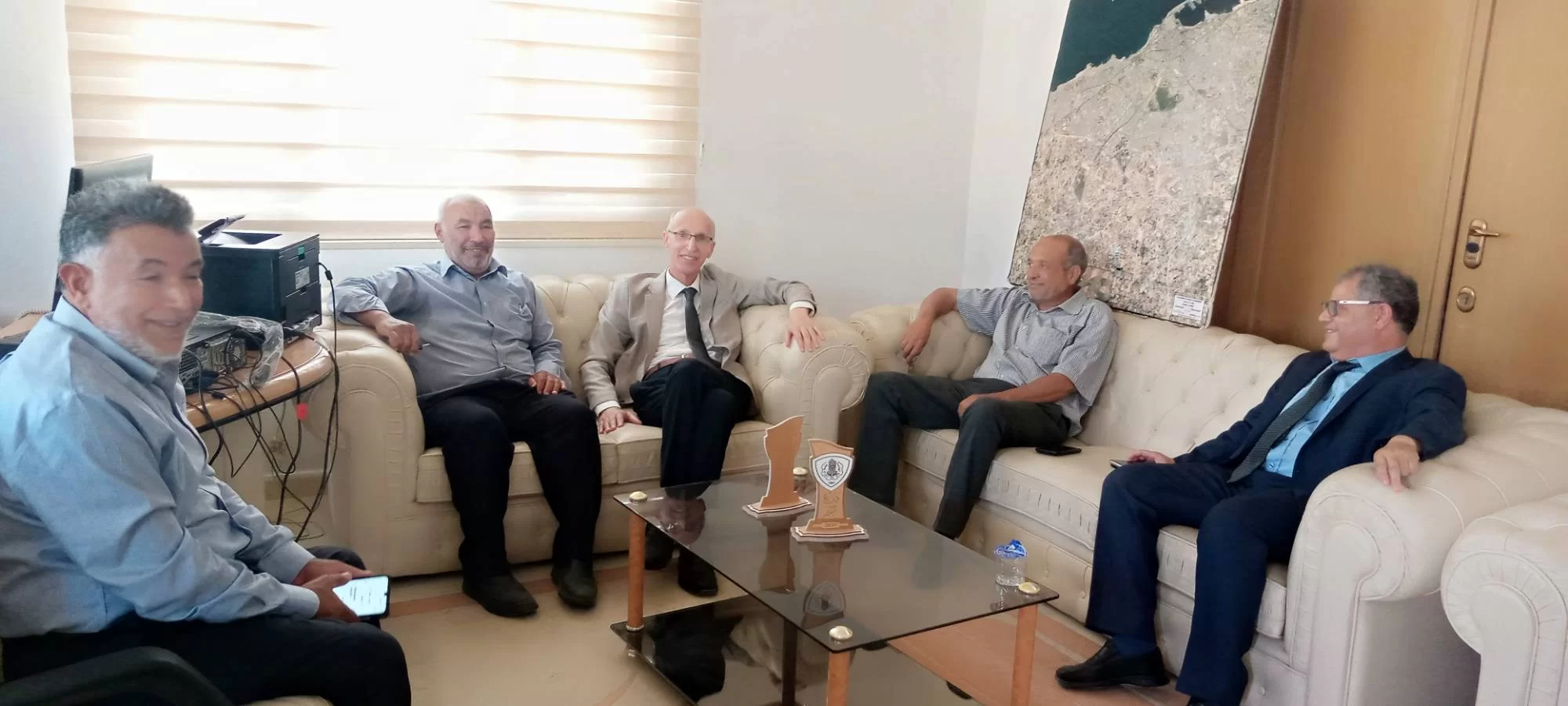
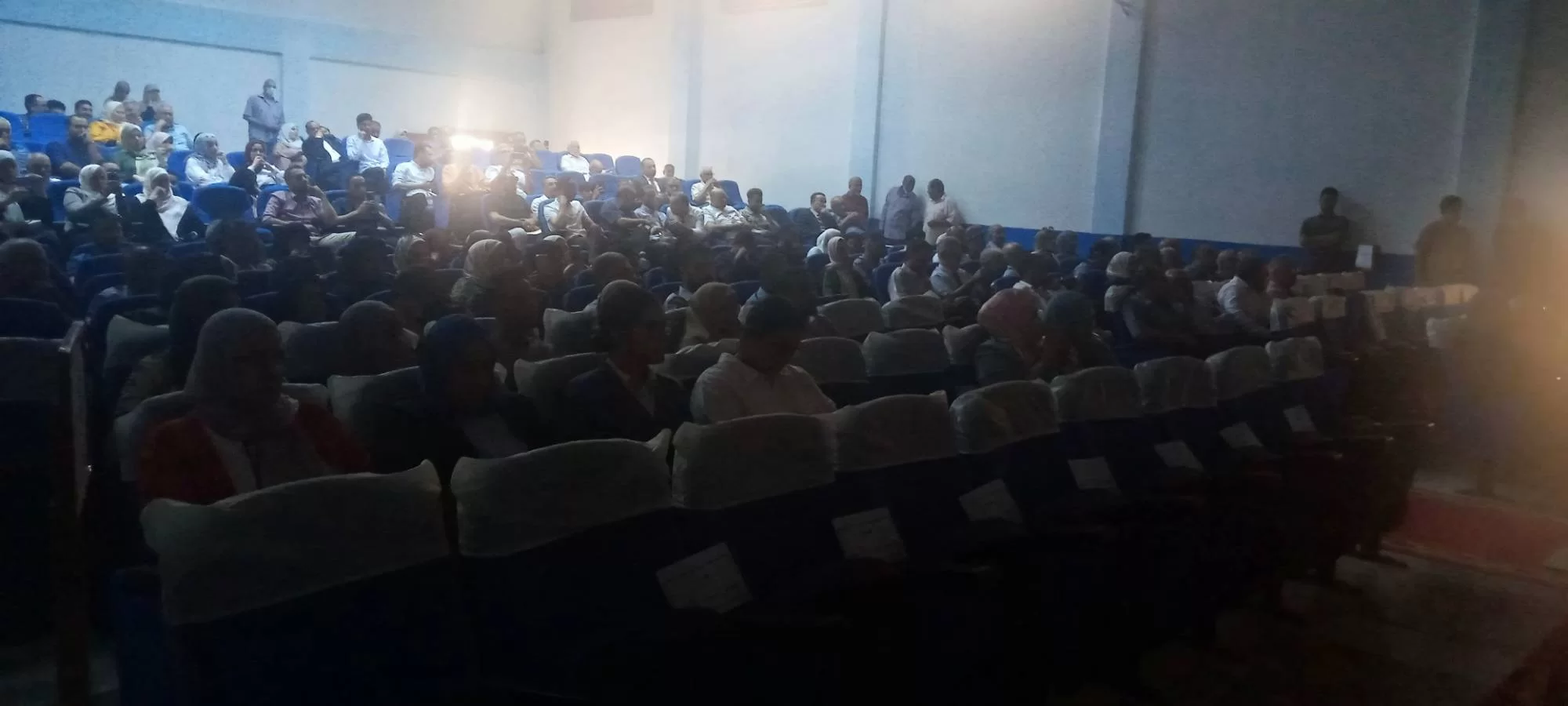
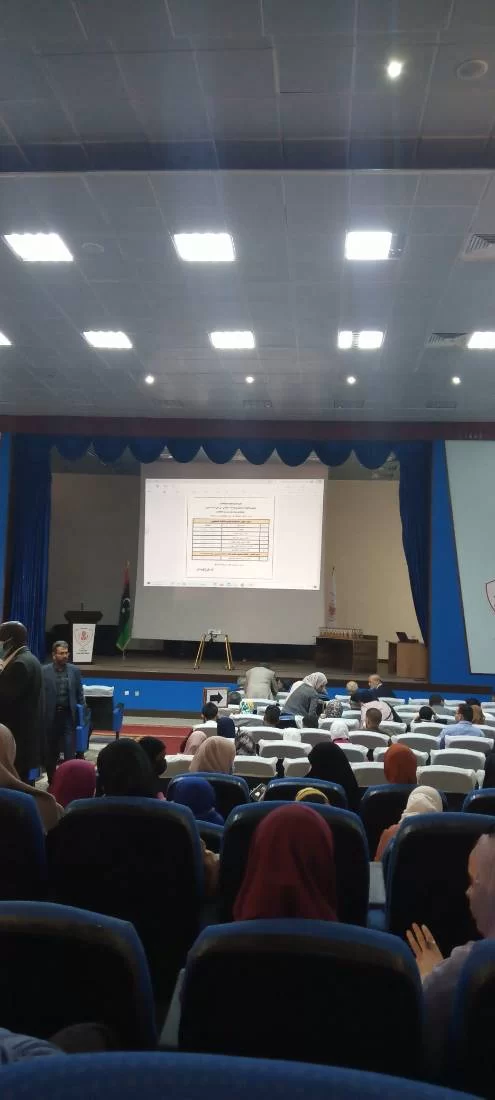
faculty of Engineering Albums