Department of Electrical and Electronic Engineering

More ...

About Department of Electrical and Electronic Engineering

Facts about Department of Electrical and Electronic Engineering

We are proud of what we offer to the world and the community

48

Publications

42

Academic Staff

1292

Students

0

Graduates

Programs

B. Sc. in Electronic and Communication Engineering
Major Electronic and Communication Engineering

...

Details

B. Sc. in Control and Automation Engineering
Major Control and Automation Engineering

...

Details

Who works at the Department of Electrical and Electronic Engineering

Department of Electrical and Electronic Engineering has more than 42 academic staff members

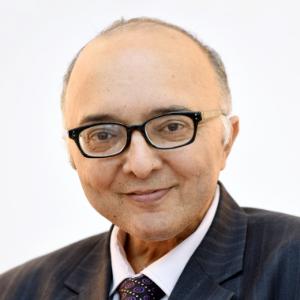
staff photo

Dr. Osama A S Alkishriwo

د. أسامة الكشريو حصل علي درجة البكالوريوس في هندسة الاتصالات والالكترونية من جامعة الزاوية, صبراتة, ليبيا, في سنة 2002 ودرجة الماجستير في هندسة الاتصالات من جامعة طرابلس ,طرابلس, ليبيا, في سنة 2006. في سنة 2013 تحصل علي درجة الدكتوراه في معالجة الاشارات والاتصالات من قسم الهندسة الكهربائية والكمبيوتر, جامعة بيتسبيرج, بنسيلفينيا, بيتسبيرج, الولايات المتحدة الامريكية. هو الان استاذ مساعد بقسم الهندسة الكهربائية والالكترونية, كلية الهندسة.

Publications

Some of publications in Department of Electrical and Electronic Engineering

Norm-Based User Selection Algorithm for Single-RF Space Modulation Techniques with Geometric Mean Decomposition Based Precoding Scheme

Joint user selection algorithm and fully digital Geometric Mean Decomposition (GMD)-based precoding scheme is considered in this paper for single Radio Frequency (RF) Space Modulation Techniques (SMTs), namely, Spatial Modulation (SM) and Space Shift Keying (SSK) schemes. The objective is to jointly perform the Frobenius norm-based user selection algorithm and design GMD-based precoded SMTs with single-RF chain in order to reduce the cost and the power consumption in Multiple Input Multiple Output (MIMO) systems, and to avoid the complicated bit-allocation problem of Singular Value Decomposition (SVD)-based precoding technique. Based on these schemes, the GMD-based precoding transmission carried out in the context of a single-user SMTs can readily be extended to the Multi-user (MU) case. Simulation results demonstrate that single-RF SMTs with GMD-based precoding scheme is capable of outperforming SMTs with SVD-based precoding technique. Meanwhile, MU-SMTs with GMD-based precoding scheme provide significant performance gains over the conventional SM- and SSK-MIMO counterparts and single-user SMTs with GMD-based precoding algorithm, which increase the energy efficiency and the reachability using these schemes. Furthermore, better error performance in MU-SMTs with fully digital GMD-based precoding technique is obtained by selecting any number of users. Therefore, MU-SMTs with GMD-based precoding scheme can be effectively used in various 5G wireless networks.
Taissir Y. Elganimi, Feras F. Alfitouri(1-2021)
Publisher's website

An algorithm for distributing users in Virtual zones in a 3G Cellular network

In this paper, we present an algorithm to generate and distribute Z users in Z virtual zones. In3G networks we have dynamic capacity that depends on the interference levels in the covered areaand the number of active users. This implies that the distance of the mobile user from the basestation is also an important factor because of the signal fading. An algorithm is presented basedon the queuing traffic models for 3G cell written in c++ programming language that distributesusers in different zones assuming that the cell area is virtually divided into Z zones depending onthe number of users (1) (PDF) An algorithm for distributing users in virtual zones in a 3g cellular network. Available from: https://www.researchgate.net/publication/317949812_An_algorithm_for_distributing_users_in_virtual_zones_in_a_3g_cellular_network [accessed May 17 2022].
w. s. abughres, mikee. woodward(10-2006)
Publisher's website

Electrical Impedance Tomography: Regularization Methods and Inequality Constraints For Image Quality

التصوير الطبقي ذو المعاوقة الكهربائية (EIT) هو تقنية تسمح بإعادة بناء صور المقطع العرضي المتعلقة بالمعاوقة الكهربائية من خلال مجموعات مقاسه من سطحها، الدافع الرئيسي من تطوير التصوير الطبقي ذي المعاوقة الكهربائية(EIT)هواحتمالية تطبيقه في مجالات التصوير الطبية، وكما هو معروف فأن النسيج الحيوي له مدي معاوقة كهربائية واسع والعديد من الأحداث الفسيولوجية محسوبة بتغيرات المعاوقة الكهربائية، و موصلية نسيج جسم الإنسان فيها اختلافات كبيرة، لذا يجب أن تعطي صور الموصلية مقارنة عالية بين الأنسجة الناعمة. وتعتمد تقنية التصوير الطبقي ذي المعاوقة الكهربائية على إعادة بناء توزيع الموصلية في جسم الإنسان، وذلك من خلال القياسات الخارجية التي يتم قياسها عند تمرير التيار خلال المجسات الموجودة على الجسم والتيار المار، والجهد المقاس يعتمد على الموصلية المراد إيجادها، وتهدف كل خوارزمياتِ وإعادةَ البناء إلي تَقليل الأخطاءِ، والحصول على صور ممتازةِ. إعادة بناء الموصلية في التصوير الطبقي ذي المعاوقة الكهربائية (EIT) تعتبر مشكلة، وبشكل عملي تحل هده المشكلة ببعض طرق التنظيم أو الفرضيات المطبقة لتحسين نوعية الصورة.للحصول على أفضل بناء صورة ممكنه للتصوير الطبقي ذي المعاوقة الكهربائية تم في هذا العمل إجراء مقارنة بين العديد من طرق التنظيم وكانت معتمدة على تعديل النسبة بين أكبر وأصغر القيم الصغيرة والقريبة للصفر داخل مصفوفة الحساسية وتم تطبيق ذلك في طريقة جديدة.كما تم في هذا العمل أيضاً تطوير طريقة جديدة تتعلق بالتصوير الطبقي ذي المعاوقة الكهربائية وتسجيل الصورة و تم الحصول على المعلومات الكاملة في الصورة الجديدة. Abstract Electrical Impedance Tomography (EIT) is a technique which allowscross-section images related to the local electrical impedance within an object to be reconstructed from sets of measurements made on its surface. The main drive behind the development of Electrical Impedance Tomography (EIT) has been its possible application in medical imaging, as biological tissues are known to exhibit a wide range of electrical impedances and many physiological events are computed by electrical impedance changes. The conductivity of the human tissue has large variations so images of the conductivity distribution should give high contrast of soft tissues. In electrical impedance tomography (EIT) the conductivity distribution is reconstructed from measured boundary potential when current sources are applied to the boundary of the object. Both internal current paths and potential distribution depend on the unknown conductivity distribution. All considerations of the reconstruction algorithms aim to minimize the errors, and to obtain quality images.Reconstruction of the conductivity distribution in electrical impedance tomography (EIT) is an un-determined and ill-posed problem. Typically requiring simplifying assumption or regularization methods to improve image quality.To improve the system’s conditioning and to determine the best image reconstruction in electrical impedance tomography (EIT) several regularization methods in this work are compared, and based on modification of the ratio between the largest and the smallest non-zero singular value of the sensitivity matrix, a new method has been developed.Also in this work a new method concerning electrical impedance tomography image registration has been developed and the full information contained in the new image can be obtained.
زينب احمد العزابى (2008)
Publisher's website