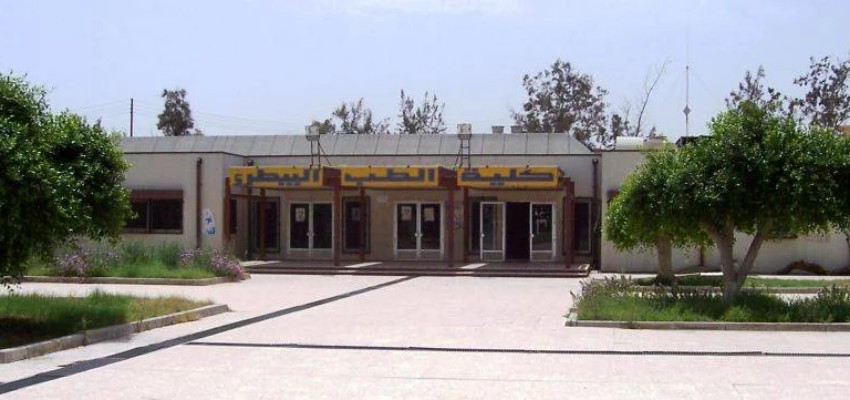
كلية الطب البيطري

المزيد ...

حول كلية الطب البيطري

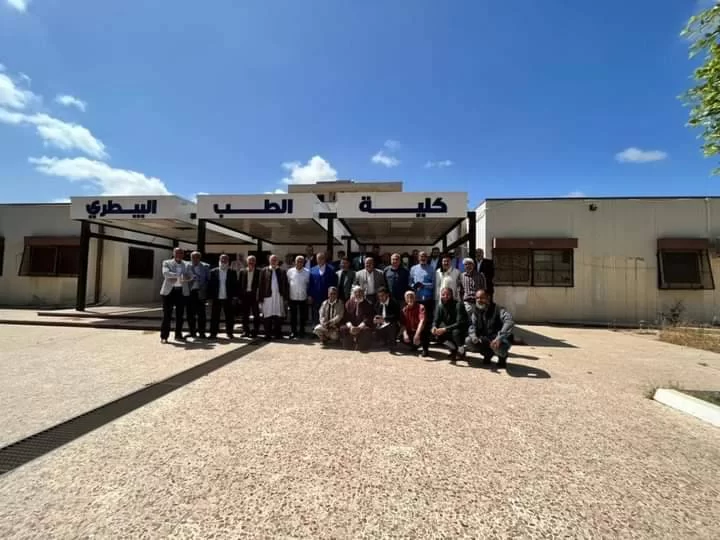
تأسست كلية الطب البيطري عام 1975م كأول كلية للطب البيطري في ليبيا. تعد الكلية من قلاع العلم و المعرفة الهامة بجامعة طرابلس ومؤسسة علمية تلبي إحتياجات المجتمع من الأطباء البيطريين وتساهم في دعم الإقتصاد الوطني من خلال العناية بصحة الحيوان وزيادة الإنتاج الحيواني والمحافظة على صحة الإنسان وحماية البيئة.

حقائق حول كلية الطب البيطري

نفتخر بما نقدمه للمجتمع والعالم

194

المنشورات العلمية

86

هيئة التدريس

245

الطلبة

23

الخريجون

البرامج الدراسية

ماجستير أمراض الدواجن
تخصص أمراض الدواجن

يُنفذ هذا البرنامج من خلال دراسة مقررات دراسية، بحيث لا يقل عدد وحداتها عن (24) وحدة دراسية، وأن لا تزيد عن (30) وحدة دراسية على مدى 3 فصول، بالإضافة إلى إنجاز رسالة بحثية...

التفاصيل

ماجستير أمراض الاسماك
تخصص أمراض الاسماك

يُنفذ هذا البرنامج من خلال دراسة مقررات دراسية، بحيث لا يقل عدد وحداتها عن (24) وحدة دراسية، وأن لا تزيد عن (30) وحدة دراسية على مدى 3 فصول، بالإضافة إلى إنجاز رسالة بحثية...

التفاصيل

من يعمل بـكلية الطب البيطري

يوجد بـكلية الطب البيطري أكثر من 86 عضو هيئة تدريس

staff photo

د. اسامة رجب محمد الواعر

اسامة الواعر هو احد اعضاء هيئة التدريس بقسم الاحياء الدقيقة والطفليات بكلية الطب البيطري. يعمل السيد اسامة الواعر بجامعة طرابلس كـأستاذ مشارك منذ 2012-06-05 وله العديد من المنشورات العلمية في مجال تخصصه وهو خبير دولي سابق في مجال الثروة الحيوانية منذ 2011 حتي 2017 كمنسق اقليمي لبرنامج الحوكمة البيطرية الاوروبي الافريقي وهو رئيس الجمعية الليبية العلمية للاطباء البيطرين ورئيس قسم العلاقات الثقافية والتعاون الدولي بكلية الطب البيطري ومنسق الدراسات العليا بقسم الاحياء الدقيقة والطفيليات بالكلية شغل عدة مناصب منها مدير مكتب اعضاء هيئة التدريس بالكلية ورئيس قسم الاستشارات والبحوث بالكلية ورئيس لجنة الامتحانات ورئيس وحدة الابحاث للحشرات الناقلة للامراض وعدة مناصب اخرى

منشورات مختارة

بعض المنشورات التي تم نشرها في كلية الطب البيطري

Characterization of a spirochaete isolated from a case ofbovine digital dermatitis

Aims: The aim of the study was to characterize a spirochaete isolated from thelesions of a cow with digital dermatitis (DD).Methods and Results: The characterization was on the basis of its light andelectron microscopic appearance, enzymic profile and DNA sequence analysisof its flagellin and 16S rRNA genes. The spirochaete was 6–8-lm long and 0Æ2–0Æ3 lm in diameter, and possessed seven to eight periplasmic flagella, withthree to five helical turns. The enzymic profile of the bacterium resembles, butis not identical to that of Treponema brennaborense. Its flagellin gene sequencewas identical to that of Treponema phagedenis but distinct from that of anovine spirochaete. Analysis of a 1477-bp region of the 16S rRNA genes indica-ted that this is a Treponema species and that it is indistinguishable from someisolates made from cases of bovine DD in the United States. Finally, electronmicroscopy revealed the presence of myovirus-like bacteriophage particles in allcultures of the treponeme examined.Conclusions: The spirochaete isolate was identified as a Treponema species clo-sely related to some isolates from the United States (by 16S rDNA) and to T.phagedenis (by flagellin gene sequence) and is associated with bacteriophageparticles.Significance and Impact of the Study: The fact that the isolates with the sameor very similar 16S rDNA sequences have been obtained from cases of bovineDD in cattle in different countries at different times, lends further support tothe hypothesis that treponemes play a role in the pathogenesis of this disease arabic 10 English 72
Abdulgader Dhawi Alfitouri Dhawi(1-2021)
Publisher's website

Extant of pathogenic and spoilage microorganisms in whole muscle meat, meat products and seafood sold in Libyan market.

Background: Whole muscle meat, meat products, and seafood contain different nutrients in adequate quantity providing a better environment for presence and replication of different microorganisms. There are underreported and inaccurate estimations of foodborne diseases due to the lack of effective surveillance systems in Libya. Aim: To determine the extent of microbiological contamination of whole muscle meat, meat products, and seafood. Methods: A total number of 731 samples of retail meat were collected from different stores in four cities in Libya. Samples were analyzed for aerobic plate count and subjected to microbiological enumeration and isolation techniques, followed by molecular identification by PCR and partial sequencing of 16S rDNA. Results: The results showed contamination of samples with enteric and spoilage bacteria. Fifteen genera of spoilage bacteria yielded 149 isolates which were detected and identified by PCR and partial sequencing of 16S rDNA as: Proteus spp., Provedencia spp., Raouttella ornithinolytical, Citrobacter spp., Enterobacter spp., Morganella morgi, Shewanella algea, Rhodobacter capsulatus, Listonella pelagia, Kluyvera spp., Pectobacterium spp., Brenneria spp., Klebsiella spp., Acintobacter radioresistens, and Pantoea spp. While for pathogenic bacteria, 143 isolates distributed among nine genera were identified by PCR and partial sequencing of 16S rDNA as: Bacillus spp., Escherichia spp., Shigella spp., Enterococci spp., Cronobacter spp., Staphylococci spp., Salmonella spp., Aeromonas spp., and Vibrio spp.. Many isolated bacteria are zoonotic bacteria with high importance for public health. Conclusion: Excessive handling and processing of meat and meat products seems to be one of the poorest microbiological qualities. These findings ought to be helpful in risk assessments and quality assurance of meat in order to improve food safety.
Salah M. Azwai(1-2020)
Publisher's website

Biosecurity and geospatial analysis of mycoplasma infections in poultry farms at Al-Jabal Al-Gharbi region of Libya

Geospatial database of farm locations and biosecurity measures are essential to control disease outbreaks. A study was conducted to establish geospatial database on poultry farms in Al-Jabal Al-Gharbi region of Libya, to evaluate the biosecurity level of each farm and to determine the seroprevalence of mycoplasma and its relation to biosecurity level. A field team of 7 Veterinarians belongs to the National Center of Animal Health was assigned for data recording and collection of blood samples. Personal information of the producers, geographical locations, biosecurity measures and description of the poultry farms were recorded. The total number of poultry farms in Al-Jabal Al-Gharbi Region is 461 farms distributed in 13 cities. Out of these, 102 broiler farms and one broiler breeder farm (10 houses) which were in operation during team visit were included in this study. Following collection of blood, sera were separated and tested by Enzyme-linked immunosorbent assay (ELISA) for the presence of antibodies against Mycoplasma (General antigen for M. gallisepticum and M. synoviae). The seroprevalence of Mycoplasma in the region was 28% (29 poultry farms out of 103 were infected). About 50% (23 out of 47) of poultry farms located in Garian city were infected with Mycoplasma and one significant cluster of Mycoplasma infection in the city was identified. Low level of biosecurity was found in poultry farms of the region. Out of the 103 farms included, 63% of poultry houses has a ground of soil and 44% of them has uncoated walls which may influence the proper cleaning and disinfection. Almost 100% of the farms are at risk of exposure to diseases transmitted by wild birds such as avian influenza and Newcastle disease due to absence of wild birds control program. Although, 81% of the farms have entry restrictions, only 20% have disinfectants at entry which increase the risk of exposure to pathogens. The results of this study highlight the weakness points of biosecurity measures in poultry farms of Al-Jabal Al-Gharbi region and high seroprevalence of mycoplasma. Data collected in this study will assist the Veterinary authorities to apply effective disease control strategies.
Abdulwahab Kammon(3-2017)
Publisher's website

قناة كلية الطب البيطري

بعض الفيديوات التي تعرض مناشط كلية الطب البيطري

اطلع علي المزيد