كلية الطب البيطري

المزيد ...

حول كلية الطب البيطري

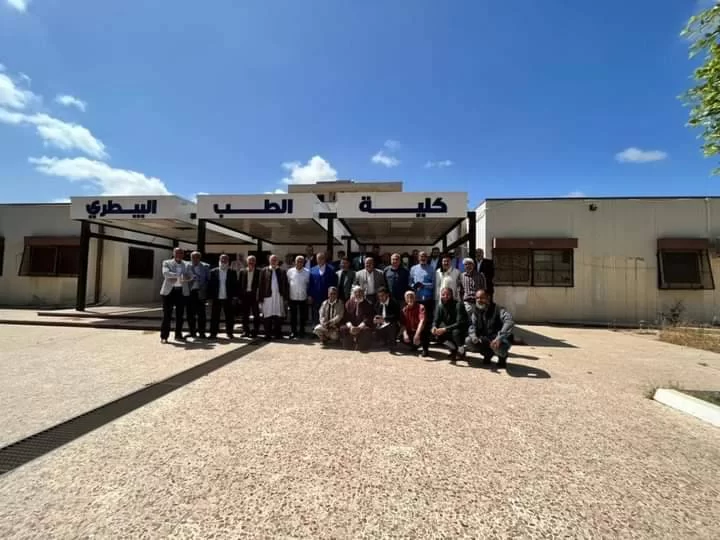
تأسست كلية الطب البيطري عام 1975م كأول كلية للطب البيطري في ليبيا. تعد الكلية من قلاع العلم و المعرفة الهامة بجامعة طرابلس ومؤسسة علمية تلبي إحتياجات المجتمع من الأطباء البيطريين وتساهم في دعم الإقتصاد الوطني من خلال العناية بصحة الحيوان وزيادة الإنتاج الحيواني والمحافظة على صحة الإنسان وحماية البيئة.

حقائق حول كلية الطب البيطري

نفتخر بما نقدمه للمجتمع والعالم

194

المنشورات العلمية

86

هيئة التدريس

245

الطلبة

23

الخريجون

البرامج الدراسية

ماجستير أمراض الدواجن
تخصص أمراض الدواجن

يُنفذ هذا البرنامج من خلال دراسة مقررات دراسية، بحيث لا يقل عدد وحداتها عن (24) وحدة دراسية، وأن لا تزيد عن (30) وحدة دراسية على مدى 3 فصول، بالإضافة إلى إنجاز رسالة بحثية...

التفاصيل

ماجستير أمراض الاسماك
تخصص أمراض الاسماك

يُنفذ هذا البرنامج من خلال دراسة مقررات دراسية، بحيث لا يقل عدد وحداتها عن (24) وحدة دراسية، وأن لا تزيد عن (30) وحدة دراسية على مدى 3 فصول، بالإضافة إلى إنجاز رسالة بحثية...

التفاصيل


من يعمل بـكلية الطب البيطري

يوجد بـكلية الطب البيطري أكثر من 86 عضو هيئة تدريس

staff photo

د. عبدالقادر الضاوي الفيتوري الضاوي

عبدالقادر هو احد اعضاء هيئة التدريس بقسم الاحياء الدقيقة والطفليات بكلية الطب البيطري. يعمل السيد عبدالقادر بجامعة طرابلس كـاستاذ مشارك منذ 01-04-2021 وله العديد من المنشورات العلمية في مجال تخصصه

منشورات مختارة

بعض المنشورات التي تم نشرها في كلية الطب البيطري

In Vitro Antibacterial Activity of Flavonoid Extracts of Two Selected Libyan Algae against Multi-Drug Resistant Bacteria Isolated from Food Products

Abstract This study aimed to evaluate the antibacterial activity of flavonoids extracted from two Libyan brown algae namely Cystoseira compressa and Padina pavonica using microwave-assisted extraction method against pathogenic bacteria isolated from meat, meat products, milk and dairy products (Staphylococcus aureus subsp. aureus (5 isolates), Bacillus cereus (3 isolates), Bacillus pumilus (1 isolate), Salmonella enterica subsp. enteric (4 isolates) and Enterohaemorrhagic Escherichia coli O157 (EHEC O157) (4 isolates)). All of these isolates were muti-drug resistant with high MAR index. The results showed that C. compressa extract exhibited better and stronger antibacterial activities against the seventeen tested isolates with inhibition zones diameter ranged from 14 - 22 mm compared to P. pavonica extract which showed positive effect against 9 isolates with low inhibition zone ranged from 11 - 16.5 mm. Flavonoids extracted from C. compressa also displayed the best spectrum of bactericidal effect with a ratio MBC/MIC ≤ 4 obtained on all susceptible tested bacterial strains. Flavonoids and proanthocyanidins significantly contributed to the antibacterial properties. The mode of action of these active extracts is under investigation.
Hesham Taher Naas(1-2017)
Publisher's website

القولونيات في الحليب و بعض منتجات الألبان المباعة بأسواق طربلس مع إشارة خاصة إلى الاشريكية القولونية الممرضة Coliforms in Milk and Some Dairy Products Sold in Tripoli Markets with Special Reference to Pathogenic Escherichia coli

Abstract: This study was carried out to detect different coliforms members with special reference to the occurrence of the pathogenic Escherichia coli existing in raw cow`s milk and some dairy products. 105 samples (35 raw milk, 35 fermented milk, and 35 ricotta cheeses) were randomly collected from different markets in Tripoli-city /Libya. In this study, two methods for coliform counting were used. The first one was the most probable number technique MPN using liquid Lauryl Sulphate Tryptone broth (LST) with a three-tube series and the second method was the plate count method using violet red bile lactose agar VRBA. Also different techniques were used to find comparative results by using the BD phoenix system, the VITEK® 2 Compact system and KB003Hi25™ Enterobacteriaceae Identification Kit methods for coliform counts in raw milk, fermented milk and ricotta chesses. The coliform bacteria were positive in all 35 (100%) samples of both raw milk and fermented milk, while 33 (94.3%) samples out of 35of ricotta cheese by using MPN-technique. Whereas, Coliform bacteria were positive in 25 (71.4%) samples of raw milk, 34 (97.1%) samples of fermented milk and in 22 (62.9%) samples of ricotta cheese by using VRBA-technique. However, the fecal Coliform bacteria were recorded in 30 (85.7%) samples of raw milk, 32 (91.4%) samples of fermented milk and in 24 (68.6%) samples of ricotta by the used MPN-technique. Whereas, fecal Coliform bacteria were detected in 11 (31.4%) samples of raw milk, 19 (54.3%) samples of fermented milk and in only 9 (25.7%) samples of ricotta cheese by the VRBA-technique. Moreover, the most commonly identified important pathogenic bacteria Gram-negative isolated the highest overall incidence rate was for Escherichia coli 117(58.5%) and Klebsiella pneumonia spp pneumonia 47(23.5%) out of 200 randomly selected from 900 isolates. These findings results revealed that a high number of bacteria, which provide an evidence for the lack of milk hygiene either during milking or transporting and storages Statistical analyses revealed significant T-test at level P
خديجة مختار التواتي (2015)
Publisher's website

Occurrence and antibiogram of multidrug-resistant Salmonella enterica isolated from dairy products in Libya

Background and Aim: Foodborne illnesses are a serious challenge to human health and the economic sector. For example, salmonellosis remains a burden in developed and developing nations. Rapid and reliable molecular methods to identify Salmonella strains are essential for minimizing human infection. This study aimed to identify Salmonella spp. in raw milk and dairy products using conventional and molecular techniques and to test the antibiotic susceptibility of the isolated strains. Materials and Methods: One hundred and thirty-one milk and dairy product samples were randomly collected from different localities in Libya. Samples were examined for the presence of Salmonella by conventional culture techniques, including cultivation in Rappaport-Vassiliadis broth and streaking on xylose lysine deoxycholate agar. Identification also used polymerase chain reaction and partial sequencing of 16S rDNA. Twenty-four antibiotics were used for the examination of antimicrobial resistance of Salmonella spp. isolates with the agar disk diffusion method (Kirby–Bauer technique). Multi-antibiotic resistance index and antibiotic resistance index (ARI)for Salmonella enterica isolates were calculated. Results: Twenty-one of 131 samples (16%) were positive for Salmonella spp. recovered from 9 (16%), 2 (11%), 4 (22.2%), and 6 (46%) samples of raw cow milk, fermented raw milk, and fresh locally made soft cheeses, Maasora and Ricotta), respectively. Samples of ice cream, milk powder, and infant formula showed no Salmonella spp. contamination. Only 9 of 21 (42.8%) isolates were confirmed as S. enterica by partial sequence 16S rDNA analysis. All isolates were resistant to amoxycillin, bacitracin, penicillin G, lincomycin, vancomycin, clindamycin,
Salah M. Azwai(5-2022)
Publisher's website

قناة كلية الطب البيطري

بعض الفيديوات التي تعرض مناشط كلية الطب البيطري

اطلع علي المزيد