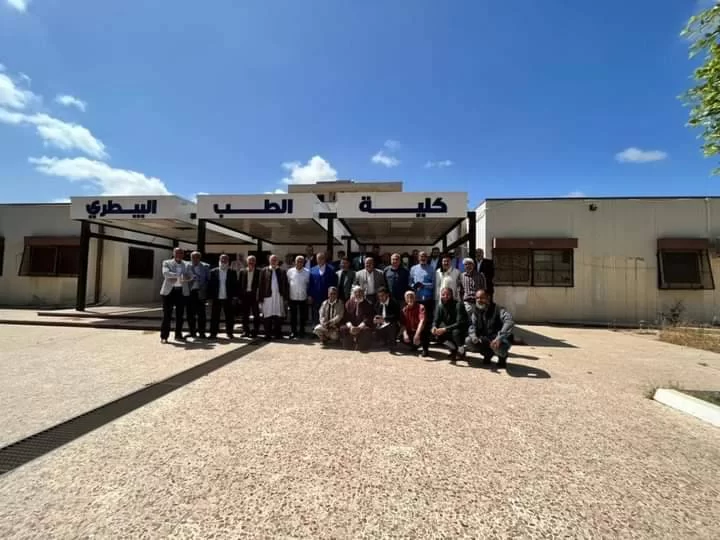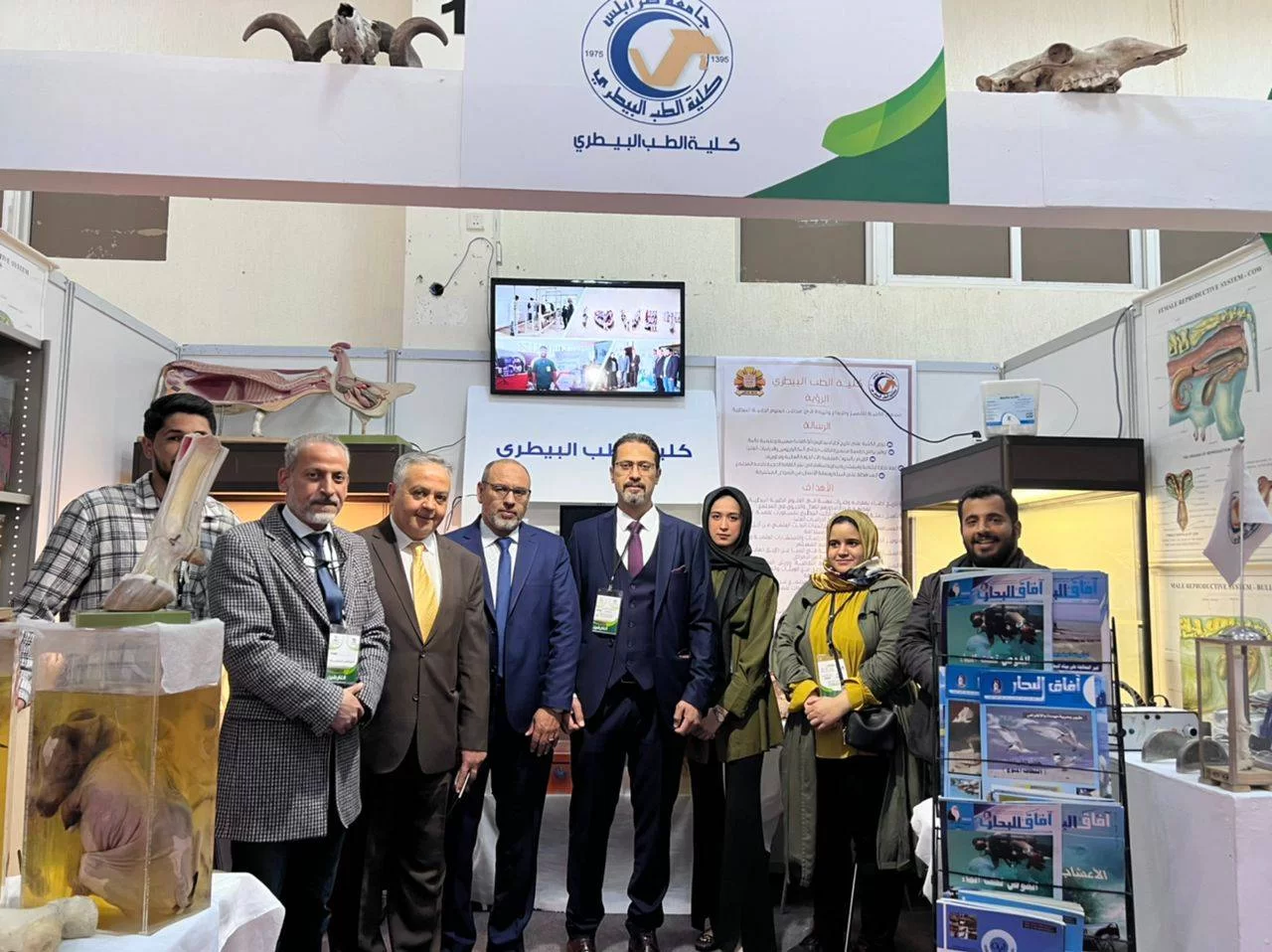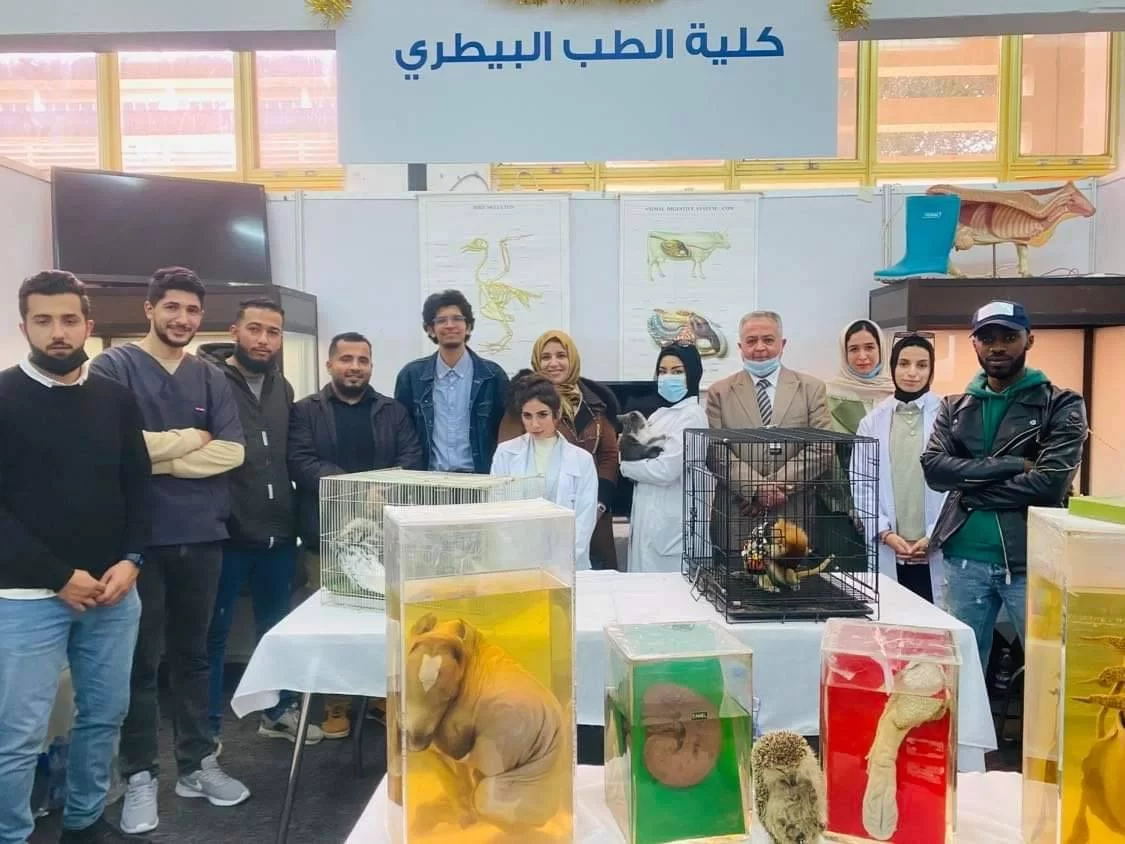
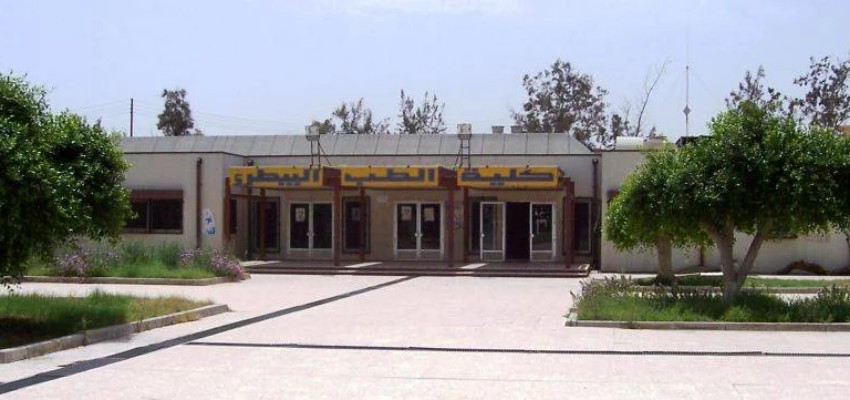


كلية الطب البيطري

المزيد ...

حول كلية الطب البيطري

تأسست كلية الطب البيطري عام 1975م كأول كلية للطب البيطري في ليبيا. تعد الكلية من قلاع العلم و المعرفة الهامة بجامعة طرابلس ومؤسسة علمية تلبي إحتياجات المجتمع من الأطباء البيطريين وتساهم في دعم الإقتصاد الوطني من خلال العناية بصحة الحيوان وزيادة الإنتاج الحيواني والمحافظة على صحة الإنسان وحماية البيئة.

حقائق حول كلية الطب البيطري

نفتخر بما نقدمه للمجتمع والعالم

194

المنشورات العلمية

86

هيئة التدريس

245

الطلبة

23

الخريجون

البرامج الدراسية

ماجستير أمراض الدواجن
تخصص أمراض الدواجن

يُنفذ هذا البرنامج من خلال دراسة مقررات دراسية، بحيث لا يقل عدد وحداتها عن (24) وحدة دراسية، وأن لا تزيد عن (30) وحدة دراسية على مدى 3 فصول، بالإضافة إلى إنجاز رسالة بحثية...

التفاصيل

ماجستير أمراض الاسماك
تخصص أمراض الاسماك

يُنفذ هذا البرنامج من خلال دراسة مقررات دراسية، بحيث لا يقل عدد وحداتها عن (24) وحدة دراسية، وأن لا تزيد عن (30) وحدة دراسية على مدى 3 فصول، بالإضافة إلى إنجاز رسالة بحثية...

التفاصيل


من يعمل بـكلية الطب البيطري

يوجد بـكلية الطب البيطري أكثر من 86 عضو هيئة تدريس

staff photo

أ.د. أبوبكر محمد ميلاد قرباج

أبوبكر قرباج هو احد اعضاء هيئة التدريس بقسم الرقابة الصحية على الاغذية بكلية الطب البيطري. يعمل السيد أبوبكر قرباج بجامعة طرابلس كـأستاذ 1992 وله العديد من المنشورات العلمية في مجال تخصصه

منشورات مختارة

بعض المنشورات التي تم نشرها في كلية الطب البيطري

Alkaloids rich extracts from brown algae against multi-drug resistant bacteria by distinctive mode of action.

Algal alkaloids are widely used for their pharmacological properties as antimicrobial agents. This study determined the antibacterial activities of algal alkaloid-rich extracts against isolates of multidrug-resistant Staphylococcus aureus and enterohaemorrhagic Escherichia coli (EHEC) O157, as well as the probable mode of action underlying their antibacterial effect. The total alkaloids were extracted from two Libyan brown algae, namely Sargassum hornschuchii and Cystoseira compressa and tested against six different isolates from the bacteria mentioned above using the agar-well diffusion method, and their mode of action on isolates was evaluated by several bacterial physiological indicators, including intracellular potassium ion efflux and nucleotide leakage. Also, the extracts' hemolytic activity was assessed as an indicator of their cytotoxicity on red blood cells. Although not to the same extent, both alkaloid extracts presented antibacterial activities against all tested isolates with no evidence of bacterial regrowth. The alkaloid extract from S. hornschuchii exerted the best effect on bacteria growth with minimum inhibitory concentration values ranging between 125 and 500 mg/mL. The results showed that the alkaloid extracts significantly induced a distinct release of nucleotide and potassium ions out of the cell membrane, indicating that they cause a change in the fluidity or permeability or both of the cell membrane. Moreover, the results revealed that there were very low cytotoxic effects. Therefore, algal alkaloids may contribute to the development of potential antibacterial agents in the future.
Salah M. Azwai(1-2021)
Publisher's website

Effect of Some Libyan Medicinal Plants on Hematological Profile, Cholesterol Level and Immune Status of Broiler Chicken

A study was conducted to determine the effect of three native plants from El-Jabal al ELAkhdar, (Libya) on hematological profile, cholesterol and immune response to ND vaccine in broiler chickens. A total of 1260 one-day-old male Cobb chickens were used in the experiment. Chickens were assigned to 7 treatment groups (6 replicates per treatment). The dietary treatments included basal diet with no additives (control), and 6 other dietary treatments (Arbutus pavarii, Salvia officinalis and Zizyphus Vulgaris) each of which was added at the rate of 0.5g and 1g/kg of basal diet. Results explicitly revealed that no significant change in TLC between the treated and control groups has been recorded. A significant heteropenia was recorded at the third week of treatment with 1% A. Pavarii 0.5 S. Officinalis and 0.5 Z. Vulgaris when compared to control group. However, the lymphocytic count show a significant increase (P≤0.05) in all treated groups compared to the control groups. Immunologically, an enhanced humeral immune response was very obvious based upon the significant elevation of antibody titer at the third week of treatment for all groups received 1 % of the three types of plants. Interestingly , cholesterol levels were significantly elevated at the six week of treatment with 0.5 % Z. Vulgaris while highest decline in cholesterol levels were recorded in group that have received 0.5 S. Officinalis.
ِAbdulatif A. Asheg(3-2015)
Publisher's website

Molecular Identification, Prevalence and Antimicrobial Susceptibility Profile of Cronobacter spp. Cultivated on a Chromogenic Medium in Libya

Background: Cronobacter sakazakii is associated with illness in infants from contaminated powdered infant formula (PIF) and it is frequently recovered from PIF factory environment. Limited information is available on contamination of other food such as dairy and meat products in Libya. Methods and findings: A total of 261 samples of milk, dairy products and coarse ground meat products were collected from different localities in Libya. Samples were examined for Cronobacter spp. with an adapted ISO /DTS 22964 cultural protocol using HiChrome™ Enterobacter sakazakii modified agar coupled with 16S rDNA partial sequencing to identify the organism. The identified isolates were biochemically characterized and tested for their ability to produce yellow pigment. Out of the 261 analyzed samples, only two beef burgers, one fermented milk “Laban”, one she-camel’s milk, two raw cow’s milk, two cereal baby food, one Maassora cheese and one ready to feed baby milk were contaminated with Cronobacter spp. at a total rate of 3.8%. Accuracy of HiChrome Ent. sakazakii modified agar reach 100% as all of blue-green presumptive colonies were confirmed Cronobacter spp. while other colorless, greenish or with blue center colonies which competed growth with Cronobacter spp. were predominantly Escherichia coli followed by Klebsiella spp. and to less extent Pseudomonas luteola, Citrobacter freundii and Acinetobacter baumanii. Moreover, the isolated strains of Cronobacter were resistant to Amoxicillin, Erythromycin, Vancomycin and Streptomycin, and sensitive to Doxycycline, Enrofloxacin and Gentamycin. Conclusion: This study documents for the first time the occurrence of Cronobacter spp. in beef burger, raw cow’s milk, fermented milk “Laban”, she-camel’s milk, Maassora cheese, cereal baby food and ready to feed baby milk sold in Libya, by using conventional methods, biochemical tests and molecular techniques.
Ibrahim Eldaghayes(12-2017)
Publisher's website

قناة كلية الطب البيطري

بعض الفيديوات التي تعرض مناشط كلية الطب البيطري

اطلع علي المزيد