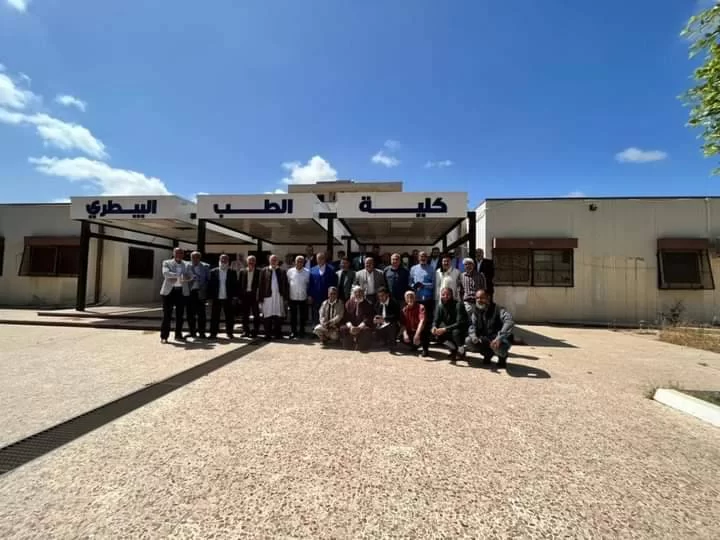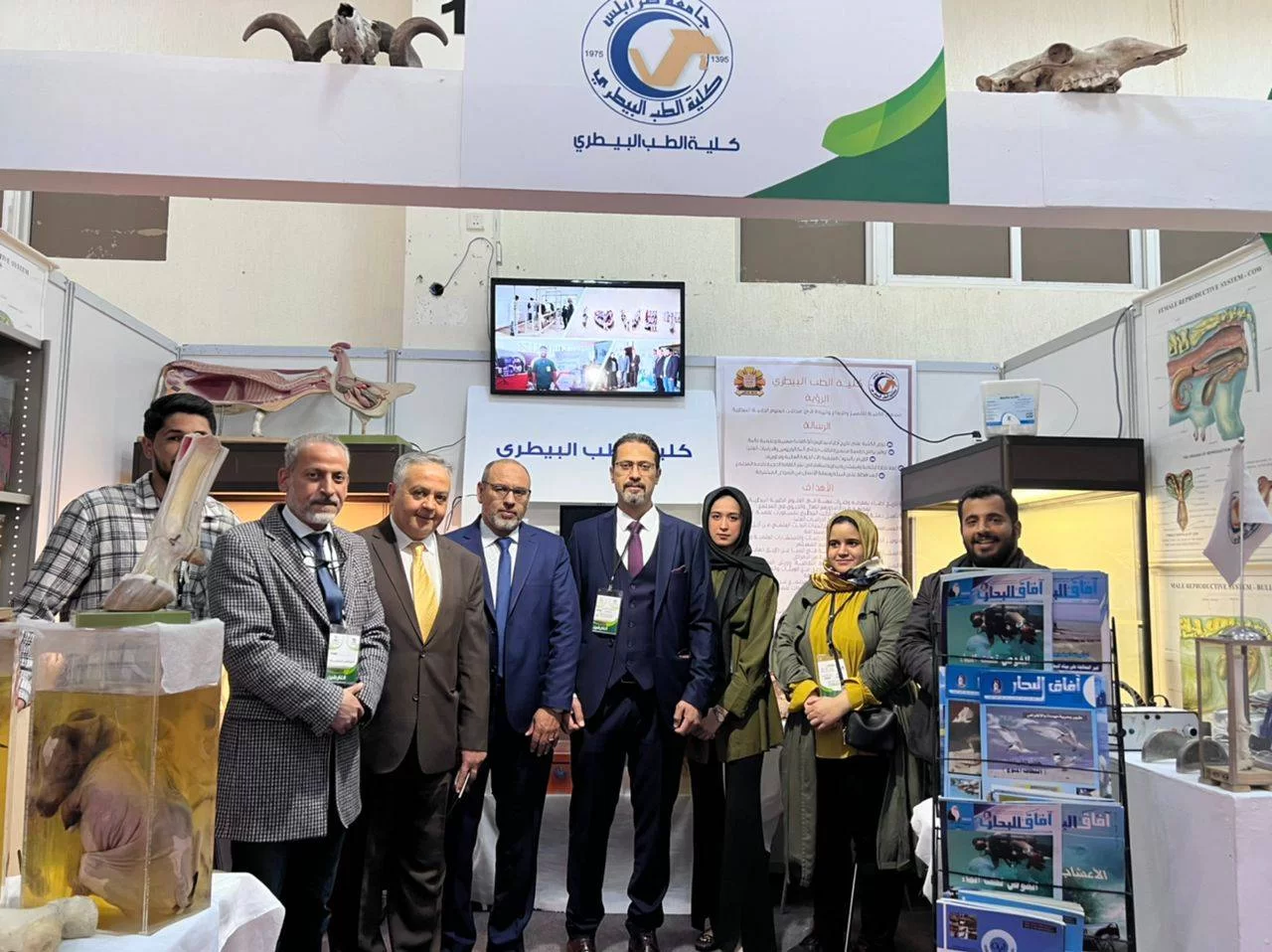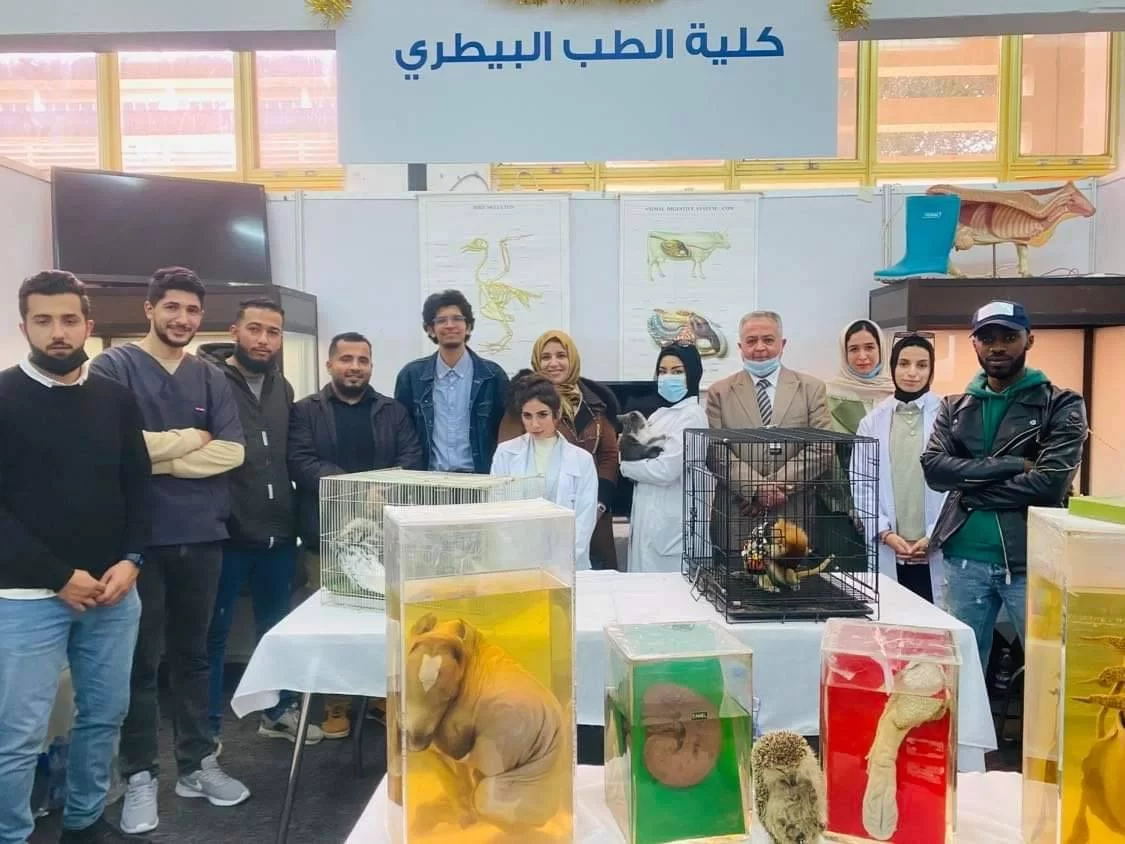
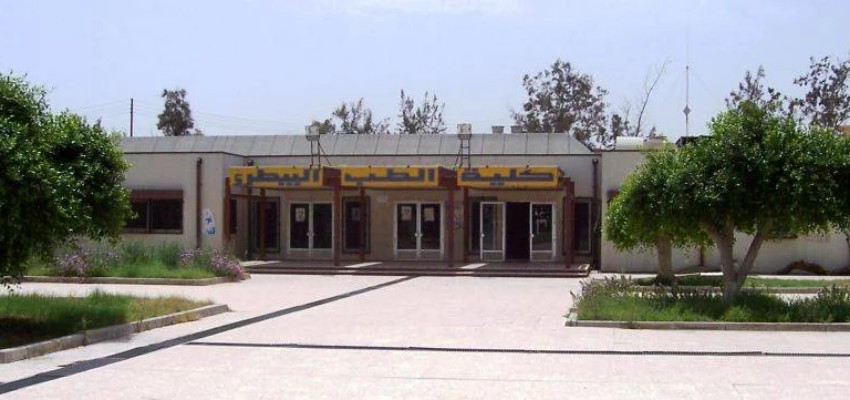
كلية الطب البيطري

المزيد ...

حول كلية الطب البيطري

تأسست كلية الطب البيطري عام 1975م كأول كلية للطب البيطري في ليبيا. تعد الكلية من قلاع العلم و المعرفة الهامة بجامعة طرابلس ومؤسسة علمية تلبي إحتياجات المجتمع من الأطباء البيطريين وتساهم في دعم الإقتصاد الوطني من خلال العناية بصحة الحيوان وزيادة الإنتاج الحيواني والمحافظة على صحة الإنسان وحماية البيئة.

حقائق حول كلية الطب البيطري

نفتخر بما نقدمه للمجتمع والعالم

194

المنشورات العلمية

86

هيئة التدريس

245

الطلبة

23

الخريجون

البرامج الدراسية

ماجستير أمراض الدواجن
تخصص أمراض الدواجن

يُنفذ هذا البرنامج من خلال دراسة مقررات دراسية، بحيث لا يقل عدد وحداتها عن (24) وحدة دراسية، وأن لا تزيد عن (30) وحدة دراسية على مدى 3 فصول، بالإضافة إلى إنجاز رسالة بحثية...

التفاصيل

ماجستير أمراض الاسماك
تخصص أمراض الاسماك

يُنفذ هذا البرنامج من خلال دراسة مقررات دراسية، بحيث لا يقل عدد وحداتها عن (24) وحدة دراسية، وأن لا تزيد عن (30) وحدة دراسية على مدى 3 فصول، بالإضافة إلى إنجاز رسالة بحثية...

التفاصيل

من يعمل بـكلية الطب البيطري

يوجد بـكلية الطب البيطري أكثر من 86 عضو هيئة تدريس

staff photo

د. عبدالرؤوف عمر أحمد قاجة

عبدالرؤوف قاجة هو احد اعضاء هيئة التدريس بقسم الجراحة والتناسليات بكلية الطب البيطري. يعمل السيد عبدالرؤوف قاجة بجامعة طرابلس منذ 2003-03-09 وله العديد من المنشورات العلمية في مجال تخصصه

منشورات مختارة

بعض المنشورات التي تم نشرها في كلية الطب البيطري

الكشف عن بكتيريا الفيبريو الشائعة التي تصيب اسماك المرجان في المنطقةالساحلية بطرابلس ليبيا

بكتيريا الفيبريو وهي مجموعة من البكتيريا سالبة الجرام التي تصيب في الأساس أسماك المياه المالحة والشروب. بكتيريا الفيبريو توجد بصورة كثيفة في مياه البحر الملوثة و خصوصا تلك الملوثة بمياه الصرف الصحي. في الدراسة الحالية تم عزل وتصنيف عدد أربعة عترات من ميكروب الفيبريو من أسماك المرجان العادي التي تم تجميعها من المنطقة الساحلية لطرابلس خلال موسم 2014 حتي موسم الربيع 2015 . تم تحديد هوية العترات المعزولة والتأكيد علي انها ميكروب V. Parahaemolyticus, Vibrio vulnificus, Vibrio fluvialis, Vibrio alginolyticus وباستخدام بعض التقنيات البيوكيميائية التقليدية و تقنية API20E. وأكدت الاختبارات اتفاق الخصائص البيوكيميائية مع الخصائص لقياسية لذلك الميكروب و المسجلة في كتاب بيرجز المرجعي لتصنيف البكتيريا (Bergey’s Manual Bactriology) بالبحث تبين أن ميكروب V. fluvialis سجل أعلى نسبة عزل خلال موسم صيف 2014 (33.33%) وربيع 2015 (27.77%) بينما مثل ميكروب V. ulnificus اقل نسبة عزل في موسم صيف 2014 بنسبة (4.44%) وربيع 2015 (5.55%). في موسم شتاء 014 مثلت V. Parahaemolyticus أعلى نسبة إصابة (20%) بينما مثل ميكروب V. alginolyticus أقل نسبة إصابة (2.22%). بالنسبة لاختبار الحساسية وجد أن معظم ميكروب V. alginolyticus و V. Parahaemolyticus هي حساسة لكل من الدوكسيسيكلين و البوليميكسين و مقاومة لكل من الاوكسيتيتر اسكين و الفلورفينيكول و الا مبيسيلين. و على الرغم من ذلك فإن ميكروب V. fluvialis أثبت حساسية كل المضادات الحيوية المستخدمة باستثناء الأمبيسيلين بينما أثبتت الاختبارات حساسية ميكروب Vibrio vulnificus لكل من الدوكسيسيكلين و البوليميكسينو الاوكسيتيتر اسكلين و مقاومة للفلورفينيكول و السلفاميثاكسازول- تراميثوبريم و الأمبيسلين و الذي يظهر اختلافا ملحوظا عن باقي العزلات البكتيرية. و في المجمل فإن النتائج تعطى مؤشر عن ازدياد مستمر للتلوث بمياه الصرف الصحي في معظم أماكن تجميع العينات في المنطقة الممتدة من تاجوراء حتى جنزور على الشاطئ الغربي لمدينة طرابلس ليبيا. Abstract: Vibrios are a group of Gram negative septicemic bacteria that mainly affect marine and estuarine fishes. Vibrios are ubiquitous in environmentally polluted seawater with especial reference to municipal sewage. In the current study, four main species of Vibrios have been frequently isolated / identified from the Common Pandora fish (Pagellus erythrinus) collected through summer 2014 to spring 2015. The identities of the retrieved isolates were confirmed as Vibrio vulnificus (V.vulnificus), Vibrio Parahaemolyticus (V. Parahaemolyticus), Vibrio fluvialis (V.fluvialis) and Vibrio alginolyticus (V. alginolyticus) depending on their morphochemical results obtained from the adopted conventional and semi-automated biochemical tests (API20E). All isolates were consistent with the standard criteria of the aforementioned Vibrio species stated by the Bergey's Manual of Systemic Bacteriology. The research has revealed that V. fluvialis was the highest isolated species (33.33%) in Summer 2014 and Spring 2015(27.77%), while V. vulnificus was the lowest isolated through summer 2014 (4.44%) and spring 2015(5.55%) . In winter season 2014, V. Parahaemolyticus presented the highest percentage of infection (20%), while V. alginolyticus was associated with the lowest percentage of infection (2.22%). Antibiogram has revealed that most of the retrieved V. alginolyticus and V.Parahaemolyticus were sensitive to Doxycyclin and Polymyxin and resistant to Oxytetracyclin, Florfenicol and Ampicillin. However V. fluvialis isolate were sensitive to all tested antibiotics with the exception of Ampicillin. Interestingly V.vulnificus were sensitive to Doxycyclin, Polymyxin, Oxytetracyclin, while resistant to Florfenicol, Sulfamethoxzole -trimethoprim and Ampicillin, which is remarkably different from the antibiogram recorded for other retrieved Vibrio species. Conclusively, the achieved results throughout the current study is indicative of a consistently growing municipal sewage pollution across the sampling sites extending from Tajoura to Janzour at the western coast of Tripoli, Libya.
محمد بشير منصور التكالي (2015)
Publisher's website

Blood profile in normal one humped dromedary (Camelus dromedarius) camel breeds in Libya. Part 2: Effect of breed variation on biochemical and haematological blood profile

Abstract As little is known about the blood profile of camels in libya, this article is the second of a 4-part series describing the biochemical and haematological blood profile in Libyan camels. In Part 1 of these manuscripts, the overall blood biochemical and haematological mean values of camels in Libya were determined, parts 2-4 evaluates the effects of breed, gender and age respectively on these values. Blood samples were collected from three camel breeds, namely, Fakhreya, Sirtaweya and Mahari, and the levels of enzymes, metabolites, electrolytes and haematological indices were measured. The blood of the Sirtaweya breed showed (i) higher levels of aspartate aminotransferase (AST), albumin and Phosphorus (Ph), than the other two breeds, (ii) higher levels of lactate dehydrogenase (LDH), amylase (AMS) and total proteins than the Fakhreya breed and (iii) higher levels of glucose, triglycerides, total cholesterol, Very Low Density Lipoprotein (VLDL), Low Density Lipoprotein (LDL), Calcium (Ca), Packed Cell volume (PCV), Mean Corpuscular Volume (MCV) and Albumin/Globulin (A/G) ratio than the Mahari breed. The Fakhreya breed had (i) higher levels of urea, Iron (Fe), Haemoglobin (Hb), Mean Corpuscular Haemoglobin (MCH) and neutrophils number than the other two breeds, (ii) higher levels of glucose, A/G, LDL, Ca, PCV, MCV and monocytes number than the Mahari breed and (iii) higher levels of erythrocyte osmotic fragility, MCH and Mean Corpuscular Hemoglobin Concentration (MCHC) than the Sirtaweya breed. The Mahari breed had (i) higher levels of globulin than the other two breeds, (ii) higher levels of AMS than the Fakhreya breed and (iii) higher levels of erythrocyte osmotic fragility, Erythrocyte Sedimentation Rate (ESR), MCHC than the Sirtaweya breed. The tested blood parameters in the three Libyan breeds in this study were affected by breed variations. arabic 28 English 143
Anwar Mustafa Abdalhadi Abdalmula, F. A. Alnagar, Amal Omar Elarif Buker, Fathia mahmoud Mohammad Ashour, I. M. Abograra , Mansur Ennuri Moftah Shmela(10-2018)
Publisher's website

Occurrence and antibiogram of multidrug-resistant Salmonella enterica isolated from dairy products in Libya

Background and Aim: Foodborne illnesses are a serious challenge to human health and the economic sector. For example, salmonellosis remains a burden in developed and developing nations. Rapid and reliable molecular methods to identify Salmonella strains are essential for minimizing human infection. This study aimed to identify Salmonella spp. in raw milk and dairy products using conventional and molecular techniques and to test the antibiotic susceptibility of the isolated strains. Materials and Methods: One hundred and thirty-one milk and dairy product samples were randomly collected from different localities in Libya. Samples were examined for the presence of Salmonella by conventional culture techniques, including cultivation in Rappaport-Vassiliadis broth and streaking on xylose lysine deoxycholate agar. Identification also used polymerase chain reaction and partial sequencing of 16S rDNA. Twenty-four antibiotics were used for the examination of antimicrobial resistance of Salmonella spp. isolates with the agar disk diffusion method (Kirby–Bauer technique). Multi-antibiotic resistance index and antibiotic resistance index (ARI)for Salmonella enterica isolates were calculated. Results: Twenty-one of 131 samples (16%) were positive for Salmonella spp. recovered from 9 (16%), 2 (11%), 4 (22.2%), and 6 (46%) samples of raw cow milk, fermented raw milk, and fresh locally made soft cheeses, Maasora and Ricotta), respectively. Samples of ice cream, milk powder, and infant formula showed no Salmonella spp. contamination. Only 9 of 21 (42.8%) isolates were confirmed as S. enterica by partial sequence 16S rDNA analysis. All isolates were resistant to amoxycillin, bacitracin, penicillin G, lincomycin, vancomycin, clindamycin, and cloxacillin with an ARI of 0.042. In contrast, all tested strains were sensitive to levofloxacin, doxycycline, and ciprofloxacin. In addition, all of the tested isolates (100%) were resistant to more than one antibiotic. Conclusion: This study demonstrated the applicability of molecular techniques, compared with conventional methods, as preferable for the identification of Salmonella in milk and dairy products and thus reduction of milk-borne transmission to the consumers. From the view of public health, isolation and identification of Salmonella multidrug-resistant strains from raw cow's milk and locally prepared dairy products sold in the Libyan markets indicate the need to improve the handling and processing of milk and dairy products to minimize the prevalence of Salmonella, one of the most important foodborne microorganisms that cause food poisoning.
Ibrahim Eldaghayes(5-2022)
Publisher's website

قناة كلية الطب البيطري

بعض الفيديوات التي تعرض مناشط كلية الطب البيطري

اطلع علي المزيد