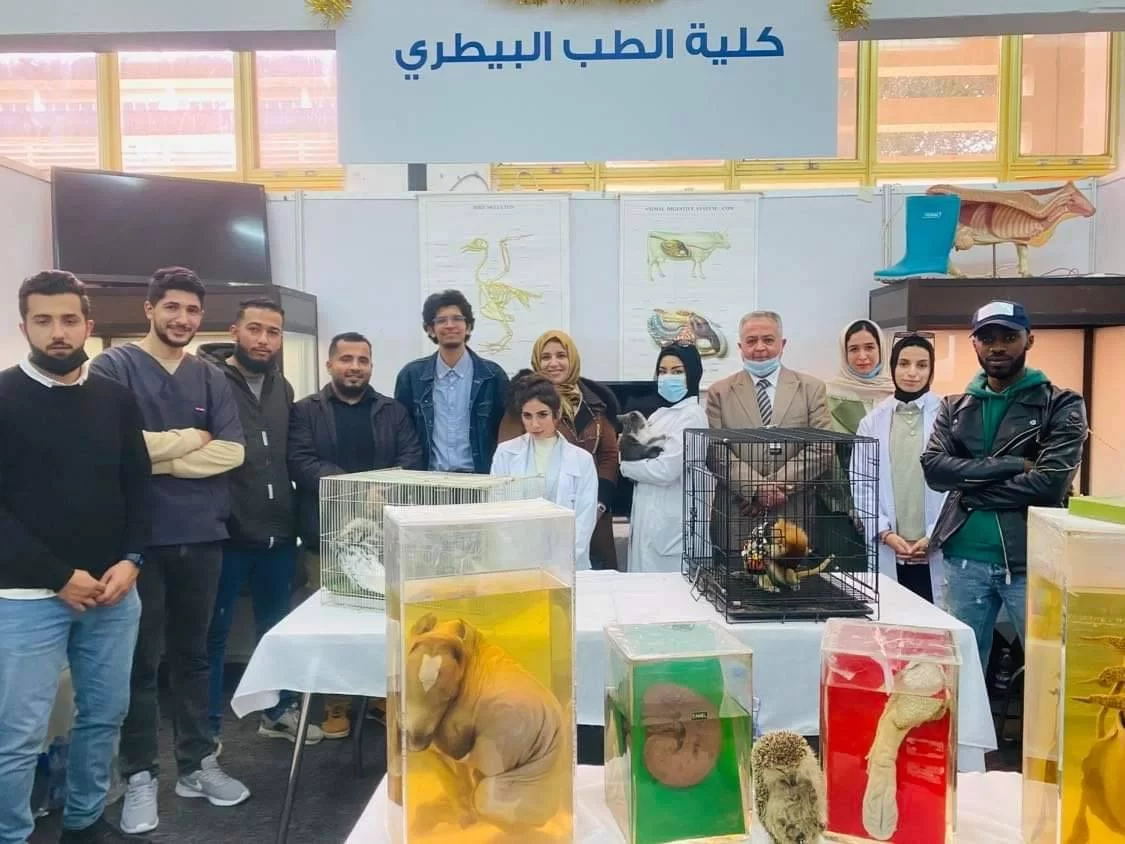
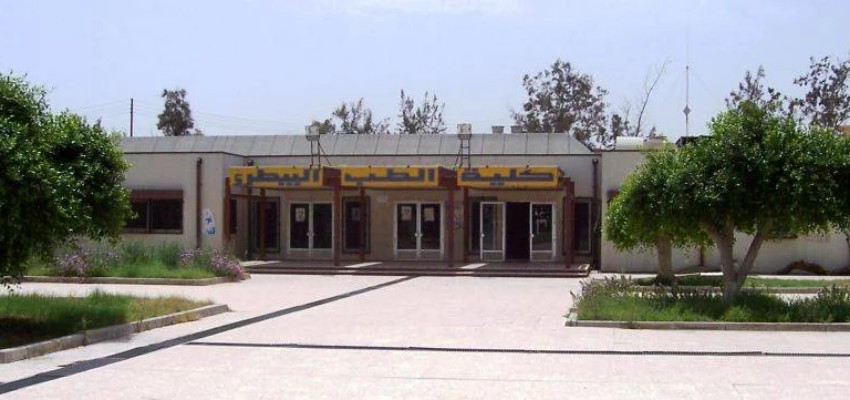
كلية الطب البيطري

المزيد ...

حول كلية الطب البيطري

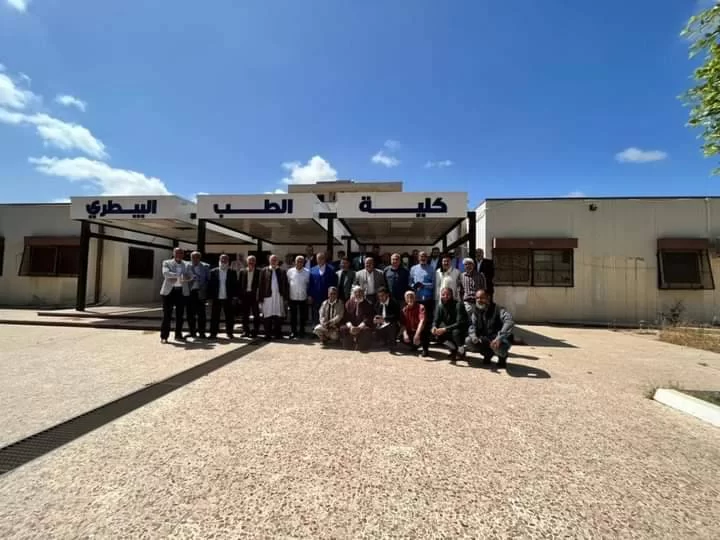
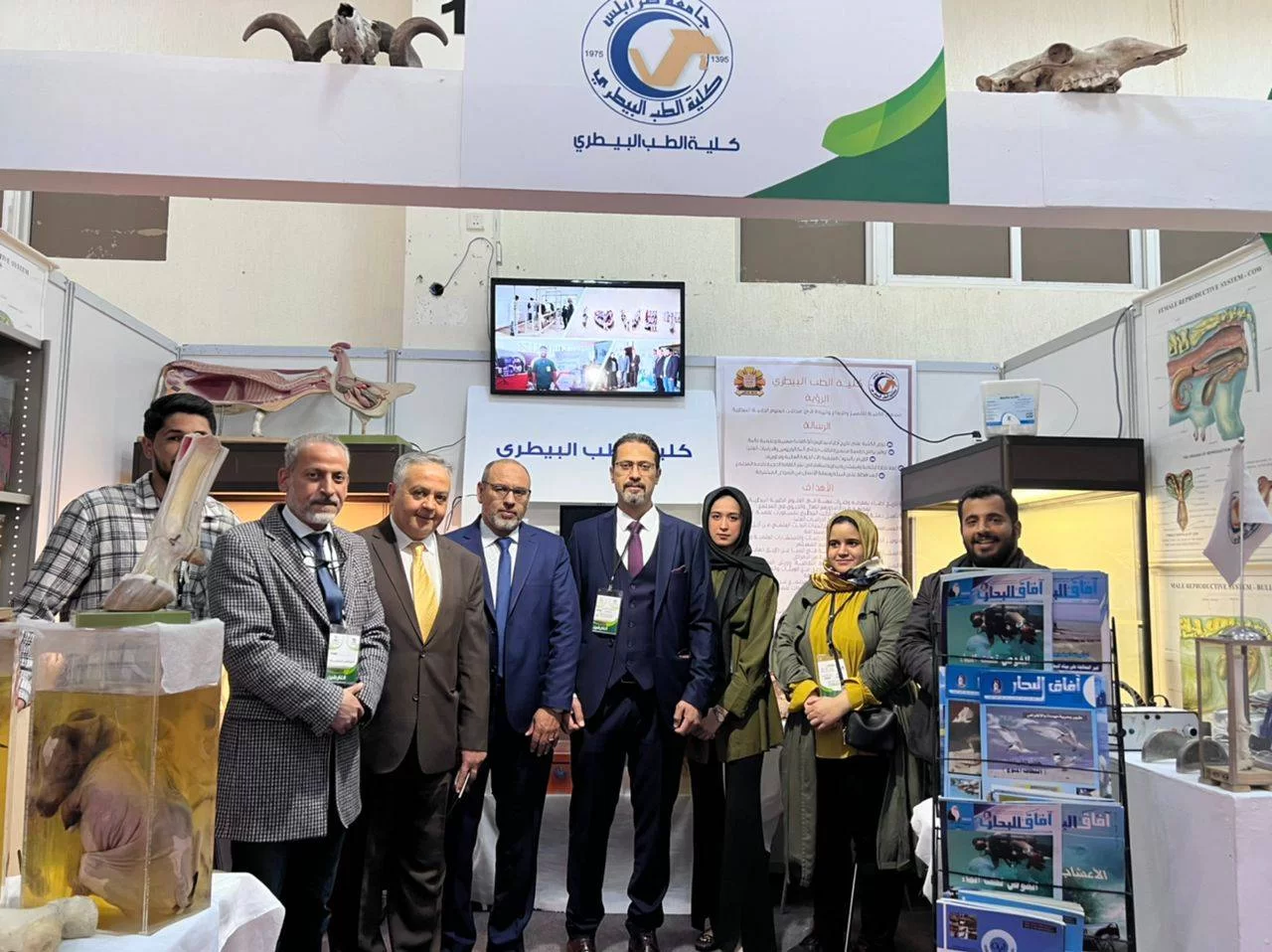
تأسست كلية الطب البيطري عام 1975م كأول كلية للطب البيطري في ليبيا. تعد الكلية من قلاع العلم و المعرفة الهامة بجامعة طرابلس ومؤسسة علمية تلبي إحتياجات المجتمع من الأطباء البيطريين وتساهم في دعم الإقتصاد الوطني من خلال العناية بصحة الحيوان وزيادة الإنتاج الحيواني والمحافظة على صحة الإنسان وحماية البيئة.

حقائق حول كلية الطب البيطري

نفتخر بما نقدمه للمجتمع والعالم

194

المنشورات العلمية

86

هيئة التدريس

245

الطلبة

23

الخريجون

البرامج الدراسية

ماجستير أمراض الدواجن
تخصص أمراض الدواجن

يُنفذ هذا البرنامج من خلال دراسة مقررات دراسية، بحيث لا يقل عدد وحداتها عن (24) وحدة دراسية، وأن لا تزيد عن (30) وحدة دراسية على مدى 3 فصول، بالإضافة إلى إنجاز رسالة بحثية...

التفاصيل

ماجستير أمراض الاسماك
تخصص أمراض الاسماك

يُنفذ هذا البرنامج من خلال دراسة مقررات دراسية، بحيث لا يقل عدد وحداتها عن (24) وحدة دراسية، وأن لا تزيد عن (30) وحدة دراسية على مدى 3 فصول، بالإضافة إلى إنجاز رسالة بحثية...

التفاصيل


من يعمل بـكلية الطب البيطري

يوجد بـكلية الطب البيطري أكثر من 86 عضو هيئة تدريس

staff photo

د. عبد السلام الشارف عبدالسلام محمود

منشورات مختارة

بعض المنشورات التي تم نشرها في كلية الطب البيطري

Familial Clustering and Re-infection with 2019 Novel Coronavirus (2019-nCoV, SARS-CoV-2) in the Libyan Community

Since its emergence as a major cause of coronavirus pneumonia, SARS-CoV-2 has spread quickly all over the world. The pandemic has affected all aspects of life and continues to spread despite the stringent control measures. Meanwhile, scientists all around the world have been scrambling to ascertain how the virus spreads and find out the effective ways to put this outbreak quickly under control, focusing on both persistent strict domestic interventions and vigilance against exogenous imported cases (1,2). Several cases of family clusters have been reported and evidence of person-to-person transmission has been confirmed. Indicating the importance of early detection and isolation of infected patients (3,4). Hence then special caution is needed for asymptomatic patients particularly for family members.
Daw MA, Ahmed MO, ET AL.(1-2021)
Publisher's website

Outbreaks of Foot-and-Mouth Disease in Libya and Saudi Arabia During 2013 Due to an Exotic O/ME-SA/Ind-2001 Lineage Virus

Foot-and-mouth disease viruses are often restricted to specific geographical regions and spread to new areas may lead to significant epidemics. Phylogenetic analysis of sequences of the VP1 genome region of recent outbreak viruses from Libya and Saudi Arabia has revealed a lineage, O-Ind-2001, normally found in the Indian subcontinent. This paper describes the characterization of field viruses collected from these cases and provides information about a new real-time RT-PCR assay that can be used to detect viruses from this lineage and discriminate them from other endemic FMD viruses that are co-circulating in North Africa and western Eurasia.
Ibrahim Eldaghayes(12-2014)
Publisher's website

Analysis of the IGF2/H19 imprinting control region uncovers new genetic defects, including mutations of OCT-binding sequences, in patients with 11p15 fetal growth disorders.

The imprinted expression of the IGF2 and H19 genes is controlled by the imprinting control region 1 (ICR1) located at chromosome 11p15.5. This methylation-sensitive chromatin insulator works by binding the zincfinger protein CTCF in a parent-specific manner. DNA methylation defects involving the ICR1 H19/IGF2 domain result in two growth disorders with opposite phenotypes: an overgrowth disorder, the Beckwith– Wiedemann syndrome (maternal ICR1 gain of methylation in 10% of BWS cases) and a growth retardation disorder, the Silver–Russell syndrome (paternal ICR1 loss of methylation in 60% of SRS cases). Although a few deletions removing part of ICR1 have been described in some familial BWS cases, little information is available regarding the mechanism of ICR1 DNA methylation defects. We investigated the CTCF gene and the ICR1 domain in 21 BWS patients with ICR1 gain of methylation and 16 SRS patients with ICR1 loss of methylation. We identified four constitutional ICR1 genetic defects in BWS patients, including a familial case. Three of those defects are newly identified imprinting defects consisting of small deletions and a single mutation, which do not involve one of the CTCF binding sites. Moreover, two of those defects affect OCT-binding sequences which are suggested to maintain the unmethylated state of the maternal allele. A single-nucleotide variation was identified in a SRS patient. Our data extends the spectrum of constitutive genetic ICR1 abnormalities and suggests that extensive and accurate analysis of ICR1 is required for appropriate genetic counseling in BWS patients with ICR1 gain of methylation.
Demars, J., Mansur Ennuri Moftah Shmela, S. Rossignol, J. Okabe, I. Netchine, S. Azzi, S. Cabrol, C. Le Caignec, A. David , Y. Le Bouc, A. El-Osta , C. Gicquel(9-2010)
Publisher's website

قناة كلية الطب البيطري

بعض الفيديوات التي تعرض مناشط كلية الطب البيطري

اطلع علي المزيد