
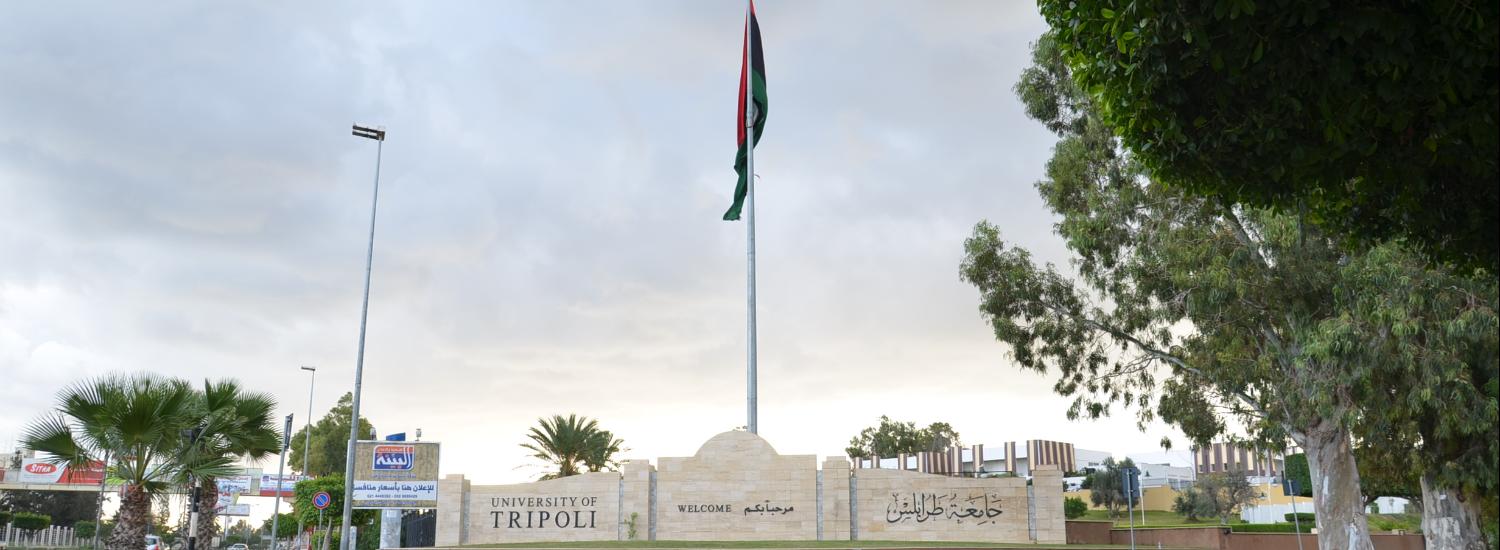
Department of Electronic trade and data analysis

More ...

About Department of Electronic trade and data analysis

Facts about Department of Electronic trade and data analysis

We are proud of what we offer to the world and the community

13

Publications

23

Academic Staff

671

Students

0

Graduates

Who works at the Department of Electronic trade and data analysis

Department of Electronic trade and data analysis has more than 23 academic staff members

staff photo

Mr. TAREQ SALAHI ALSAGHEER ALMIGHEERBI

طارق الصلاحي هو أحد أعضاء هيئة التدريس في قسم التجارة الإلكترونية/كلية الاقتصاد منذ 2010. يقوم بتدريس عدة مواد في تخصصه وله عدد من المنشورات في مجال اهتمامه كما هو مبين أدناه. إلى جانب عمله كمحاضر ، عمل مديرًا لمكتب المعلومات والتوثيق بالكلية. في عام 2004، حصل على درجة البكالوريوس في علوم الكمبيوتر من جامعة طرابلس، ليبيا. في عام 2008، حصل على درجة الماجستير في العلوم في تكنولوجيا المعلومات من جامعة مارا للتكنولوجيا (UiTM) بماليزيا. حاليًا ، يعمل على الحصول على درجة الدكتوراه في جامعة فروتسواف للعلوم والتكنولوجيا بدولة بولندا. من مجال اهتماماته: community source مصدر المجتمع ، تخطيط موارد المؤسسات ERP، ، الاقتصاد الدائري في تكنولوجيا المعلومات.

Publications

Some of publications in Department of Electronic trade and data analysis

Using the SERVQUAL model to assess service quality and students' satisfaction: (an empirical study of the online registration system at the University of Tripoli)

This paper comes as a part of an exploratory study with a goal to investigate the applicability of Collaboratively-Developed, Enterprise Resource Planning [ERP](a CD-ERP Approach) within Libyan public universities. The purpose of the research presented was to evaluate the new online system launched recently at the University of Tripoli (UOT) in order to investigate 1) what students expect from such a service, 2) whether or not they are satisfied with the service offered, 3) how important security issues are to the users. To answer these questions, quantitative data was collected using questionnaires based on the instruments of the SERVQUAL model via online questionnaires. Based on our results, students' expectations were higher than their perceptions of the quality of the services (QoS). The results indicate that students are obviously unsatisfied with the services provided by UOT's new online system. W arabic 27 English 135
TAREQ SALAHI ALSAGHEER ALMIGHEERBI(1-2019)
Publisher's website

Evaluation of the Performance of Information Systems Implemented at the University of Tripoli, Libya

Evaluating the performance of information systems (ISs) has emerged from the increasing influence of information technology on the effectiveness and efficiency of work processes in an organization (Bryman and Bell 2007). The aim of the overall study is to overcome a lack in the literature regarding the assessment of information systems (IS) in Libyan Higher Education (LHE), especially universities. The aim of this initial article is to focus on the University of Tripoli (UOT), a study that will be extended to other Libyan public universities. A description of the study, its significance and objectives and the methodology followed are presented, together with an analysis of the findings on the basis of appropriately chosen models. Finally, we assess the current level of ISs implemented in UOT by analyzing the findings based on these models. arabic 14 English 86
TAREQ SALAHI ALSAGHEER ALMIGHEERBI(9-2019)
Publisher's website

An Empirical Analysis of Critical Success Factors for CD-ERP Model

Collaboratively-Developed ERP (CD-ERP) is an intermediate model between two well-known models, namely: closed-and open-source systems. This model is based on the community-source paradigm and ERP packages. It has been proposed for Libyan higher education (LHE) to be governed by a consortium of LHE institutions. To investigate the applicability of this model in LHE, this paper presents an analysis of critical success factor (CSFs) based on both a review of the relevant literature and lessons learnt from similar projects. Using the literature review, the title of the model was proposed on the basis of its fundamental elements. Cases of other projects which follow a similar approach show that communitysource has been adopted by many universities and government bodies worldwide. Also, many of the issues observed in such projects are similar to those that appear in the literature, especially in regards to distributed and collaboratively working environments. arabic 10 English 56
TAREQ SALAHI ALSAGHEER ALMIGHEERBI(1-2021)
Publisher's website