
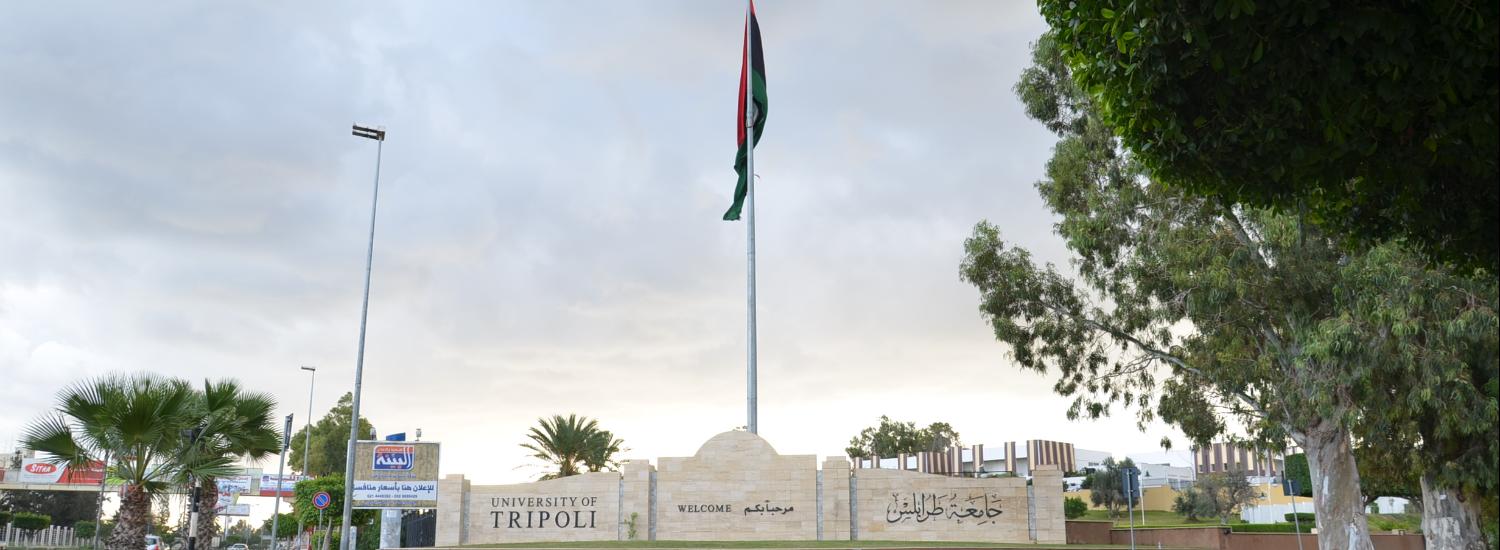
قسم الطب الوقائي

المزيد ...

حول قسم الطب الوقائي

أ‌. علم سلوكيات ورعاية الحيوان:يهدف هذا المقرر إلى التعريف بأسس تربية ومعاملة الحيوانات ورعايتها مع تغطية كاملة لقواعد الرعاية الصحية والسلوكية المتعلقة بالفرد والقطيع.ب‌.علم الوراثة والأنسال:يهدف علم الوراثة والأنسال إلى التعريف بالقواعد الأساسية لعلم الوراثة وقوانينها للإستفادة منها في الرفع من الإنتاجية.ج‌. علم صحة وإدارة القطعان:يهدف هذا المقرر إلى التعريف بالبرامج المختلفة المتعلقة بصحة وإدارة القطعان الحيوانية.د‌. علم الوبائيات:يدرس الطالب في هذا المقرر العوامل المؤثرة على صحة القطعان الحيوانية ومسببات الأمراض وطرق انتشارها  وتركيب القطعان الحيوانية وأشكال حدوث الأمراض في القطعان الحيوانية وطرق التشخيص الوبائي إضافة إلى طرق قياس حدوث المرض في القطعان الحيوانية بهدف الوصول إلى فرضية تحديد مسببات المرض لكي يتم اختبار هذه الفرضية من خلال علم الوبائيات التحليلي والذي يتم من خلاله استخدام الدراسات التجريبية أو دراسات الملاحظة لتحديد العلاقة بين التعرض للمسبب المرضي وحدوث المرض، وفى هذا العلم يدرس الطالب المسوحات الوبائية والترصد الوبائي وعلم الوبائيات المصلي وهي المعلومات التي تستخدم من أجل التحكم في الوباء في حال حدوثه.هـ. علم الأمراض المشتركة:يدرس الطالب في هذا المقرر تصنيف الأمراض المشتركة وأهم أنواعها مع التركيز على وبائيتها وطرق مقاومتها على المستوى الوطني والعالمي مع التعريف بالمنظمات الدولية المختصة والأمراض الواجب التبليغ عنها حال اكتشافها محليا ودوليا.

حقائق حول قسم الطب الوقائي

نفتخر بما نقدمه للمجتمع والعالم

14

المنشورات العلمية

10

هيئة التدريس

من يعمل بـقسم الطب الوقائي

يوجد بـقسم الطب الوقائي أكثر من 10 عضو هيئة تدريس

staff photo

د. عبد السلام الشارف عبدالسلام محمود

منشورات مختارة

بعض المنشورات التي تم نشرها في قسم الطب الوقائي

Human diseases versus mouse models: insights into the regulation of genomic imprinting at the human 11p15/mouse distal chromosome 7 region

The 11p15 region is organised into two independent imprinted domains controlled by imprinting control regions, which carry opposite germline imprints. Dysregulation of 11p15 genomic imprinting results in two human fetal growth disorders (Silver-Russell syndrome (SRS, MIM 180860) and Beckwith-Wiedemann syndrome (BWS, MIM 130650)) with opposite growth phenotypes. The mouse orthologous region on distal chromosome 7 (dist7) is well conserved in its organisation and its regulation. Targeted mutagenesis in mice has provided highly valuable clues in terms of the mechanisms involved in the regulation of genomic imprinting of the 11p15/dist7 imprinted region. On the other hand, the recent identification of unexpected genetic defects in BWS and SRS patients also brought new insights into the mechanisms of 11p15 imprinting regulation. However, some mouse models and human genetic defects show contradictions in term of growth phenotypes and parental transmission. In this review, we extensively analyse those various mouse and human models and more particularly models with mutations affecting the two imprinting centres, in order to improve our understanding of regulation of 11p15/dist7 genomic imprinting. arabic 21 English 117
Mansur Ennuri Moftah Shmela, C. F. Gicquel(1-2013)
Publisher's website

Regulation of genomic imprinting at the human 11p15 region

The human 11p15 region is divided into two independent imprinted domains, the H19/IGF2 and CDKN1C/KCNQ1 domains. Each domain is regulated by its own imprinting control regions, ICR1 and ICR2, which carry opposite germline imprints. The expression of 11p15 imprinted genes is regulated by two major mechanisms. ICR1 binds a zinc finger protein (CTCF) on the unmethylated maternal allele and acts as a chromatin insulator, whereas ICR2 is unmethylated on the paternal allele and serves as a promoter for a regulatory non-coding RNA (KCNQ1OT1). Dysregulation of 11p15 genomic imprinting results in two human foetal growth disorders: the Beckwith-Wiedemann (BWS) and the Silver-Russell (SRS) syndromes, which display opposite growth phenotypes. Various 11p15 epigenetic and genetic defects result in BWS and SRS. Gain or loss of DNA methylation account for 60% of BWS and SRS and, in most cases, the mechanism of the DNA methylation defect is unknown. The overall aim of this thesis was to decipher the mechanisms resulting in loss or gain of DNA methylation at ICR1 or ICR2 by investigating large cohorts of BWS and SRS patients displaying a “primary” DNA methylation defect. We aimed at establishing what was the incidence of copy number variations (CNVs) (duplications, deletions and segmental uniparental isodisomies) confined to one or one part of the H19/IGF2 or CDKN1C/KCNQ1 domains. We also screened extensively the ICR1 imprinting control region in BWS and SRS patients to identify new genetic defects. We show in this work that genetic defects in cis account for a significant proportion (approximately 30%) of BWS patients with ICR1 gain of DNA methylation but are rare in SRS and BWS patients with loss of DNA methylation at ICR1 and ICR2, respectively. We describe novel small gain and loss CNVs involving only part of the two domains in BWS and SRS. We also describe, for the first time, mutations and small deletions involving binding sites for the OCT4 and SOX2 pluripotency factors. Those defects account for approximately 14% of BWS cases and result in a BWS phenotype upon maternal transmission. We further characterize the role of OCT4/SOX2 pluripotency factors in the maintenance of genomic imprinting at the H19/IGF2 domain in mouse embryonic stem cells. By screening the whole 11p15 region for susceptibility alleles for loss or gain of DNA methylation, our group identified a novel 4.5 kb cis-regulatory region within the CDKN1C/KCNQ1 domain. A specific 4.5 kb haplotype confers, upon maternal transmission, a risk of ICR2 loss of DNA methylation in BWS patients. This study investigated the mechanism involved in the risk of ICR2 loss of DNA methylation in BWS and showed that within this 4.5 kb region, two SNPs (rs11823023 and rs179436) affect CTCF occupancy at DNA motifs flanking the CTCF 20 bp core motifs. This study identifies a new cis-regulatory region and highlights the crucial role of CTCF for the regulation of genomic imprinting at the CDKN1C/KCNQ1 domain. These recent findings bring new insights in the regulation of genomic imprinting at both the IGF2/H19 and CDKN1C/KCNQ1 domains. arabic 8 English 50
Mansur Ennuri Moftah Shmela(9-2014)
Publisher's website

Genetic variants within the second intron of the KCNQ1 gene affect CTCF binding and confer a risk of Beckwith–Wiedemann syndrome upon maternal transmission.

Background Disruption of 11p15 imprinting results in two fetal growth disorders with opposite phenotypes: the Beckwith–Wiedemann (BWS; MIM 130650) and the Silver–Russell (SRS; MIM 180860) syndromes. DNA methylation defects account for 60% of BWS and SRS cases and, in most cases, occur without any identified mutation in a cis-acting regulatory sequence or a trans-acting factor. Methods We investigated whether 11p15 cis-acting sequence variants account for primary DNA methylation defects in patients with SRS and BWS with loss of DNA methylation at ICR1 and ICR2, respectively. Results We identified a 4.5 kb haplotype that, upon maternal transmission, is associated with a risk of ICR2 loss of DNA methylation in patients with BWS. This novel region is located within the second intron of the KCNQ1 gene, 170 kb upstream of the ICR2 imprinting centre and encompasses two CTCF binding sites. We showed that, within the 4.5 kb region, two SNPs (rs11823023 and rs179436) affect CTCF occupancy at DNA motifs flanking the CTCF 20 bp core motif. Conclusions This study shows that genetic variants confer a risk of DNA methylation defect with a parent-of-origin effect and highlights the crucial role of CTCF for the regulation of genomic imprinting of the CDKN1C/KCNQ1 domain. arabic 26 English 132
Julie Demars, Mansur Ennuri Moftah Shmela, Abdul Waheed Khan , Kai Syin Lee, Salah Azzi, Patrice Dehais, Irène Netchine, Sylvie Rossignol, Yves Le Bouc, Assam El-Osta, Christine Gicquel(7-2014)
Publisher's website