مكتب الجودة وتقييم الأداء

المزيد ...

حول مكتب الجودة وتقييم الأداء

حقائق حول مكتب الجودة وتقييم الأداء

نفتخر بما نقدمه للمجتمع والعالم

12

المنشورات العلمية

2

هيئة التدريس

منشورات مختارة

بعض المنشورات التي تم نشرها في مكتب الجودة وتقييم الأداء

Preliminary Survey to Understand the Epidemiology of COVID-19 and Its Socio-economic Impacts in Libya

Background: During the last three decades there are many viral infections emerging and re-emerge with high socio-economic and public health impacts worldwide. The Coronavirus Severe Acute Respiratory Syndrome (SARS-CoV-2) emerged in China in late December 2019. Later, on 30th Jan 2020, the World Health Organization (WHO) has constituted the COVID-19 as a public health emergency of international concern (PHEIC). Objectives: To understand the epidemiological patterns and assessing potential socio-economic impacts of the COVID-19 is critical and how to determine these impacts on social life is considered fundamental. Therefore, the present preliminary survey was conducted firstly to understand the epidemiological situation of COVID-19 in the country, and secondly to determine the socioeconomic impacts of the COVID-19 among Libyan population to build up strategies concerning socio-economic response by the technical team committee. arabic 16 English 86
Abdusalam Sharef Abdusalam Mahmoud(2-2021)
Publisher's website

Exploiting serological data to understand the epidemiology of bluetongue virus serotypes circulating in Libya

The epidemiological patterns of Bluetongue (BT) in North Africa and Mediterranean Basin (MB) dramatically changed by emergence of subsequent episodes of novel bluetongue virus (BTV) serotypes with highly pathogenic indexes and socio-economic impacts. The objective of the study was to investigate the sero-prevalence and serotype distribution of BTV in Libya. During 2015-2016, a total of 826 serum samples were collected from domestic ruminants in Libya. All sera were assayed by competitive enzyme-linked immunosorbent assays (c-ELISA). C-Elisa-positive samples (43.3%; 173/400) were further analyzed by virus neutralization assay to identify BTV serotypes and determine the antibody titre of positive samples. An overall BTV sero-prevalence was 48.4% (95% CI: 45.0%-51.8%). Neutralizing antibodies were detected against the following BTV serotypes namely: BTV-1, BTV-2, BTV-3, BTV-4, BTV-9 and BTV-26. While BTV-1, BTV-2, BTV-4 and BTV-9 circulation was unsurprising as they have been responsible of the last year outbreaks in Northern African Countries, the detection of BTV-3 and BTV-26 was definitely new and concerning for the animal health of the countries facing the Mediterranean Basin. It is crucial that European and Northern African authorities collaborate in organizing common surveillance programmes to early detect novel strains or emerging serotypes in order to set up proper preventive measures, and, in case, develop specific vaccines and plan coordinated vaccination campaigns. arabic 13 English 96
Abdusalam Sharef Abdusalam Mahmoud(1-2018)
Publisher's website

Covid-19 Vaccination Hesitancy: Preliminary Questionnaire Survey of Knowledge and Attitudes in Libya

Background: The pre-vaccination survey is considered an important tool for assessing and evaluating knowledge, attitudes and determine vaccine hesitancy. Throughout many decades the world had faced a challenge in fighting against the endemic, epidemic, and pandemic diseases that have been emerging and re-emerging special those that constitute a great potential risk on humanity’s life. Still, after more than one year and half of scientific milestones of COVID-19 pandemic, there are many countries scarifying and struggling to mitigate the impacts of SARS-CoV-2 among their societies. Objectives: Our study was conduct to address, assessing and evaluate COVID-19 vaccine literacy (VL) prior to and during the vaccination campaign in Libya. Material and Methods: The cross-sectional questionnaire survey was conducted during April 2021 one week prior COVID-19 vaccination campaign in Libya. All relevant data was obtained and collected by online and face-to-face interview. The sampling method with an online Microsoft form questionnaire resulted in collecting only 33 valid questionnaires. Further, the survey carried out also during vaccination campaign however, any participants who had already taken the COVID-19 vaccine were not indorsed in questionnaire survey. Results: A total of 243 participants were involved in this study. The overall response rate (45.6%). This study enrolled (58.8%) and (41.2%) of participants from male and female respectively. Considering the age classes, the results revealed that (35%, 18-30 year), (43.6%, 31-50 year), (18.5%, 51-65 year) and (>65 year, 2.9%). The results revealed that, 29.2% (95% Confidence Interval (CI): 25%-33.44%) of the respondents were confirmed or suspected COVID-19 infection, while and 70.8% (95% CI: 66.56%-75%) participants were not sure if they had contracted the virus. Regarding the recurrent COVID-19 infection, our questionnaire survey reported that, at least 5.8% (95% CI: 3.60%-7.92%) of the respondents had got infected twice by SRAS-CoV-2. Regarding the currently available COVID-19 vaccines (Sputnik V, AstraZeneca and Sinovac) in the country, the vast majority (43.2%) of the participants, they would like to prefer the Sputnik V, followed by (19.3%) AstraZeneca and (2.5%) Sinovac vaccines, while (35%) of the respondents refused to be vaccinated by three of these vaccines that have been provided by the Libyan healthy authorities under the supervision of NCDC. A proximately 33% (95% CI: 28.56%-37.28%) of the respondents refused to be vaccinated due to mistrust in the vaccine safety. Clearly, the vaccine safety was the main cause for the refuse and delay time of the vaccination from the most of the population. Conclusion: Our study highlights that, the vaccine hesitancy is underestimated issue in Libya, and clearly there is misleading and misinformation about SARS-CoV-2 from unauthorized media sources. According to the metadata analysis of high efficacy, safety and successes of COVID-19 vaccines for mitigate and minimize both the case fatality rate (CFT) and transmission rate across the entire of the global, still there is a controversies around potential safety concerns of the COVID-19 vaccines. Urgently, the Libyan healthy authority needs to enforce the public health education about vaccine safety, and Libyan healthy authorities should be implement an effective vaccination strategies that complement with international standard criteria for the vaccination policy to improve the vaccination efficacy and the vaccine coverage rate. Consequently, The Libya national deployment and vaccination plan for the COVID-19 vaccine should implement National Immunization Technical Advisory Group (NITAG) in every municipality for collecting and processing information, and producing periodic reports during COVID-19 vaccination campaign.
Abdusalam Sharef Abdusalam Mahmoud(6-2021)
Publisher's website

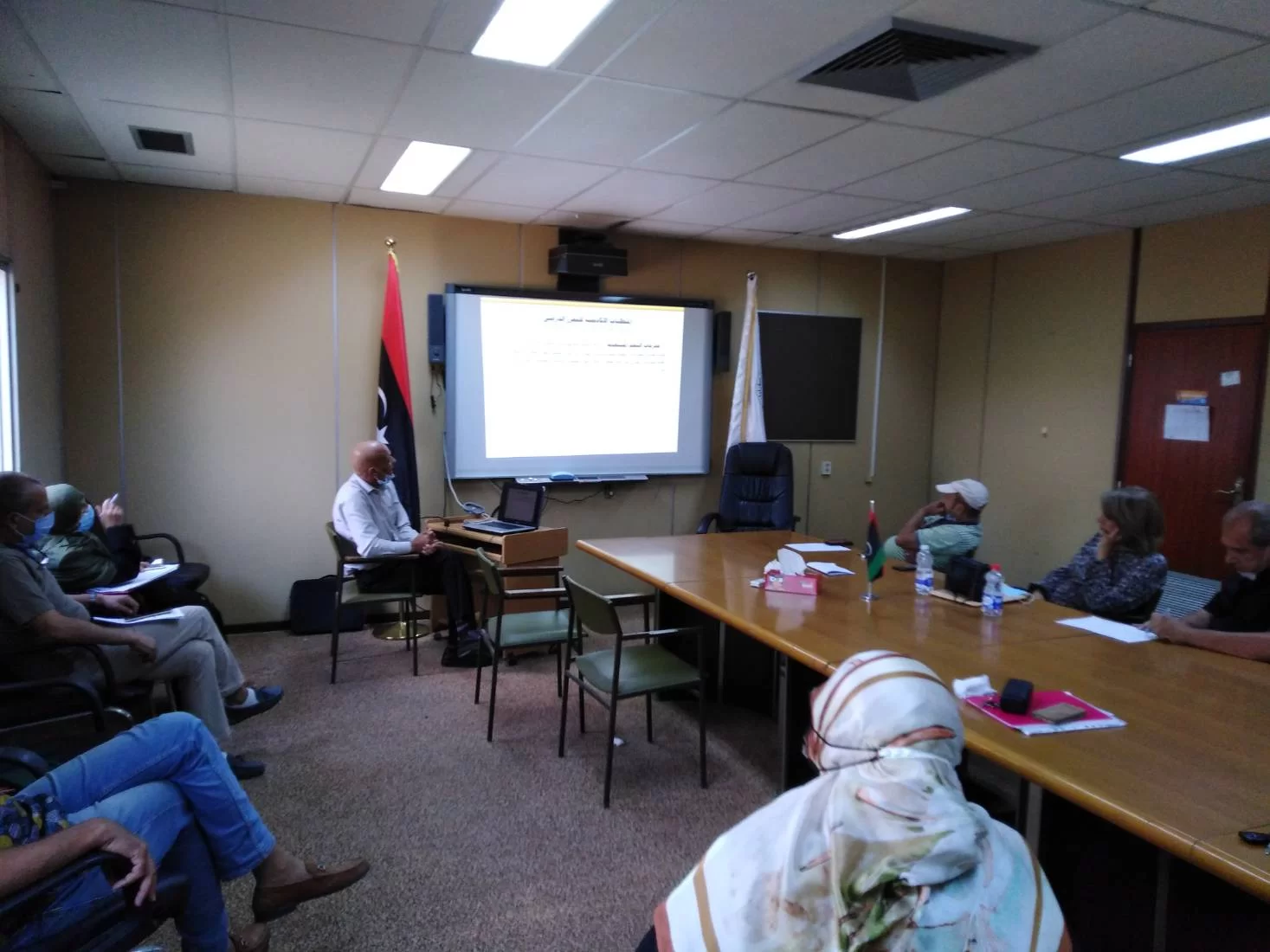
مكتب الجودة وتقييم الأداء في صور

الالبومات الخاصة بفعاليات مكتب الجودة وتقييم الأداء