Department of Software Engineering

More ...

About Department of Software Engineering

Facts about Department of Software Engineering

We are proud of what we offer to the world and the community

29

Publications

12

Academic Staff

99

Students

101

Graduates

Programs

بكالوريوس في تقنية المعلومات
Major هندسة البرمجيات

...

Details

Who works at the Department of Software Engineering

Department of Software Engineering has more than 12 academic staff members

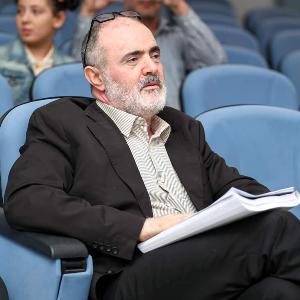
staff photo

Dr. Rudwan Ali Belgasim Husain

د. رضوان حسين أستاذاً مشاركاً وكيل الشؤون العلمية لكلية تقنية المعلومات بجامعة طرابلس. د. رضوان له العديد من المنشورات العلمية في مجال تخصصه ومجالات أخرى. كان الدكتور رئيساً لقسم هندسة البرمجيات لمدة أربع أعوام جامعية من خريف 2013 إلى نهاية ربيع 2017, وكان أيضاً رئيس فريق تطوير منهج القسم ضمن لجنة تطوير مناهج كلية تقنية المعلومات. هو عضو مؤسس في الجمعية الليبية للاستشعار عن بعد ونظم المعلومات الجغرافية, وهو عضو بجمعية أمل الغد لأطفال التوحد, و عضو مؤسس في جمعية السلامة لأعمال مخلفات الحروب. يهتم د. رضوان بنمذجة الأنظمة المركبة (المعقدة) والذكاء الاصطناعي, معالجة الصور والوسائط المتعددة, وتطوير نظم المعلومات الجغرافية.

Publications

Some of publications in Department of Software Engineering

Improving Performance and Progression of Novice Programmers: Factors Considerations

Teaching computer programming is recognized to be difficult and a real challenge. The biggest problem faced by novice programmers is their lack of understanding of basic programming concepts. A visualized learning tool was developed and used by volunteered first-year students for two semesters. The purposes of this paper are: Firstly, to emphasize factors which directly affect the performance of our students negatively. Secondly, to examine whether the proposed tool would improve their performance and learning progression or not. This tool provides many features and enhancement which were presented to students as pre-lecture material. The results of adopting this tool were conducted using a pre-survey and post-survey questionnaire. As a result, students who used the learning tool showed better performance in their programming subject. arabic 9 English 74
Hala Shaari, Nuredin Ahmed(1-2018)
Publisher's website

Most Common and Reliable Traits for Fusion of Biometrics

Biometrics technologies have been around for quite some time and many have been deployed for different applications all around the world, ranging from small companies' time and attendance systems to access control systems for nuclear facilities. Biometrics offer a reliable solution for the establishment of the distinctiveness of identity based on "who an individual is", rather than what he or she knows or carries. Biometric Systems automatically verify a person's identity based on his anatomical and behavioral characteristics. Biometric traits represent a strong and undeviating link between a person and his identity, these traits cannot be easily lost or forgotten or faked. Since biometric systems require the user to be present at the time of authentication. Some biometric systems are more reliable than others, yet biometric systems are neither secure nor accurate, all biometrics have their strengths and weaknesses. Although some of these systems have shown reliability and solidarity, work still has to be done to improve the quality of service they provide. In this paper we present the most common and reliable known biometric systems suitable for Multimodal Biometrics Fusion, providing highly efficient and secure systems, showing their strengths and weaknesses and also presenting technologies in which may have great benefits for security applications in the near future.
Abdulmonam Omar Ahmed Alaswad, Ihab Meftah Elfituri, Fawzia Elhashmi Mohamad(0-2014)
Publisher's website

Enhanced Still 3D Integral Images Rendering Based on Multiprocessor Ray Tracing System

The main purpose of this paper is to introduce 3D integral imaging interpolation method, to overcome the 3D missing information problem occurred between cylindrical lenses (micro-images) due to occluded areas in the previous cylindrical lens, new cylindrical lens shows an area, to generate one single photo-realistic 3D integral imaging frame. The method is based on a Multiprocessor ray-tracer containing 3D integral imaging parser, 3D integral camera model, a 3D integral imaging renderer, spatial coherence and 3D scene transformations. Consequently, an increase in speed in the generation of still 3D integral image is achieved compared to fully ray tracing time of missing pixels. Experiments show that a significant reduction in execution time is achieved by using the 3D integral interpolation process. Savings up to (57%-66%) in the ray tracing time when compared to fully ray tracing the missing pixels depends on the complexity of the scene. 
Dr. Mahmoud Geat Eljadid, Prof. Amar Aggoun, Dr. Osama Hassan Youssef(1-2022)
Publisher's website