قسم الجراحة والتناسليات

المزيد ...

حول قسم الجراحة والتناسليات

حقائق حول قسم الجراحة والتناسليات

نفتخر بما نقدمه للمجتمع والعالم

14

المنشورات العلمية

10

هيئة التدريس

من يعمل بـقسم الجراحة والتناسليات

يوجد بـقسم الجراحة والتناسليات أكثر من 10 عضو هيئة تدريس

staff photo

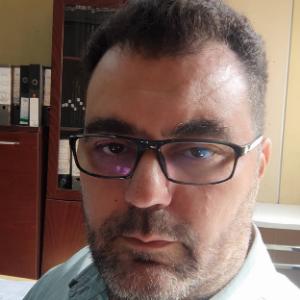
أ.د. لطفي موسى ساسي بن علي

ا.د. لطفي بن علي هو احد اعضاء هيئة التدريس بقسم الجراحة والتناسليات بكلية الطب البيطري.انخرط بالسلك التدريسي بجامعة طرابلس كمعيد مند (1988) والان يشغل درحة استاد منذ 2015 وله العديد من المنشورات العلمية في مجال تخصصه

منشورات مختارة

بعض المنشورات التي تم نشرها في قسم الجراحة والتناسليات

Fetlock Parameters Development on Dorsopalmar Radiographs in the Equine Forelimb

Several reports have discussed possible bony morphological causes of fetlock pathology but without relating them to its morphometry. Radiographic measurement is widely used in constructing numerical databases of bone morphometry. Such measurements would not be reliable unless all factors affecting the radiographs were considered. Therefore, this study aimed to establish a specific dorsopalmar view (DP) for fetlock radiographic measurements, and then to develop reliable and repeatable fetlock parameters that represent fetlock conformation on those DP radiographs. Ten cadaveric forelimbs from ten adult horses were cut at the distal third of the radius and mounted in a normal posture for DP radiography. Specific features on fetlock bones were used as landmarks to identify the DP at zero degrees. Other bony features were selected as landmarks for developing fetlock parameters on these radiographs. Twenty-seven parameters were designed in the form of angles (12) and ratios (15). The repeatability and consistency of each parameter was tested. A specific fetlock DP view was determined at zero degrees based on certain landmarks. All angular and ratio parameters showed high reliability and consistency in their measurements. The established parameters provide an opportunity to test the relationship between fetlock morphometrics and performance, or the likelihood of certain pathologies.
Abdulrhman Mohamed Salah Alrtib, Aiman Hussein Saleh Oheida, Mohamed Hamrouni S. Abushhiwa, Helen M S Davies(3-2019)
Publisher's website

Successful Anatomical Access for Surgical Removing of the Distal Fracture of Splint Bones in Thoroughbred Horses (Case Study)

Poor performance in athletic horses due to musculoskeletal affections is very common in Libya. Two mature thoroughbred horses suffering from poor performance and history of moderate degree forelimb lameness were admitted to the Aswany Private Equine clinic in Tripoli, Libya. The study is aiming for presenting a simple, time effective, cost effective surgical procedure to treat distal simple splint bone fracture in thoroughbred horses. Horses were examined thoroughly for the common muscle, hoof, and tendons affections. A progressed unilateral left forelimb swelling involving the lateral distal part of the fourth metacarpal bones was noticed. Three radiographs were taken to each horse including latero- medial, dorsolateral-palmaromedial, and palmarolateral-dorsomedial views to assess both splint bones. The radiographs showed that there is a complete fracture involving the distal extremity (button) of the fourth metacarpal bones. Surgical excisions of the fractured part of the splint bones have been decided to treat these horses. To precisely locate the site of the bone fragments, 1.5 mm stainless steel wires were placed over the distal part of splint prior to taking the radiographs. The surgical sites were aseptically prepared, and the horses were then sedated via intravenous injection of xylazine at a dose rate of 1 mg/kg body weight. The site of surgical incision was infiltrated with 2% lidocaine. The bone fragments were then removed after performing the surgical incision. The sharp end at the distal end of the proximal part of the splint bone was then smoothening with a scissor. The surgical incisions were then routinely closed and the post-operative care and radiographs were taken. The surgical incision made complete healing within two weeks. Both horses were followed up for up to three years post-operation, and they did well compared to what has been done in other studies. We concluded that the surgical technique used to treat the two horses with splint bone fracture enrolled in the current study is a simple and effective procedure. arabic 19 English 106
Mohamed H. Abushhiwa, Osma K Sawesi, Khaled A. Milad, Aiman. A. Shalgum, Abdulrhman Mohamed Salah Alrtib(9-2019)
Publisher's website

Carpal Morphometry in Normal Horses and Horses with Carpal Bone Pathology

Relationships between carpal morphology and carpal pathology might assist in identifying horses at risk of carpal pathology. This study was aimed to investigate the hypothesis that carpal morphology is related to the incidence of carpal pathology in racing Thoroughbreds. Ten carpal parameters were used to measure carpal morphology on dorsopalmar (DP) carpal radiographs. Radiographs were collected from 19 experienced Thoroughbred race horses with no evidence of carpal damage(normal)and 72 horses with carpal damage (clinical). All radiographs were at a defined position called zero degrees (ZDP) or within an acceptable rotational range. Based on a P-value of < 0.05 and using the false discovery rate method to control Type I error, two parameters showed significant differences between normal and clinical horses. The angulation of the radial metaphysis and distal radius in relation to the angulation of the radial facet of the third carpal bone (C3) was significantly related to the occurrence of pathology in the bones of the middle carpal joint in Thoroughbred race horses. This study presented important features on DP radiographs that allowed identification of a carpal conformation associated with carpal damage in Thoroughbred race horses. Using such a highly specific, cost-effective and safe technique as a routine for examining yearling Thoroughbreds would assist in identifying horses with carpal conformation unsuited to racing.
Aiman Hussein Saleh Oheida, Abdulrhman Mohamed Salah Alrtib, Mohamed Hamrouni S. Abushhiwa, Christopher J. Philip, Helen M.S. Davies(1-2022)
Publisher's website