
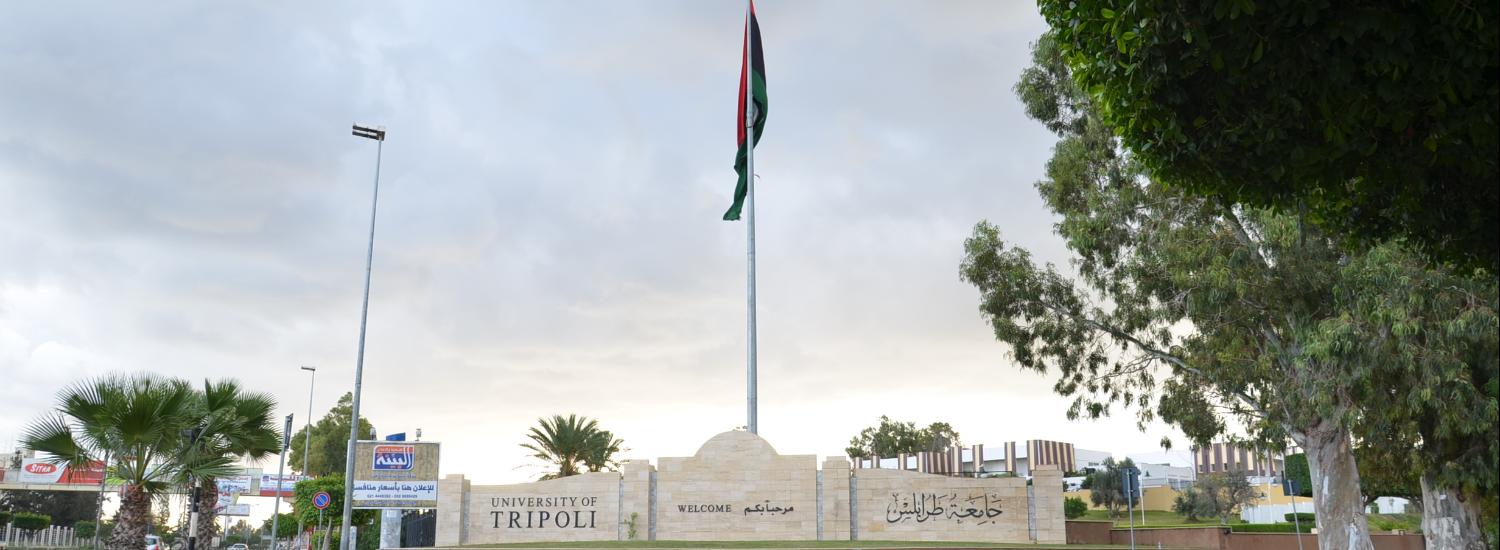
Department of Pharmacology & Clinical Pharmacy

More ...

About Department of Pharmacology & Clinical Pharmacy

Facts about Department of Pharmacology & Clinical Pharmacy

We are proud of what we offer to the world and the community

13

Publications

21

Academic Staff

Who works at the Department of Pharmacology & Clinical Pharmacy

Department of Pharmacology & Clinical Pharmacy has more than 21 academic staff members

staff photo

Prof.Dr. Walid Yousef Saad Tarsin

وليد تارسين هو احد اعضاء هيئة التدريس بقسم علم الادوية والصيدلة السريرية بكلية الصيدلة. يعمل السيد وليد تارسين بجامعة طرابلس كـأستاذ منذ 2014-09-17 وله العديد من المنشورات العلمية في مجال تخصصه

Publications

Some of publications in Department of Pharmacology & Clinical Pharmacy

Phytochemical Screening of Methanolic Extract of Five Libyan Date Varieties (Phoenix Dactylifera L.) And Evaluation of Their Antimicrobial Activity

More than 2000 cultivars of Phoenix dactylifera L. are known to grow around the world. Date is an essential fruit in North Africa, and in Libya in particular, it represents an important national food resource. Recently, researchers discovered the medicinal value of different parts of palm tree beside the well known nutritional value of the fruit edible part. In this study five Libyan date seeds (Bestian, Deglet, Abel, Khadrai and Hamrai) were collected from Aljofra region and were screened for phytochemical components and their antimicrobial activity. The phytochemical analysis of methanolic extract of five different Libyan date palm seeds showed the presence of aflavnoids, glycosides, phytosterols, phenolic compound, tannins, and fixed oil, absences of alkaloids and saponine. The susceptibility of bacterial species to five methanolic extracts of Phoenix dactylifera L seeds by cup-cut agar method exhibited Inhibition zones (IZD). That inhibition zone diameters are vary from 15.0 0.3 to 3.02 0.01 against MRSA; 16.040.1 to 6.0  0.7 against Pseudomonas aeruginosa; 14.2 0.1 to 6.00.7 against Proteus vulgaris; 18.3 0.2 to 6.0 0.1 against Staphylococcus aureus; 14.04 0.2 to 2.0 0.02 against E. coli; and 18.0 0.1 to3.2 0.02 against Klebsiella pneumonia. The results of current study shows the antibacterial properties of five Libyan samples of date seed extract against a wide spectrum of bacteria. arabic 21 English 126
Basma Doro, Nahla Labyad, Fadia Gafri(1-2020)
Publisher's website

تقوية التأثير الوقائي للرانتيدين بواسطة الفيراباميل للقرحه المستحدثة بواسطة الايثانول في الفئران

تعتبر قرحة المعدة والإثنى عشر من أكثر أمراض الجهاز الهضمي شيوعاً. ورغم معرفة معظم العوامل المسببة للقرحة مثل الادوية المضادة للالتهابات الغيرستيرويدية وبكتيريا مثل helicobacter pylori والكحول والتدخين وغيرها ورغم توفر الأدوية المختلفة لعلاجها الاأن هناك الكثير من الحالات التي لاتستجيب بفعالية لهذه الأدوية وذلك لعدم المعرفة التامة ببعض العوامل المؤثرة على حدوثها. من المعروف أن ايونات الكالسيوم تلعب دوراً مهما في تنظيم إفراز الحامض المعدي، وتعتبر هذه الايونات مسؤلة عن تطور حدوث الأنواع المختلفة للقرحة، كما يلعب تدفق الكالسيوم دوراً مهما في إفراز وتحفيز الخلايا mammalian oxyntic cells , التأثير الذي يمكن منعه من قبل حاصرات الكالسيوم calcium channel blockers وعلاوة على ذلك تمارس حاصرات الكالسيوم تأثيرا مانعا لتحفيز إفراز الحامض المعدي عن طريق الهستامين , والجاسترين لذا يمكن أن يكون لحاصرات قناة الكالسيوم تأثير وقائي ضد القرح المعوية وذلك بتخفيض تدفق الكالسيوم مما يؤثر على إفراز الحامض في المعدة. ولهذا هدفت هذه الدراسة لتقييم تأثيرات احد أنواع حاصرات قنوات الكالسيوم الفيرباميل عند إعطاءه مع مضاد الهيستامين الرانتيدين على قرحة المعدة المستحدثة في الفئران بواسطة الكحول الإيثيلي (الايتانول). وقد أظهرت نتائجنا أن مضاد الكالسيوم، الفيراباميل، الذي يستخدم عادة لعلاج أمراض القلب والأوعية الدموية بما في ذلك ارتفاع ضغط الدم والذبحة الصدرية، وعدم انتظام ضربات القلب يملك خصائص مضادة للقرحه حيث أشارت النتائج إلى انخفاض في قرح المعدة وإفراز الحامض المعدي و ذلك عندما يعطى بمفرده أو جنبا إلى جنب مع مضادات الهيستامين الرانتيدين، وبالتالي فأنه من الممكن أن يلعب الفيراباميل دور مفيد في المرضى الذين يعانون من أعراض القلب والأوعية الدموية، وكذلك يتناولون الكحول. ويمكن الجمع بين استخدام الفيراباميل و الرانيتيدين بشكل فعال في القرحة المعوية الحادة ومتلازمة زولينجر إليسون، وربما يكون مفيداً للغاية في المرضى الذين يعانون من القرحة الهضمية، وامراض القلب والأوعية الدموية، قد تكون هناك الحاجه إلي إضافة جرعة صغيره من الرانتيدين لأن الفيراباميل وحده لن يكون كافياً للسيطرة على القرحه المعديه. وهناك حاجة إلى مزيد من الدراسات لتحديد الآلية الدقيقة للتأثير الواقي من القرحه للفيراباميل بما في ذلك تقييم تأثيره على إطلاق مخاطية المعدة للبروستاجلاندين، وتدفق الدم في مخاطية المعده، وعلى اطلاق وسائط الالتهاب الأخرى وبالإضافة إلى ذلك هناك الحاجة إلى المزيد من الدراسات السريرية على الإنسان لتأكيد هذه الفعالية.
زينب رمضان الشريف (2012)
Publisher's website

Study of Caffeine Consumption Rate and Concentration in Different Food and Beverages Consumed by Libyan Children

Caffeine is the most commonly used psychoactive substance throughout the world. It is found in coffee, black tea, and chocolate, as it is produced naturally in the beans and leaves of the plants used to manufacture these products. This study aimed to make a survey study among children 2-11 years in some Tripoli, Libya schools to determine caffeine concentration in number of beverages and foods consumed by studied children. About 313 copies of the questionnaire were distributed to students to be filled by their parents. Caffeine was extracted from samples using dichloromethane. Purity of isolated caffeine was estimated by using TLC method.Quantitative analysis of caffeine was performed by using a UV-Visible spectrophotometer. Chocolate biscuits, chocolate cake, cocoa milk and chocolate ice cream were the highest consumed products among the studied children (81%, 79%, 67% and 63% respectively). The highest side effects of caffeine consumption was hyperactivity was the highest side effect in children (76%). Some children also suffered from severe side effects such as panic attack (14%). Naseem ice cream sample showed the highest caffeine content (28 mg/serving) among solid samples.Whereas in the beverages, energy drink samples Red pull, XIR and Shark were 268, 262 and 250 mg/serving respectively. In conclusion, there was excessive consumption of caffeine among the studied group of children and some of them showed side effects and even severe side effects. Variety of tested foods and beverages under the study contained uncontrolled concentrations of caffeine. In addition, chocolate milk (Al Rayhan), contained no caffeine. arabic 15 English 97
Sakina S. Saadawi, Khairi A. Alennabi, AMAL .A ABOALLA AMMAR, , , ٍSuhera Mehemed Abdulsalam Aburawi(9-2019)
Publisher's website