
كلية تقنية المعلومات

المزيد ...

حول كلية تقنية المعلومات

تعد كلية تقنية المعلومات من أحدث كليات جامعة طرابلس حيث أنشئت بموجب قرار اللجنة الشعبية العامة للتعليم العالي سابقاً رقم 535 لسنة 2007م بشأن استحداث كليات تقنيات المعلومات بالجامعات الأساسية في ليبيا.

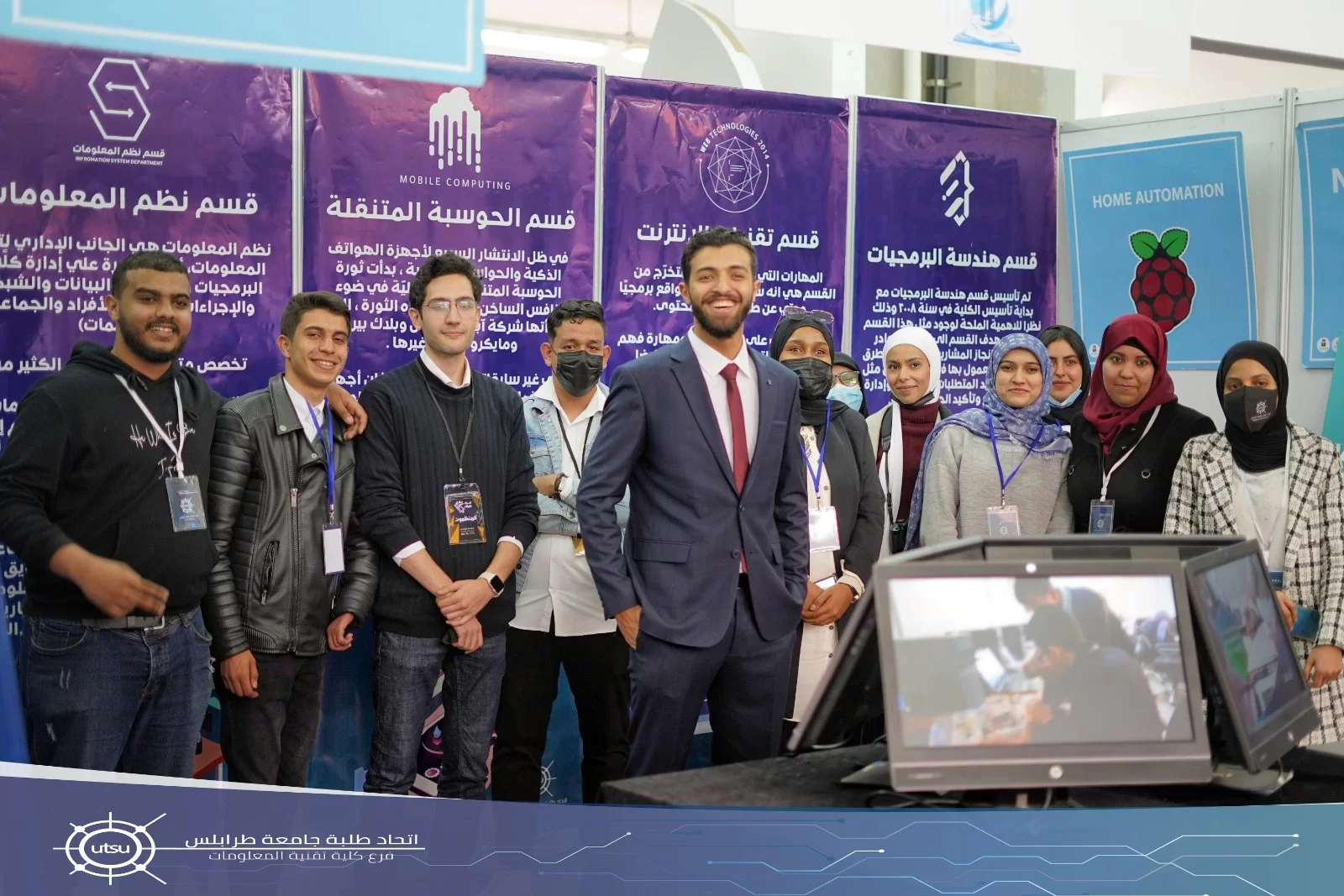
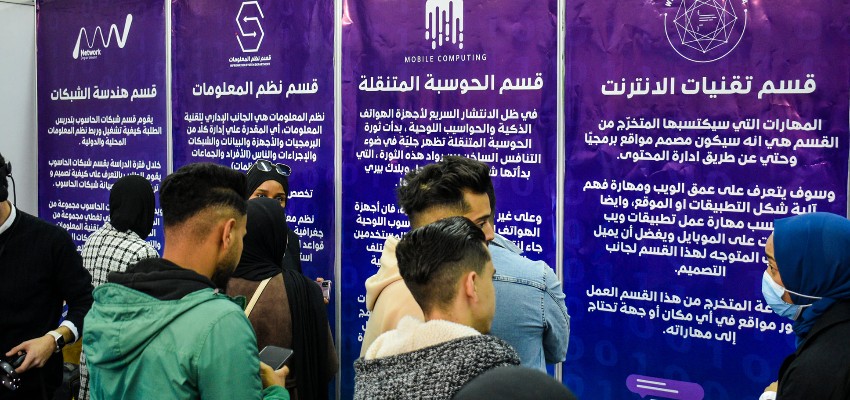
تكونت الكلية عند إنشائها من ثلاثة أقسام هي: قسم شبكات الحاسوب، قسم علوم الحاسوب وقسم هندسة البرمجيات والآن تشتمل على خمسة أقسام هي: قسم الحوسبة المتنقلة، قسم شبكات الحاسوب، قسم تقنيات الانترنت، قسم نظم المعلومات وقسم هندسة البرمجيات.

يتبع نظام الدراسة بالكلية نظام الفصل المفتوح ويضم كل عام دراسي فصلين دراسيين خريف وربيع وقد بدأت الكلية بقبول الطلاب والتدريس فعلياً مع بداية فصل الخريف 2008م. وتمنح الكلية درجة الإجازة المتخصصة (الجامعية) في تقنية المعلومات في أي من التخصصات سالفة الذكر. والحصول على الدرجة يتطلب إنجاز 135 وحدة دراسية على الأقل بنجاح. اللغة العربية هي لغة الدراسة بالكلية ويجوز استخدام اللغة الإنجليزية إلى جانبها. أما مدة الدراسة بالكلية فهي ثـمانية فصول دراسية.

تطمح الكلية إلى افتتاح برامج دراسات عليا بقسمي شبكات الحاسوب وهندسة البرمجيات مع بداية فصل الربيع 2018م.

حقائق حول كلية تقنية المعلومات

نفتخر بما نقدمه للمجتمع والعالم

69

المنشورات العلمية

38

هيئة التدريس

1710

الطلبة

159

الخريجون

البرامج الدراسية

بكالوريوس نظم المعلومات
تخصص نظم المعلومات

يهتم قسم نظم المعلومات بكيفية استخدام تكنولوجيا المعلومات وممارستها وتطبيقها في...

التفاصيل
بكالوريوس في تقنية المعلومات
تخصص هندسة البرمجيات

يهدف البرنامج الى إعداد الكوادر القادرة على إداء انجاز المشاريع البرمجية بالطرق الهندسية...

التفاصيل
بكالوريوس في تقنية المعلومات
تخصص تقنيات الانترنت

...

التفاصيل

من يعمل بـكلية تقنية المعلومات

يوجد بـكلية تقنية المعلومات أكثر من 38 عضو هيئة تدريس

staff photo

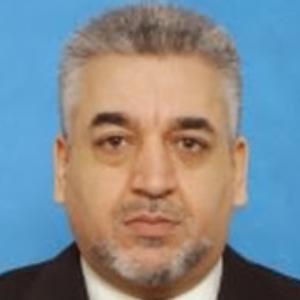
د. عبدالمنعم عمر احمد الاسود

عبدالمنعم الاسود هو احد اعضاء هيئة التدريس بقسم هندسة البرمجيات بكلية تقنية المعلومات. يعمل السيد عبدالمنعم الاسود بجامعة طرابلس كـاستاذ مشارك منذ 2010-02-27 وله العديد من المنشورات العلمية في مجال تخصصه

منشورات مختارة

بعض المنشورات التي تم نشرها في كلية تقنية المعلومات

Applying Multiple Deep Learning Models for Antipersonal Landmines Recognition

Antipersonnel landmines represent a very serious hazard endangering the lives of many people living in armed conflict counties. The huge number of human lives lost due to this phenomenon has been a strong motivation for this research. Deep Learning (DL) is considered a very useful tool in object detection, image classification, face recognition and other computer vision activities. This paper focuses on DL for the problem of landmines recognition in order to identify its type based on shape features. This research work consists of several stages: gathering a new dataset of Anti-Personnel Mines (APMs) images for training and testing purposes, employing several augmentation strategies to boost the diversity of training data, applying four different Convolutional Neural Network (CNN) models namely VGG, ResNet, MiniGoogleNet and MobileNet, and evaluating their performances on APMs recognition. In conclusion, results indicate that MiniGoogleNet exceed all of other three models in recognizing APMs with the highest accuracy rate of 97%. arabic 9 English 69
Hassan Ali Hassan Ebrahem, Abdelhamid Elwaer, Marwa Solla, Fatima Ben Lashihar, Hala Shaari, Rudwan A. Husain(7-2021)
Publisher's website

Different Approaches to Classify Network Routing Protocols

In this paper a brief introduction to the concept of quality of service has been given. However, it mainly focuses on the classification of routing algorithms based on a number of different criteria like: protocols, structure, technologies in use, etc. And it concludes with a presentation of a common problem facing routing protocols, namely routing loops, and explained the known solutions to that problem. arabic 6 English 52
Ibrahim Almerhag, Ali Ganoun(6-2018)
Publisher's website

Agent Based Computing Technique for Epidemiological Disease Modelling

Agent-Based Models (ABM) have become popular as tools for epidemiological simulations due to their ability to model real life phenomena at individual entity levels. ABM is a relatively new area for modelling as compared to the classical modelling methods. Many different fields use agentbased models including ecology, demography, geography, political science and epidemiology. Recently, an abundance of literature has presented applications of agent-based modeling in the biological systems. In this paper, the authors present an agent-based model attempts to simulate an epidemiological disease known as Cutaneous Leishmaniasis (CL). The model is developed to investigate the ability of ABM in modelling a disease that keeps speeding in Libya. The methodology used for describing and designing CL model is derived from nature of the disease mechanism. The ABM model involves three types of agents: Human, Rodent and Sand-fly. Each agent has its own properties, in addition to other global parameters which affect the human infection processes. The main parameter used for monitoring the model's performance is the number of people infected. The model experiments are designed to investigate ABM’s performance in modeling CL disease. Simulation results show that human infection rate is increasing or decreasing dependent on number of sand-fly vectors, number of host rodents, and human population awareness level arabic 7 English 62
Rudwan A. Husain, Hala Shaar, Marwa Solla, Hassan A. H. Ebrahem(3-2019)
Publisher's website