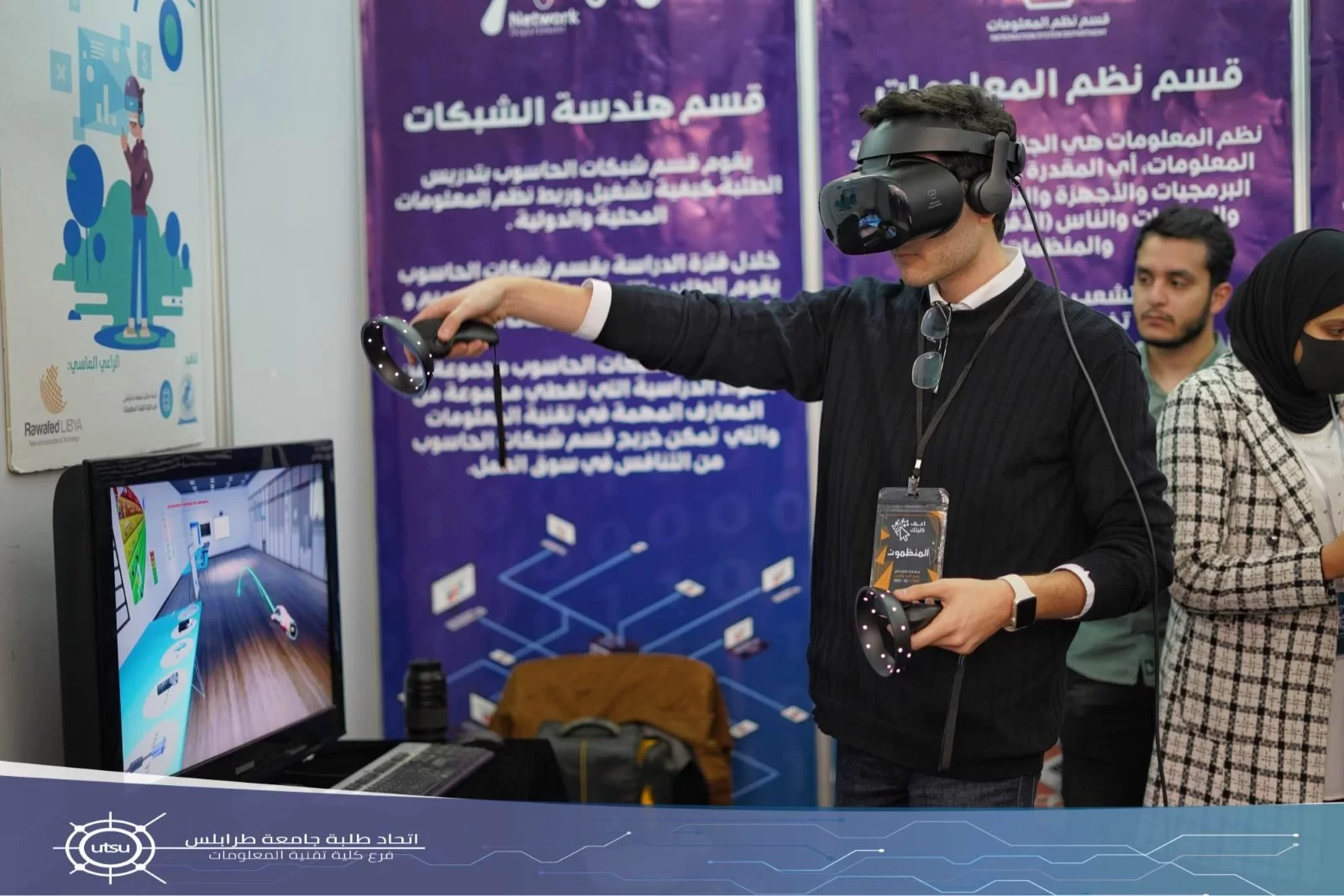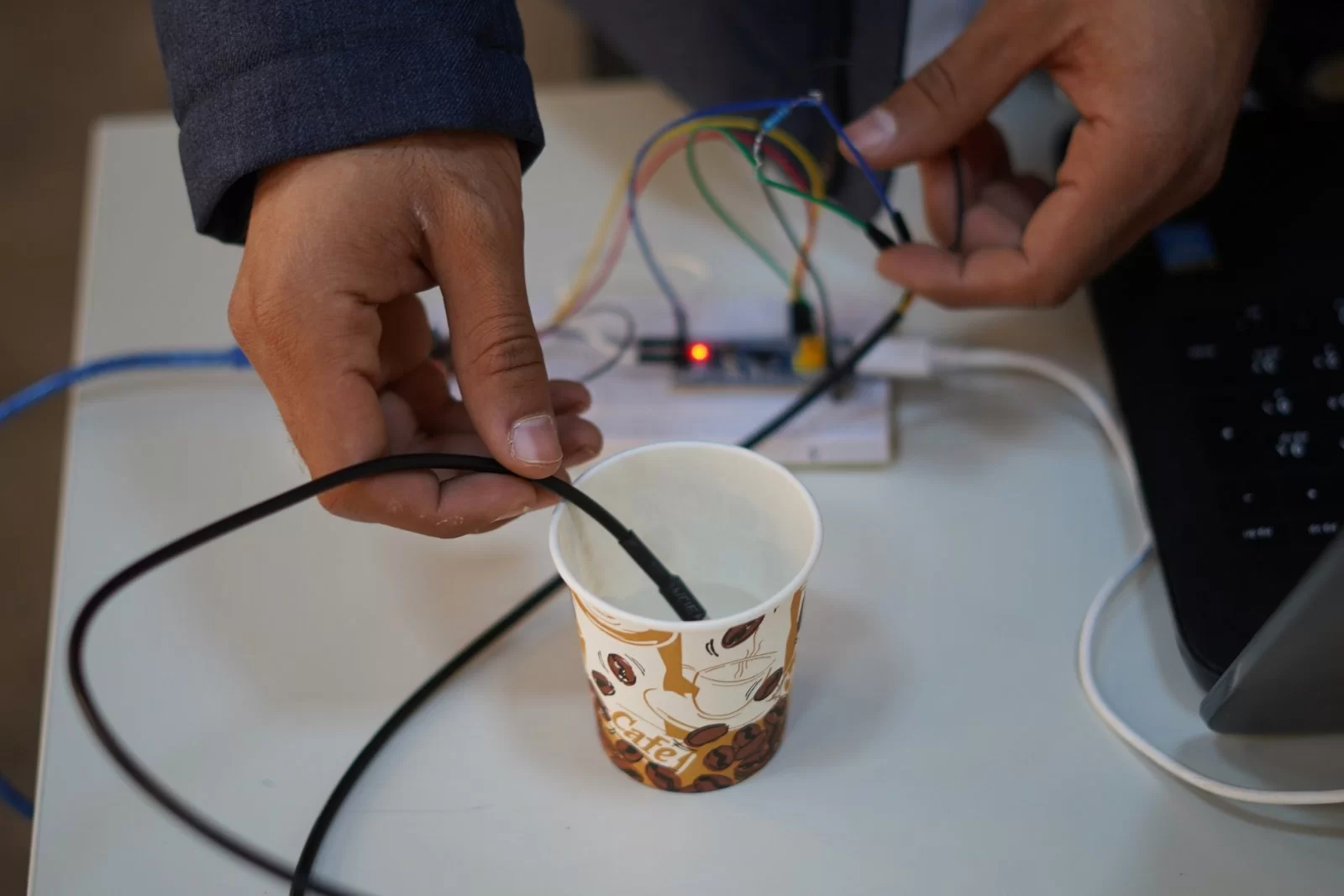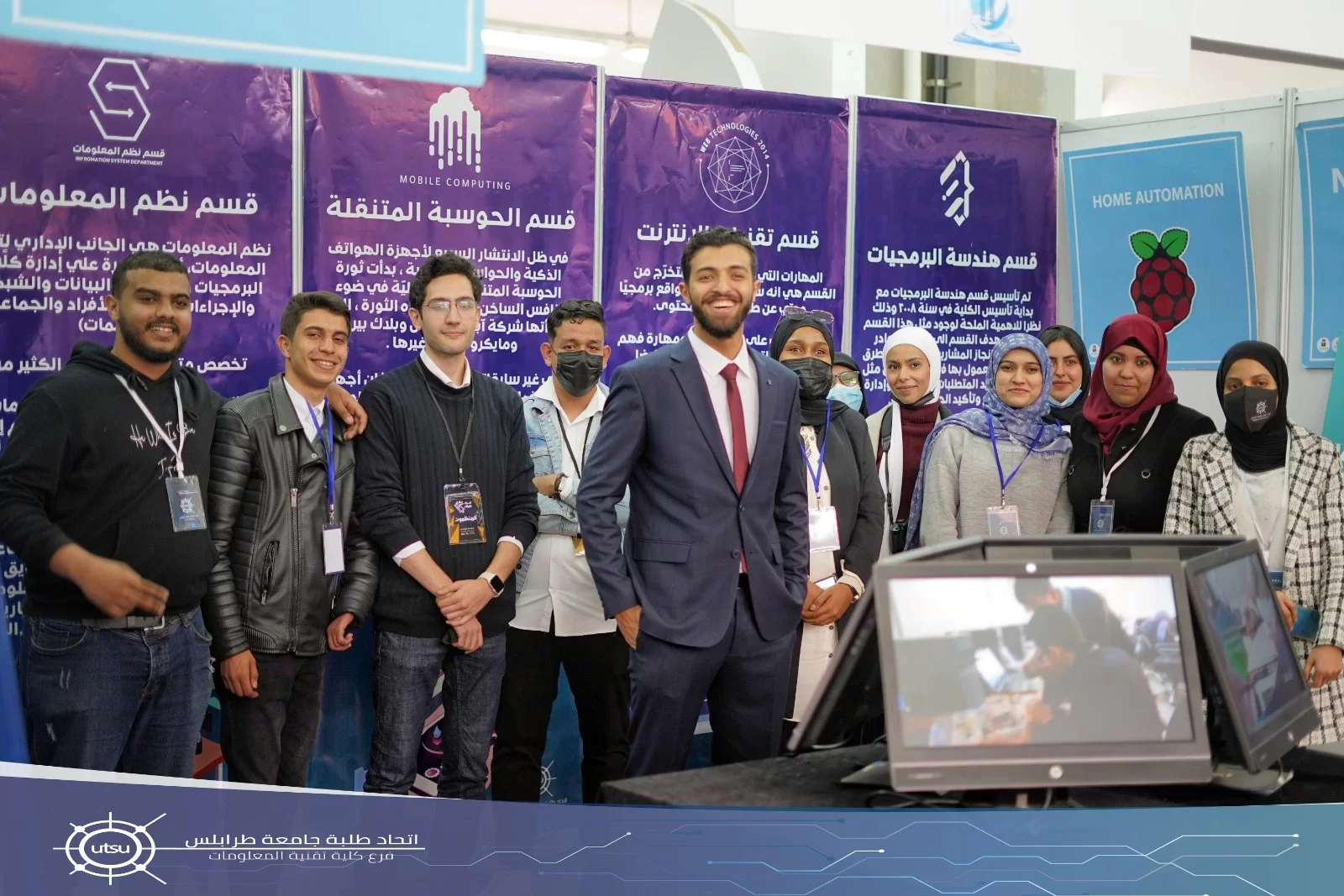
كلية تقنية المعلومات

المزيد ...

حول كلية تقنية المعلومات

تعد كلية تقنية المعلومات من أحدث كليات جامعة طرابلس حيث أنشئت بموجب قرار اللجنة الشعبية العامة للتعليم العالي سابقاً رقم 535 لسنة 2007م بشأن استحداث كليات تقنيات المعلومات بالجامعات الأساسية في ليبيا.

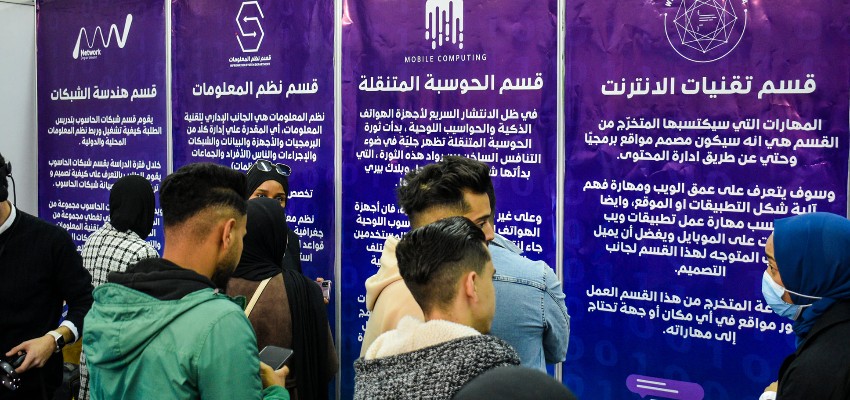
تكونت الكلية عند إنشائها من ثلاثة أقسام هي: قسم شبكات الحاسوب، قسم علوم الحاسوب وقسم هندسة البرمجيات والآن تشتمل على خمسة أقسام هي: قسم الحوسبة المتنقلة، قسم شبكات الحاسوب، قسم تقنيات الانترنت، قسم نظم المعلومات وقسم هندسة البرمجيات.

يتبع نظام الدراسة بالكلية نظام الفصل المفتوح ويضم كل عام دراسي فصلين دراسيين خريف وربيع وقد بدأت الكلية بقبول الطلاب والتدريس فعلياً مع بداية فصل الخريف 2008م. وتمنح الكلية درجة الإجازة المتخصصة (الجامعية) في تقنية المعلومات في أي من التخصصات سالفة الذكر. والحصول على الدرجة يتطلب إنجاز 135 وحدة دراسية على الأقل بنجاح. اللغة العربية هي لغة الدراسة بالكلية ويجوز استخدام اللغة الإنجليزية إلى جانبها. أما مدة الدراسة بالكلية فهي ثـمانية فصول دراسية.

تطمح الكلية إلى افتتاح برامج دراسات عليا بقسمي شبكات الحاسوب وهندسة البرمجيات مع بداية فصل الربيع 2018م.

حقائق حول كلية تقنية المعلومات

نفتخر بما نقدمه للمجتمع والعالم

69

المنشورات العلمية

38

هيئة التدريس

1710

الطلبة

159

الخريجون

البرامج الدراسية

بكالوريوس في تقنية المعلومات
تخصص تقنيات الانترنت

...

التفاصيل
بكالوريوس نظم المعلومات
تخصص نظم المعلومات

يهتم قسم نظم المعلومات بكيفية استخدام تكنولوجيا المعلومات وممارستها وتطبيقها في...

التفاصيل
بكالوريوس في تقنية المعلومات
تخصص هندسة البرمجيات

يهدف البرنامج الى إعداد الكوادر القادرة على إداء انجاز المشاريع البرمجية بالطرق الهندسية...

التفاصيل

من يعمل بـكلية تقنية المعلومات

يوجد بـكلية تقنية المعلومات أكثر من 38 عضو هيئة تدريس

staff photo

أ.د. محمود ميلود علي منصور

محمود منصور هو أحد أعضاء هيئة التدريس بقسم الشبكات بكلية تقنية المعلومات. يعمل السيد محمود بجامعة طرابلس كـأستاذ منذ 2020-02-03 وله العديد من المنشورات العلمية في مجال تخصصه

منشورات مختارة

بعض المنشورات التي تم نشرها في كلية تقنية المعلومات

Diagnosis and Surveillance of Covid-19 Pandemic Based on 3D Integral Images Technique

3D integral imaging is a true 3D imaging technology. It offers the simplest form that is capable of recording and replaying the true light field 3D scene in the form of a planar intensity distribution, by employing microlens array. There is a new world health crisis threatening the humanity with the spread of Covid-19 (Coronavirus Disease-2019). The Covid-19 belongs to a family of viruses that may cause various symptoms such as pneumonia, fever, breathing difficulty, and lung infection. Real images of Covid-19 patients confirmed by computed tomography CT were used to segment areas of increased attenuation in the lungs, all compatible with ground glass opacities and consolidations. This paper describes a new method to generate an indicative Covid-19 3D integral image models. The method is based on a Multiprocessor Ray Tracing System including Philips viewer, 3D slicer software and unidirectional camera. Experimental results are extremely satisfactory and for the first time it is proved that 3D integral images Covid-19 models are generated through Multiprocessor ray tracing system in order to deep monitoring and visualization to could be aid diagnosis in the absence of RT-PCR kits as demonstrated. A new file format content is created as well.
Dr. Mahmoud Geat Eljadid(3-2022)
Publisher's website

Nagwa Salama, Azeddien M. Sllame,: A Simulator For FAT-Tree Network-On-Chip Systems Based On MPLS Technique, In The Libyan International Conference on Electrical Engineering and Technologies (LICEET 2018), Tripoli, Libya, March 2018.

This paper is presenting a discrete-event simulator written in C++ for modeling and simulating Fat tree network-on-chip systems based on MPLS technique. The simulator contains main component that construct butterfly Fat tree structure and other components that generate suitable number of switches and IP nodes (cores). The designed switch consists of input ports, output ports, input/output link controller, multi-buffers, crossbar switch, routing and arbitration components and MPLS unit. The correctness and the efficiency of the MPLS based Fat network-on-chip system is measured against well-known wormhole+ virtual channels technique. The produced results are clearly demonstrated the efficiency of the MPLS technique for future NoC designs. arabic 45 English 189
Azeddien M. Sllame, Nagwa Abobaker Salama(2-2018)
Publisher's website

3D Holoscopic Image Video Content Display on Volumetric Displays:The next generation 3D TV technology

Integral imaging, also known as Holoscopic imaging to be promising approach for glassless 3D and Its methodology uses the principle of “Fly’s eye” and hence allows natural viewing of objects (i.e. fatigue free viewing), In this paper, the main objective is to provide a new plug-in tools for full parallax computer generated 3D Holoscopic content, based mainly on 3D Virtual Reality Modeling Language parser to enable 3D integral images content and rendering to be produced from VRML file format, and displayed on auto-stereoscopic. In the proposed system, the 3D content is either captured by a single camera with a micro lens, cylindrical lens array or computer generated to allow for mixed 3D video generation. Multiprocessor ray tracing system is adapted to be able to generate 3D integral images that containing 3D IIVRML integral images content parser modules; new 3D IIVRML file format is created by uses 3D unidirectional camera parameters in order to import/accept into ray tracer renderer software. Experimental results show validation of the new plug-in software tool and tests on such Tie scene and Cessna scene . Consequently, 3D integral images frames and short time 3D II movie are generated and displayed without a glass on PC screen, LCD and the HoloVizio.
Dr. Mahmoud Geat Eljadid, Prof. Amar Aggoun(1-2018)
Publisher's website