
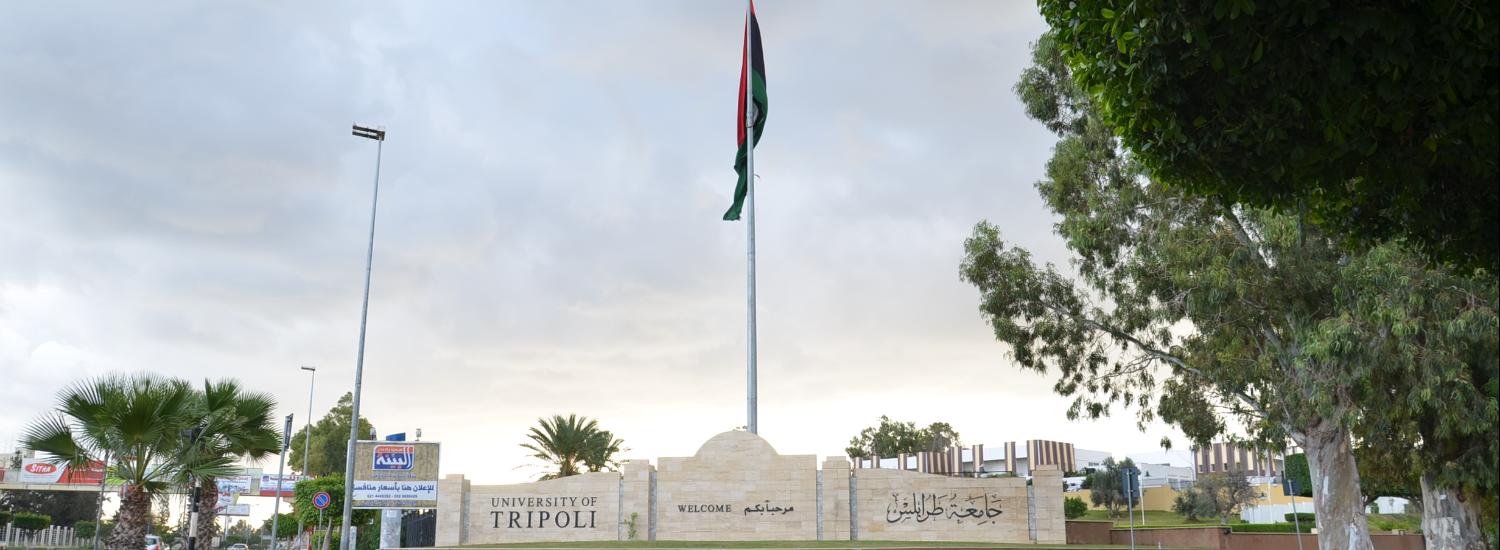
Department of Mechanical and Industrial Engineering

More ...

About Department of Mechanical and Industrial Engineering

Facts about Department of Mechanical and Industrial Engineering

We are proud of what we offer to the world and the community

44

Publications

40

Academic Staff

910

Students

0

Graduates

Who works at the Department of Mechanical and Industrial Engineering

Department of Mechanical and Industrial Engineering has more than 40 academic staff members

staff photo

Prof.Dr. MOHAMED SALEH GUMA OUN

محمد صالح عون هو احد أعضاء هيئة التدريس بقسم الهندسة الميكانيكية والصناعية بكلية الهندسة. يعمل السيد محمد صالح عون بجامعة طرابلس كـأستاذ منذ مايو 2019 وله العديد من المنشورات العلمية في مجال تخصصه

Publications

Some of publications in Department of Mechanical and Industrial Engineering

Performance Assessment of a Solar-Powered Absorption System in Libya

Abstract During the last years there has been an increasing consciousness of the environmental problems, created by the use of fossil fuels in electrical power generation consumed by converting cooling systems. In addition, the use of common working fluids (refrigerants), with their ozonedepleting and global warming potential, has become a serious environmental problem. This underlines the need to implement advanced, new concepts in building air-conditioning. The most common global type of thermally driven technology to produce chilled water is absorption cooling. For air-conditioning applications, absorption systems commonly use the water/lithium bromide or ammonia/water as working pair of fluids. The objective of this study is to establish a fundamental basis for further research and development within the field of solar cooling. In this study, an overview of possible systems for solar powered refrigeration and airconditioning systems will be presented. The concept of the ‘Solar Cooling Path’ is introduced, including a discussion of the energy source to the collector. Brief information and comparisons of different absorption refrigeration cycles are also presented. A solar-driven absorption refrigeration system has been selected as a case study for a further detailed investigation. A low temperature heat source can be used to drive the absorption refrigeration cycle, making the system suitable for integration with solar thermal collector. The Transient System Simulation program (TRNSYS) and Engineering Equation Solver (EES) simulation tools are used to model and analyze the performance of a solar-driven absorption refrigeration system. Analysis of the absorption cycle system is initiated by steady-state analysis. A modeling of single effect water/lithium bromide absorption cycle was constructed to study the effect of the operating variable on the system performance and to determine the optimum operating conditions for the absorption cycle. This model was developed by Engineering Equations Solver program (EES). In practice, the ambient conditions and solar radiation are not constant. Therefore, a dynamic analysis is useful for determining the characteristics of the system during the entire year, and dimensioning the important components of the solar collector subsystem, such as storage tanks and collector area. The overall solar absorption cooling system has been simulated by the TRNSYS program with a typical meteorological year file containing the weather parameters for the capital of Libya, Tripoli. Finally, a parametric study was carried out to investigate the influence of key parameters on the overall system performance of solar absorption cooling system and hence to improve and optimize the system design. Results from the parametric optimization indicated that with an area of 130m2 of flat plate collectors with an inclination of 32° and 3.5m3 of storage tank is achieved to cover the demand of air conditioning of a 35kW absorption chiller.
إبراهيم محمد علي الطويري (2011)
Publisher's website

مفاهيم وأساسيات إعادة هندسة العمليات وإمكانية إستخدامها لتحسين مستويات الأداء حالة دراسية لبرامج الدراسات العليا بكلية الهندسة جامعة طرابلس

لمواجهة تحديات القرن الحادي والعشرون، وإدراكاً لأهمية الإدارة الجامعية في التطوير وإعتماد أساليب إدارية حديثة تقدم حلولاً لمشكلات التعليم من خلال التغيير الجذري للعمليات الإدارية والتي تُعد المحور الأساسي في منهجية إعادة هندسة العمليات بإعتبارها من أفضل الأساليب العلمية المُستخدمة في مجال التطوير الحديث، حيث أنها تسعى إلى التركيز على الرفع من مستوى التحسين في التكلفة وفي الوقت وفي الجودة خلال كافة أنواع العمليات المستخدمة لإنجاز الأعمال المطلوبة. تم إنجاز هذه الدراسة خلال العام الدراسي 2017 / 2018، تم التركيز فيها بشكل مُفصل على دراسة أهم العوامل ذات العلاقة المباشرة في تطبيق مفاهيم إعادة هندسة العمليات بجامعة طرابلس، تم ذلك من خلال التركيز على العمليات الإدارية للدراسات العليا بكلية الهندسة كحالة دراسية، ولتحقيق أهداف هذه الدراسة تم استخدام المنهج الوصفي التحليلي، صُمم خلاله أستمارة إستبيان خصيصاً لهذا الغرض، ثم تم توزيعه على كافة أفراد مجتمع هذه الدراسة والمُتمثل في كافة من لهم علاقة بأمور الدراسات العليا بكلية الهندسة، ومدير إدارة الدراسات العليا والتدريب بالجامعة، بالإضافة الى رئيس الجامعة والوكلاء ومدراء الإدارات بالجامعة، وتمت معالجة البيانات إحصائياً باستخدام الجداول التكرارية والنسب المئوية، والمتوسطات الحسابية والإنحرافات المعيارية، ومعامل ارتباط سبيرمان. أظهرت نتائج الدراسة مدى حاجة الجامعة محل الدراسة للتطوير والتحسين، وبالتالي ضرورة السعي لتطبيق مفاهيم إعادة هندسة العمليات، الأمر الذي يستوجب الإهتمام بشكل جدي بعوامل النجاح والإعتماد أكثر على تكنولوجيا المعلومات لضمان كفاءة وفعالية الأداء. أوصت الدراسة بضرورة التركيز على دعم الإدارة العليا لتطبيق منهج إعادة هندسة العمليات بجامعة طرابلس، ونشر ثقافة التطوير والتحسين المستمر بين كافة العاملين فيها، والسعي لإستخدام المفاهيم الحديثة في تصميم وتنفيذ كافة العمليات الإدارية على مستوى كافة مكونات الجامعة. arabic 260 English 0
رجب عبدالله عبدالقادر حكومة, رجاء البدري بن زقلام, (6-2021)
Publisher's website

Manufacturing Quality Techniques For Training and Education and Their Possible Applications Within Libyan Institutions: A Case Study

Most of organizations (both national and international) have struggled with many difficulties during the past decades due to many problems, creating a negative impact on the productivity and utilization levels of many institutions around the globe, and within Libya in particular. This paper presents the current role, relevance, trends and challenges with respect of quality management applications in educational field within Libya as a case study. It outlines an overview of the current state of art to show how in the face of growing global competitiveness quality at the levels of knower, knowing and known elements of educational system using unified field of all the laws of nature, are deriving the benefits of the quality techniques. The paper also investigates the current implementation levels of Total Quality Management (TQM) as a philosophy for improving the quality levels within some academic and training institutions within Libya. A survey methodology has been applied in this research where some findings from interesting case studies are presented to show the benefits of successful TQM implementations originally developed for manufacturing industry. The paper has also pointed to areas where senior managers within the surveyed organizations should take immediate actions to achieve effective and successful TQM implementations, thereby improving their position in this competitive marketplace. arabic 17 English 115
Rajab Abdallah Abdulqader Hokoma(1-2015)
Publisher's website