

كلية التقنية الطبية

المزيد ...

حول كلية التقنية الطبية

حقائق حول كلية التقنية الطبية

نفتخر بما نقدمه للمجتمع والعالم

13

المنشورات العلمية

93

هيئة التدريس

38

الطلبة

37

الخريجون

البرامج الدراسية

تخصص

...

التفاصيل
تخصص علوم المختبرات الطبية

...

التفاصيل

من يعمل بـكلية التقنية الطبية

يوجد بـكلية التقنية الطبية أكثر من 93 عضو هيئة تدريس

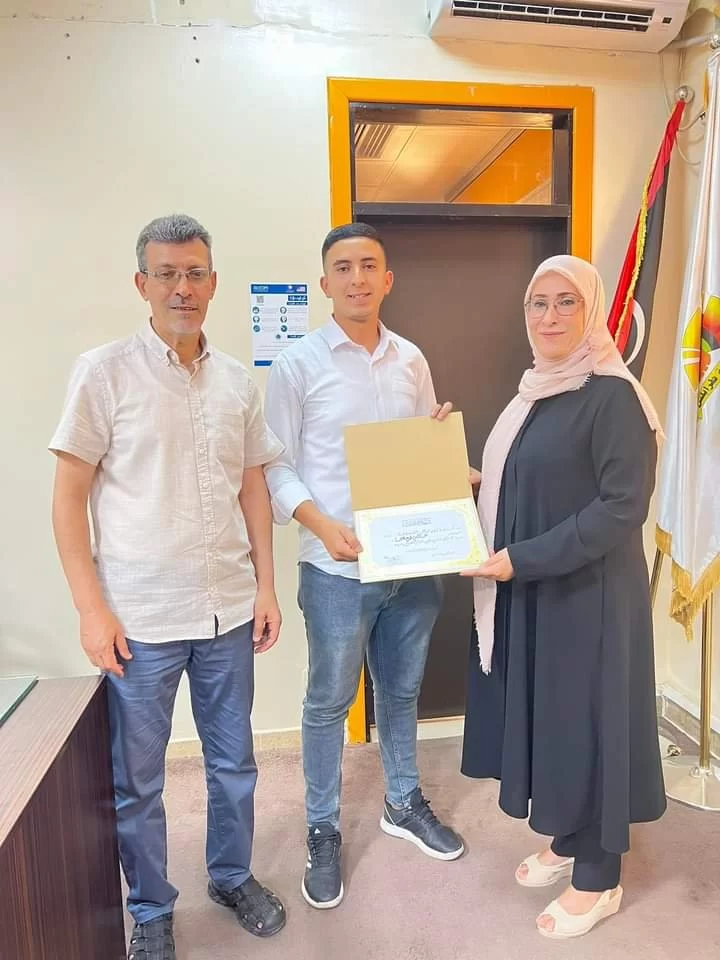
staff photo

د. فوزية احمد محمد الترهوني

الدكتورة فوزية الترهوني هي احد اعضاء هيئة التدريس بقسم الصحة العامة بكلية التقنية الطبية. تعمل الدكتورة بجامعة طرابلس كـمحاضر منذ2012-3-20 ولها العديد من المنشورات العلمية في مجال تخصصها

منشورات مختارة

بعض المنشورات التي تم نشرها في كلية التقنية الطبية

Adherence of Libyan Community Pharmacies to Optimal Drug Storing Conditions during the Condition of Recurrent Electricity Shutdowns

Background and Objectives: Compliance of community pharmacies with the proper practice of storage and dispensing of medicines is crucial for ensuring the quality and safety of medicines, particularly with the circumstance of recurrent electricity blackout in Libya. This study was aimed to assess the compliance of community pharmacies with the proper practice of drug storage in Tripoli city, Libya. Materials and Methods: A cross-sectional survey conducted in November 2020 targeting a total of 56 community pharmacies in Tripoli, Libya. The questionnaire was adapted from the WHO Checklist for Good Storage Practices and included 41 questions organized under five sections: socio-demographics, pharmacist’s attitude toward the quality of storage practices, queries on environmental storage conditions, the quality of facilities in the community pharmacy, and queries on storage and pharmacy practices. Data were presented as descriptive statistics. Results: Out of the total 56 visited pharmacies, a total of 46 (82.1%) pharmacists participated in the study with one pharmacist being interviewed in every pharmacy. Results showed that 15% of employees reported variety of cleanliness regulatory depending on cutting off running water circumstances in Tripoli and other reasons. About 78.8% participants observed dust in shelves and over the drugs packaging, and 22% of the participant pharmacies’ drugs exposure to direct sunlight. Additionally, 72% of employee experienced high temperatures in the pharmacy during electricity blackouts, whereas only 48% of them experienced humidity. In addition, 91.4% had alternative source of electricity, 44.3% had a power backup connected to the refrigerators. Conclusion: The compliance of majority of the community pharmacies operated in Tripoli is below standard. There is still need to improve the storage practices in the community pharmacies by obeying with the regulatory standards as specified by the Drug Regulatory Authority of Libya.
Ahmed Elbadri M Atia(5-2021)
Publisher's website

Convergence angles of Porcelain Fused To Metal Crowns performed in Libyan private dental practice

Abstract Back ground: Full coverage porcelain fused to metal crowns (PFM) is commonly recommended for restoration of extensively damaged teeth. Ability of the dentist to adequately prepare teeth is necessary to achieve a proper success and longevity of these restoration. Aims: This study aimed to determine the degree of axial taper and total occlusal convergence angles (TOC) for Porcelain Fused To Metal crowns (PFM) prepared with clinically practiced values, that carried out by dental practitioners in Tripoli center, Libya. Materials and Methods: It was a descriptive, cross-sectional study design and held at Alzendah private dental laboratory, Tripoli Libya. A convenience sample (40) models of Porcelain Fused To Metal Crowns (PFM) preparations carried out by private dental practitioners were scanned by employing a 3D model scanner (Ceramill Map300, Amanngirrbach, Austria). Evaluation of the total occlusal convergence (TOC), bucco-lingual and mesio-distal convergence angles of each abutment tooth was proceeded using B&B dental software (Guide system, B&B, Italy). The degree of taper was measured on the axial walls of each crown preparation and the bucco-lingual and mesio-distal convergence angles subsequently calculated. Results: A total of 40 casts having crown preparations (15 anterior, 25 posterior). The mean convergence angles mesio-distally for all preparations was 40.29° (sd 21.8°), and for the bucco-lingual was 29.92° (sd 9.3°), with mean of TOC was 35.10°. In anterior preparations, the mean bucco-lingual convergence angle was 42.32° (sd 12.2°) compared to 24.52° (sd 15.5°) for posterior preparations (p
Dr. Khaled Omar & Abdussalam Eljabali(1-2022)
Publisher's website

LABORATORY EVALUATION OF PRE-POLYMERIZED DENTURE BASE MATERIAL USED FOR CAD/CAM COMPLETE DENTURE MANUFACTURING

INTRODUCTION: CAD/CAM denture base materials are milled from pre-polymerized pucks of resin that are highly condensed. So, they provide no polymerization shrinkage eliminating its subsequent disadvantages. This technology offered improved fit, strength properties and more bio-hygienic denture bases compared with conventional processing of the denture base material. OBJECTIVES: The aim of the study was to evaluate the physico-mechanical properties of CAD/CAM denture base material and the effect of thermo-cycling on it compared with the conventional one. MATERIALS AND METHODS: The study was conducted on two parallel groups, divided according to the denture material used. Group (1) conventional PMMA (control group), group (II) CAD/CAM PMMA (study group) of 40 specimens each (16 for impact strength, 16 for flexural strength, 8 for surface roughness and grinded powder form both materials for residual monomer test). Each group was divided into 2 sub-groups: (A) No thermo-cycling and (B) Thermo-cycling, then subjected to 4 different tests, impact strength, flexural strength, surface roughness and residual monomer tests. Data were collected, tabulated and statistically analyzed. Significance level was set at 5%. Bar charts were used for graphical presentations. RESULTS: Our study revealed a highly statistically significant decrease in residual monomer of CAD/CAM PMMA material in both conditions before and after thermo-cycling when compared to conventional PMMA material, which therefore leads to enhanced impact strength and significantly reduced surface roughness after heat treatment. On the other hand, also a highly significant reduction of its flexural strength after thermocycling has been observed. CONCLUSIONS: CAD/CAM dentures with lower amount of methacrylate monomer exhibit more favourable physico-mechanical properties and they have a long-term biocompatibility even with thermal changes making them a more satisfactory as a denture base material for edentulous patients.
Yusra Muftah Saad Elfaidy, Ahmed M. Abdelhamid, Sonia M. Elshabrawy(12-2018)
Publisher's website