
كلية التقنية الطبية

المزيد ...

حول كلية التقنية الطبية

حقائق حول كلية التقنية الطبية

نفتخر بما نقدمه للمجتمع والعالم

13

المنشورات العلمية

93

هيئة التدريس

38

الطلبة

37

الخريجون

البرامج الدراسية

تخصص

...

التفاصيل
تخصص علوم المختبرات الطبية

...

التفاصيل

من يعمل بـكلية التقنية الطبية

يوجد بـكلية التقنية الطبية أكثر من 93 عضو هيئة تدريس

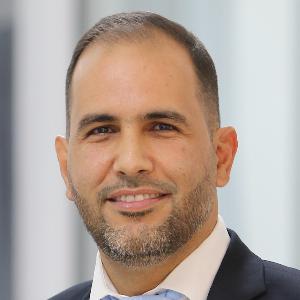
staff photo

د. باسم المبروك محمد رجب

منشورات مختارة

بعض المنشورات التي تم نشرها في كلية التقنية الطبية

Information provided to customers about over-the-counter medications dispensed in community pharmacies in Tripoli, Libya: a cross-sectional study

More Please check this summary of your article Test We're testing a new feature which would provide a 1-sentence summary of an article to help others quickly decide if it is relevant for them. We need your help to find out how accurate this automatically generated summary is. This summary is for testing purposes – only you can see it. Summary The adequacy of information given to consumers on over-the-counter medications dispensed in community pharmacies in Tripoli, Libya, and compared the performance Thank you for your help! Your feedback will help improve this feature. Very good How would you summarize your article in 1 sentence? Help us improve the quality of this feature by writing your own summary. Others will not see your summary. Enter your 1-sentence summary (max 300 characters) Do you have any other feedback about this feature? Enter your feedback Submit Abstract and figures Background: Adherence to pharmacy practice guidelines for dispensing medications in pharmacy settings is important to ensure the safe use of medications. Aims: This study assessed the pattern and adequacy of information given to consumers on over-the-counter medications dispensed in community pharmacies in Tripoli, Libya, and compared the performance of pharmacists and non-pharmacists. Methods: This was a cross-sectional survey of private community pharmacies conducted in 2018 . Trained simulated patients were used to collect data on over-the-counter medications dispensed for hypothetical common cold symptoms and the information given by the pharmacy staff on the medication. This information included: name and the strength of the medication, indication for use, duration of use, dosage, how often to take the medicine, timing (before/after/with food), storage, expiry date, and side-effects of the medicine. Time taken to deliver the information was recorded. The adequacy of information provided by the pharmacists and non-pharmacists was compared. Results: A total of 169 pharmacists were surveyed. There were no significant differences between pharmacists and non-pharmacists in information given on the dispensed medications, except for information on taking the medication with food or not (84.5% of pharmacists gave this information versus 57.1% of non-pharmacists; P = 0.001) and on potential side-effects (39.4% of pharmacists versus 20.3% of non-pharmacists; P = 0.014). Significantly more pharmacists (85.9%) than non-pharmacists (61.2%) provided the medication-related information in less than 1 minute (P = 0.001). Conclusion: The inadequate information on medications provided by pharmacists is a concern for patient safety. Health regulatory organizations need to promote safe medication practices.
Ahmed Elbadri M Atia(7-2020)
Publisher's website

Malaria in Illegal Immigrants in Southern Libya

Background: Libya has been malaria-free since 1973. The risk of malaria re-introduction to Libya is increasing because of the increase in imported malaria cases due to immigration to Libya from countries where malaria is endemic. Cases are mainly due to P. falciparum and Sub-Saharan Africa is the most common origin. This study was conducted to investigate the prevalence of malaria positive cases among illegal immigrants in the southern region of Libya. Methods: A prospective, observational, multi-center study was conducted. Three hundred and three illegal immigrants from 12 different countries were included. Enzyme-linked immunosorbent assay was used to detect the presence of serum malaria antibodies. Results: A total of 303 immigrants were included in the study with mean age of 25.78±5.92 years. Of them, 195 tested positive for malaria antibodies. Two hundred and sixty nine of the participants came from Brak Al-Shati, 16 from Sebha and 18 from Bergan centers, with 175, 15 and 5 positive cases, respectively. Most of the positive cases (172) arrived in Libya within 1-10 months. The highest number of positive cases (70) came from Ghana followed by (40) from Niger and (39) from Bangladesh. Conclusions: Illegal immigration is a major malaria re-introduction route. The issue of illegal immigration have to be treated urgently to stop the huge influx of illegal immigrants and increase the surveillance activities of infectious diseases in order to keep Libyan territories as a malaria-free lands. Key words: Illegal immigration, Malaria, Libya.
Fadwa Jamaledden Mustafa Kamel Mahanay, Badereddin Bashir K. Annajar, Asma A Ali Oun(11-2021)
Publisher's website

LIBYAN MEDICAL EDUCATION: CHALLENGES TOWARD WFME CRITERIA

More Abstract This work shares Libyan experiences with medical education accreditation, as well as the challenges that the system faced in meeting the criteria of the World Federation of Medical Education (WFME). WFME, which was founded in 1972, is an international organization concerned with the education and training of medical doctors. WFME was initiated on the initiative of the WHO and the World Medical Association (WMA) with the goal of reviewing bodies that accredit basic medical education. The worldwide task force on accreditation in medical education was founded in 2004 by WHO and the WFME. In the same year, 26 members from 23 countries representing all six WHO–WFME regions assembled to discuss how WHO and WFME could assist in the establishment of long-term accrediting systems to ensure high-quality medical education. By 2024, all candidates must obtain a graduation certificate from a program certified by an entity that meets WFME or other international requirements for an accrediting system, according to the Educational Commission for Foreign Medical Graduates. Thereafter, accreditation for all health training programs by 2020 was indorsed as part of the WHO’s Worldwide Strategy on human resources for health: workforce 2030 and was recommended by the WMA. In response to these regulations, the NCQAA has started to prepare “the National Standards Manual for Basic Medical Education” and further connect with all Libyan medical faculties to comply with these criteria, while linking with the WFME. This is based on the WHO endorsement that all countries to apply accreditation mechanisms for health training institutions by 2020. Now it is a time to call for a rigorous auditing system in addition to assessment mechanisms in order to warrant ongoing quality control, and the quality control agency should be self-governing of external encouragement and have only an academic agenda. Finally, all medical schools that have decided to be recognized by the WFME, must have strengthened their ability to face challenges and start adapting these regulations and standards. The construction of networks, alliances, and associations between Libyan medical faculties are encouraged as an efficient approach for implementing and obtaining this accreditation.
Ahmed Elbadri M Atia(11-2021)
Publisher's website