
كلية الزراعة طرابلس

المزيد ...

حول كلية الزراعة طرابلس

حقائق حول كلية الزراعة طرابلس

نفتخر بما نقدمه للمجتمع والعالم

253

المنشورات العلمية

184

هيئة التدريس

522

الطلبة

0

الخريجون

من يعمل بـكلية الزراعة طرابلس

يوجد بـكلية الزراعة طرابلس أكثر من 184 عضو هيئة تدريس

staff photo

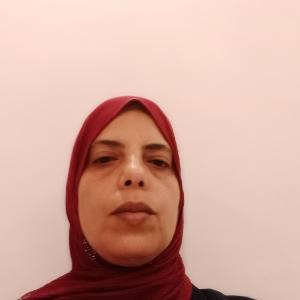
د. مروان محمد سالم كشلاف

مروان كشلاف هو احد اعضاء هيئة التدريس بقسم وقاية النبات بكلية الزراعة طرابلس. يعمل السيد مروان كشلاف بجامعة طرابلس كـاستاذ مشارك منذ 2019-08-04 وله العديد من المنشورات العلمية في مجال تخصصه

منشورات مختارة

بعض المنشورات التي تم نشرها في كلية الزراعة طرابلس

Carcass Characteristics of the Libyan Purebred Mahali Goat and their crosses with Damascus and Morcia Granada Goat

Agricultural and Marine Sciences, 15: 21-27 (2010) 2010 Sultan Qaboos University Carcass characteristics of the Libyan purebred Mahali goat and their crosses with Damascus and Morcia Granada Goats. Ahtash A.E., Biala A.s., Magid M.F. and Marhoun H.M. This study was conducted to evaluate the Carcass characteristics of Mahali (M), Damascus (D) and Morcia Granada goats and their crosses. Live weght, carcass weight, dressing-out %, rib eye muscle area, non-carcass component and kidney fat were measured. The results showed significant superiority of Damascus goats in live weight (65.8 kg), carcass weight (34.3 kg), dressing-out % (52.1 %), rib eye muscle areas (22.7 cm2) over the Mahali and Morcia Granada goats. The crossbred group ( ½ M x ½ D) was superior in live weight (50 kg), carcass weight (24.2 kg), dressing-out % (48.4%) and rib eye muscle area (21.2 cm2) over other crossbreds. The crossbred group (¾ D x ¼ M) was superior in live weight (61.7 kg) carcass weight (31 kg) and rib eye muscle area (21.3 cm2) over the other ¾ crossbreds. This study indicated that crossing between Mahali x Damascus breed was beneficial for increasing live weight and meat production. Key words: Breeds, crossbreeding, carcass.
Abdelkareem E. Ahtash, Abdulla S. Biala , Aiad F. Magid , Hamed M. Marhoun(5-2010)
Publisher's website

Estimation of Sunshine Duration using Statistical Approach:‎ Libya As A case Study

Sunshine duration (SD) is an essential atmospheric indicator which is used in many agriculture, ‎architects and solar energy applications. In many situations where data of sunshine duration may not be ‎available due to temporal and financial constraints, developing alternative indirect methods based on ‎theoretical considerations for determining SD are essentially required. In this study, seven models were ‎developed using stepwise regression technique to estimate monthly sunshine duration for Libya. The ‎predictors which were used as inputs differ from one model to another and they included monthly ‎cloudiness index, total day length, mean relative humidity, depth of precipitation, mean maximum ‎temperature, altitude and longitude over 16 meteorological stations spread across Libya during the ‎period of 1961 – 2000 . The evaluation of the developed models was performed using a set of data of ‎four meteorological stations representing different physiogeographic and climatic zones during 2001 ‎and against Abdelwahed and Snyder (2015) equations which were developed for estimating sunshine ‎duration for Libya. The statistical parameters of evaluation criteria included mean absolute error (MAE), ‎root mean square error (RMSE), (RMSE %) and Nash and Sutcliffe Efficiency (NSE). The linear regression ‎equation relating predicted with measured data with intercept equals zero and determination coefficient ‎‎(R2) were also used for evaluation purpose. According to the performance indicators, it was detected ‎that six of the developed models were superior to the model with one parameter (cloudiness index) in ‎estimating the sunshine hours. It was also found that all the developed models have better performance ‎in estimating the sunshine duration as compared with Abdelwahed and Snyder (2015) equations. ‎However, due to its few required variables, a model with two parameters (cloudiness index and total ‎day length) is sufficient and can be used with confidence in estimating sunshine duration for Libya. ‎ Keywords: Sunshine duration, Stepwise regression, Statistical model.‎ arabic 15 English 69
ِAhmed Ibrahim Ekhmaj, Milad Omran Alwershefani(12-2016)
Publisher's website

The Soils of Libya

This book presents the soil pedodiversity in Libya. Soils are the source of all life; there can be no life without them. Further, each soil has its own history and its present conditions, which have been shaped by many different factors (e.g. climate, biota, parent material, and relief or topography). The book, divided into eight chapters, provides extensive information on Libyan soils. Chapter one provides an introduction and a broad perspective of the subject, while Chapter two covers the history of soil mapping and research in Libya. Chapter three focuses on local factors of soil formation and describes the geology and climate of the region to explain the diversity of its soils. Chapter four discusses soil classification systems and those most commonly used in the country. The fifth chapter illustrates the constraints and limiting factors that negatively affect agricultural activities across the country. The land cover/land use and the vegetation of the country are described in Chapter six. In turn, Chapter seven presents the status quo of soil biology, the corresponding related research activities, and the other biological properties of Libyan soils. The final chapter (Chapter eight) focus on land degradation and desertification in Libya, emphasizing the main causes, impacts of the phenomena, and efforts to combat it. This book demonstrates the problems that the country is currently facing as a result of climate change, soil erosion, salinization, and pollution, and outlines potential remedies to improve local food security. Bringing together the perspectives and expertise of many distinguished scientists from various universities and institutions in and outside of Libya, the book represents a unique and highly valuable resource. arabic 3 English 15
Hamdi Zurqani, Khaled Ben Mohamed, Azzeddin Elhawej, Mukhtar Elaalem, Bashir Nwer, Az Ali, Eman Ferjani, Merfat Ben Mahmoud, Asma Alnajjar(12-2020)
Publisher's website